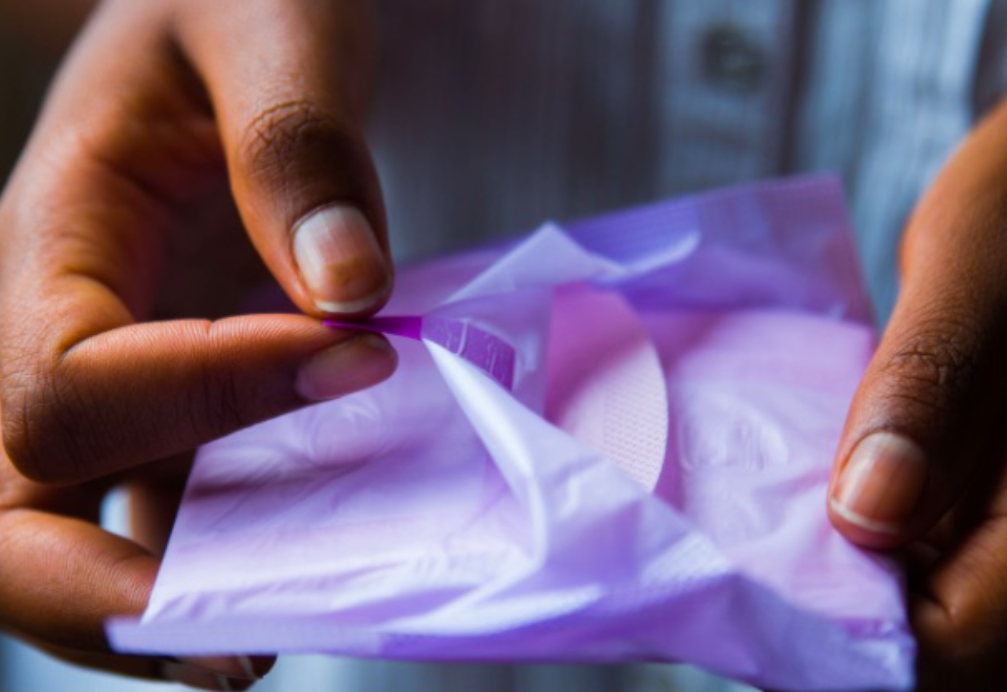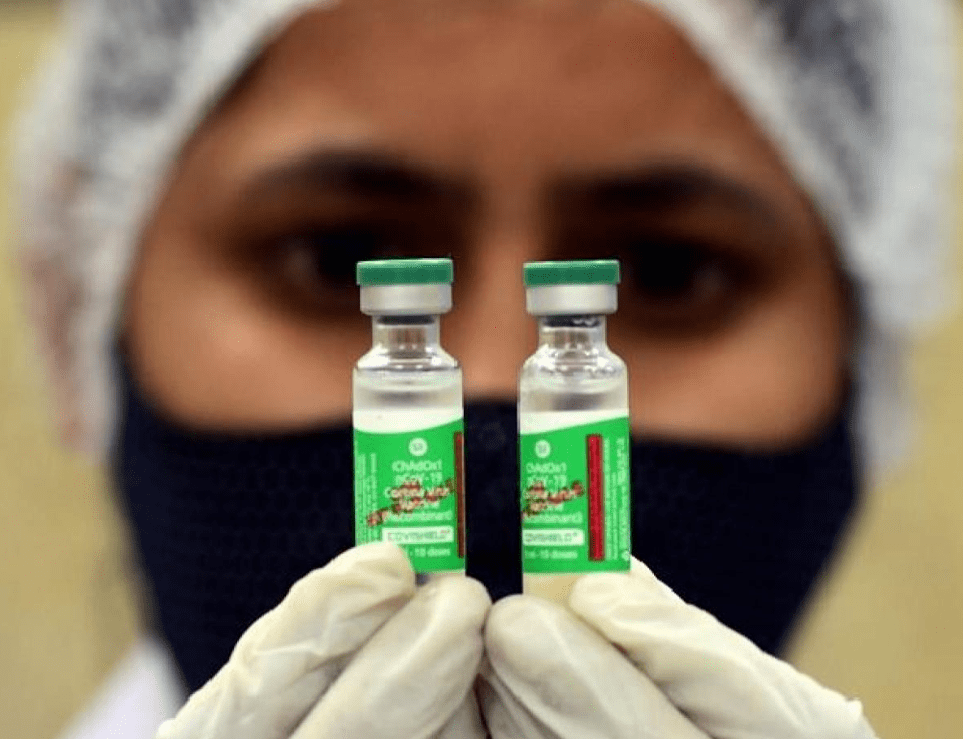

Need for Sexual & Reproductive Health Awareness in Adolescents

BY- TANYA SHARMA

Council Member (West Bengal Human Rights Council, A wing of WICCI)

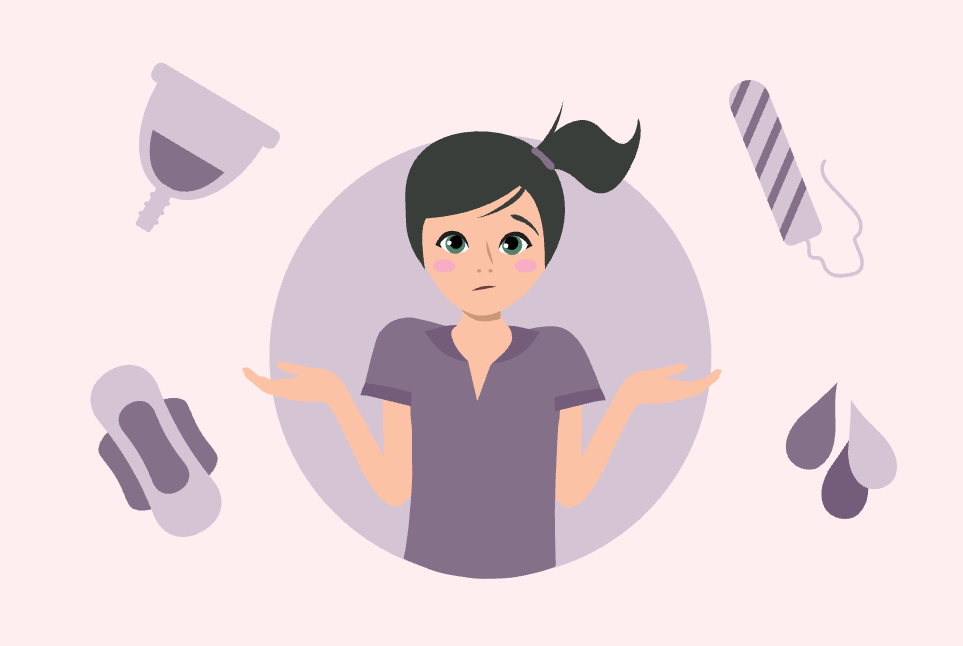
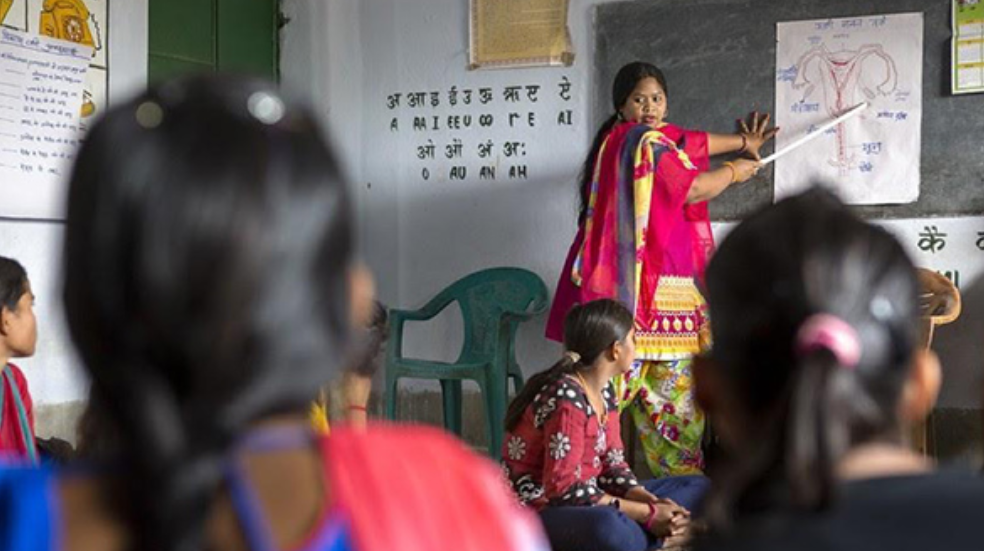
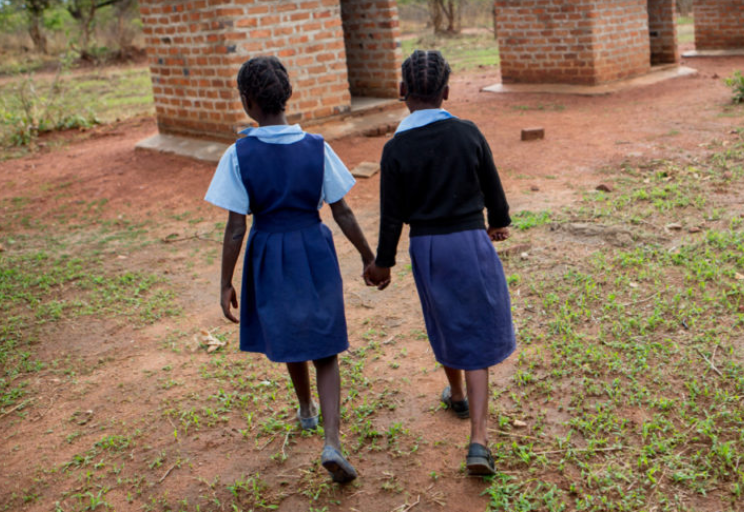
Indeed! It’s very true that it is the high time to create awareness for sexual & reproductive health in adolescents as it has resulted in unsafe sexual practices, violence, and substance abuse in recent years. But first of all, a question arises that what actually “adolescents” mean? As per the definition provided by the World Health Organization (WHO), “adolescent” is any person who falls under the age of range of 10 to 19 years. Adolescence is referred as a developmental bridge between childhood and adulthood and is a period of rapid growth along with physical and emotional changes. Age is a convenient way to define adolescence; however, it is the only one characteristic that delineates this period of development. It is a stage of life in which an individual attains sexual maturity, and inspite of this; it has been observed that adolescents lack basic information about their body, sexuality, and contraception. This age group consists of 20% of the total population of the world and about 85% of the adolescents live in developing countries. According to UNICEF , only 34.5 male adolescents and 18.6 female adolescents have knowledge about the risks associated with unprotected sex.
Source- Social Media

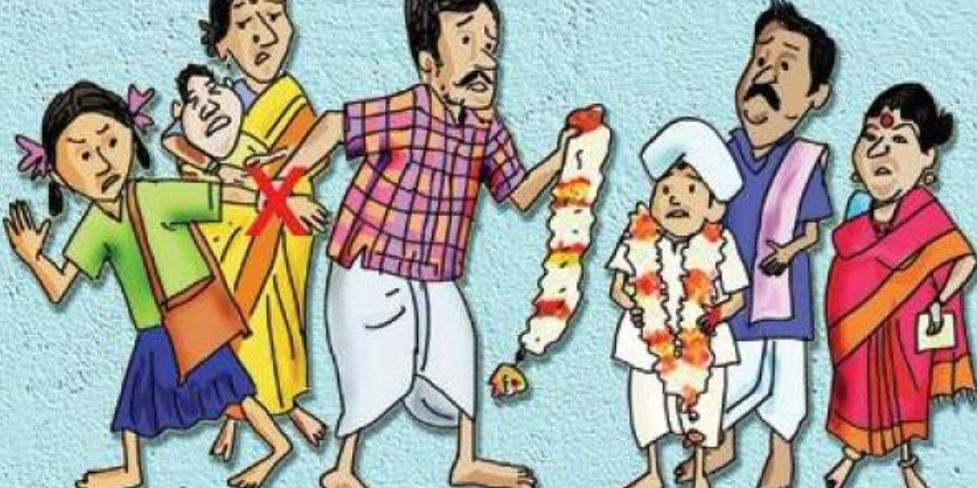
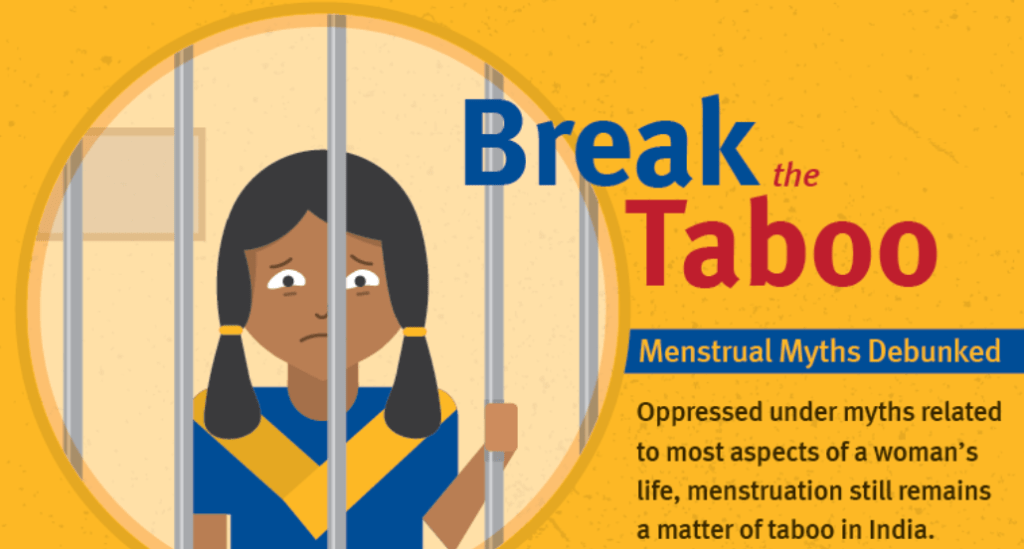
Talking about India, then it has the largest national population of adolescents, i.e. 243 million followed by China. The main problem in our country is that sex is considered as a taboo and is looked upon by the society in terms of education because public discussion about sexual practices is considered wrong which ultimately acts as a barrier to provide adequate and affective sexual education to Indian adolescents. As per our Indian culture, sex is confined only with the institution of marriage for the purpose of procreation and not for joy of intimacy, pleasure, and fun. However, a very popular Hindu text, known as “Kama Sutra”, is depicted as a classic work on human sexual behavior which clearly highlighted scriptures and pornographic depictions, as a medium for sexual education, and was never regarded as a taboo in ancient India and was always a part of Indian culture. Also other most ancient texts and the Vedas discloses the moral perspectives on sexuality, marriage, and fertility prayers but in comparison with recent scenario, “talking about sex” or “imparting sex education” is looked upon as “destroying our Indian cultures and values”. Due to this typical mindset of our society sex education is banned in Maharashtra, Gujarat, Rajasthan, Madhya Pradesh, Chhattisgarh, and Karnataka.

Key Issues related to Sexual & Reproductive Health (SRH) are as follows:


Puberty- Adolescents is the pertinent period to build healthy habits and lifestyle related to SRH, as it is the transformation from childhood to adulthood and is related with physical and psychological changes. Also adolescents are exposed to human rights abuses in the areas of sexuality, marriage, and childbearing. Thus, health services should be made adolescent friendly.
Pregnancy and Unsafe abortion- Girls and women do not have access to quality services and information due to which they are at high risk of unintended pregnancy and because of it almost half of all pregnancies are unintended and approximately half of unwanted pregnancies end in abortion. Abortion should be done safely otherwise it can put women’s and girl’s lives and well-being at risk. Unsafe abortion can be prevented through comprehensive sexuality education, access to affordable contraception, and safe abortion care.
Access to modern contraception- Contraceptives prevent unintended pregnancies, therefore, women and young girls must have information and access to services that can help them to avoid unwanted pregnancies. Contraceptives also reduce the number of abortions and lower the incidence of death and disability related to complications of pregnancy and childbirth.
Sexually Transmitted Infections (STIs) and HIV/AIDS- HIV/AIDS and STIs have a grave impact on individual’s and couple’s sexual and reproductive health and well-being, therefore, it is imperative for people to have access to sexual and reproductive information, education, and communication to prevent HIV/AIDS and STIs.
Gender-based violence- Violence, which is already a violation of person’s rights, puts females and other vulnerable populations into unintended pregnancy, HIV infection and other health issues.
Alcohol, tobacco, and drugs abuse- Alcohol, tobacco, and other intoxicating products cause a high prevalence of risky sexual behavior due to impair decision-making.
Poor mental/emotional health- Poor mental and emotional health issues are related with the rising rates of unsafe sex, sexually transmitted diseases and early sexual experiences.
Influence of Information and Communication Technologies (ICTs) on sexual behavior- Influence of Information and Communication Technologies (ICTs) namely, information relating to sexual activity, cyber-bullying, and sexting has resulted in a new high-risk behavior among youth.
Source- Social Media

Parents, who are considered as the first educator of their children, feel uncomfortable to talk about sex with their children, especially adolescents. They feel like their child is too young to understand the concept of sex and its consequences and will slowly and gradually know about it at his/her maturity age but this is not at all true. In this era of technology, where everyone has the access to internet, we cannot say that a 15 year sweet kid hasn’t seen online pornography. Also teachers at school end up talking about sex by teaching reproductive organs and finishing the topic here and there and feel shy to talk openly about sex with their students.

Even in 2005, Central Board of Secondary Education (CBSE) issued a circular named “Adolescence Reproductive and Sexual Health Education (ARSH) project ” which unfortunately still remains on paper and is yet to be implemented in reality. This project aims at facilitating adolescents to understand the outlook of physical, biological, and emotional changes in order to administer their emotions effectively to restrict themselves from sex exploitation and gender based violences to understand the risk of HIV/AIDS etc. But none of this happened and because of this illiteracy people are unaware of the consequences of unprotected sex and the ways to protect themselves from HIV/AIDS.

Therefore, every year on February 12, “Sexual and Reproductive Health Awareness Day” is organized in order to raise awareness about sexual and reproductive health. The day is celebrated with the main objective that people must be informed and empowered to protect themselves from sexually transmitted infectives, HIV/AIDS, unintended pregnancies and unsafe abortions, and especially women to have access to services when they decide to have children and to help them with a healthy pregnancy, safe delivery and a healthy baby.

Lastly, the Government of India through the Ministry of Health & Family Welfare has launched several programmes under the guardianship of “Reproductive, Maternal, Newborn, Child and Adolescent Health ” (RMNCH+A) in order to provide health services for sexual and reproductive health. RMNCH+A strategy was launched to prioritize high-impact interventions for various lifecycle stages to increase effectiveness of investments by prioritizing geographical areas based on evidence, integrate monitoring and accountability through good governance, use of available data sets, community involvement, and steps to address grievances, etc.

Programmes under RMNCH+A are:


Jansankhya Sthirata Kosh (JSK), an autonomous society of the Ministry, has a toll free helpline 1800-11-6555 for replying queries on reproductive health, family planning and infant health. It is also known as National Population Stabilisation Kosh.
Rashtriya Kishor Swasthya Karyakram (RKSK) was launched in collaboration with United Nations Population Fund (UNFPA) to provide adolescents with preventive, promotive, curative, and counseling services with routine check-ups at primary, secondary and tertiary level.
As a part of this programme, SAATHIYA resource kit and SAATHIYA SALAH app has been introduced which aims to train around 1.64 million adolescents to share accurate information about sexual health with their peers, besides, adolescents could also learn and clear their doubts with the help of the app. SAATHIYA resource kit comprises of Activity Book, Bhranti-Kranti Game, Question-Answer Book, and Peer Educator Diary.
Source- Social Media

Thus, it is the need of the hour to spread awareness among adolescents about sexual and reproductive health. We all need to take initiatives on our part may it be playing the role of a parent, a teacher, a friend or a brother/sister to explain the concept of sex and its consequences to adolescents instead of making sex as a taboo. Proper sex education should be given to adolescents so that they might not face any of the harsh consequences of it.


Download Your E-Article/E-Paper here!!


The Audiobook is only available for a week. Make sure you download it from the online link. (If you forget to download Your Audiobook don’t worry just reach out to us via [whatsapp] we will help you with the same.)



A visual of women’s safety and security in India

BY- NADIA HASAN

Council Member (West Bengal Human Rights Council, A wing of WICCI)

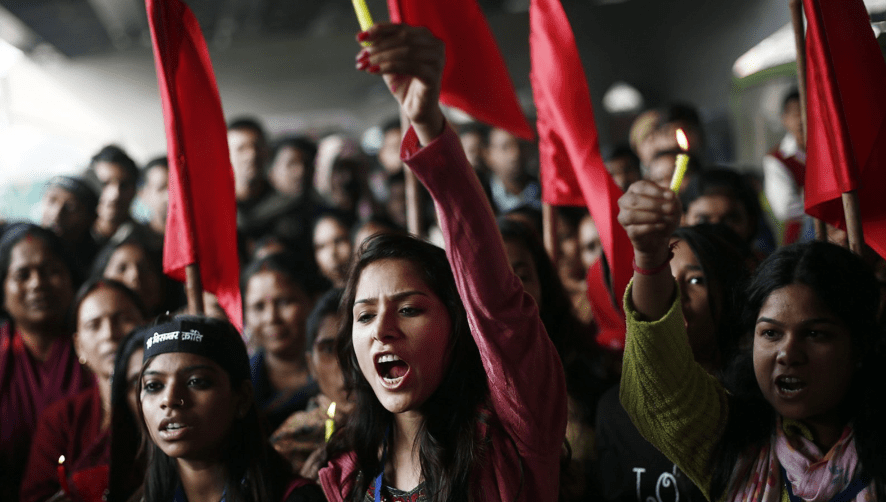
India is a place where women are worshipped in form of goddesses like the Saraswati, Laxmi, and Durga yet it is one of the most unsafe places for women on the planet. According to the Women Peace and Security Index 2019, India stood at 133rd place out of 167 countries. This data exposes the helplessness of women residing in this country and how much they are prone to violence and sexual harassment against them. It was not long ago when the country witnessed the brutal Nirbhaya gang-rape case which somehow awakens the conscience of the public in form of protests and dissent demanding the government to amend the laws and make them more favorable towards women safety. Then the government made changes to the criminal law after 2012 and drew the Criminal Law (Amendment) Act 2013 which provided rigorous life imprisonment and even death sentences to the rape convicts, in addition to severe punishment to the convicts of acid attack, stalking, and voyeurism.

Source- Social Media

But do these changes made after the 2012 Nirbhaya case yielded the desired results? Answer to this question can be concluded from the National Crimes Records Bureau (NCRB) report of 2019 where 88 rape cases were recorded regularly in India which highlights that the rape vulnerability of a girl or woman has increased up to 44% in the last 10 years. Not only has this, but the cases of domestic violence gradually increased during the lockdown period. Another report from the National Crime Record Bureau says that in India, there is one dowry death in the country every 78 h, one act of sexual harassment every 59 min, one rape every 34 min, one act of torture every 12 min and almost one in every three married women experienced domestic violence. These are some of the ugliest weapons used by men to prove their male superiority against a woman. The problem of such feeling lies within the roots of our society; our society has nourished the mindset of the male community in such a way that they believe themselves superior to a woman. This feeling of superiority has made a patriarchal misogynistic environment where assurance of women’s safety is a major concern. Another reason of raising the number of crime against women is depicting the women as an object by the entertainment industries. Although there are lots of movies where women empowerment is encouraged but they are fewer in number. The big-budget movie starring the most successful actors which attracts a bigger audience uses the female lead just for the sake of glamour and presents various tactics where the male lead tries to woo the female one regardless of she is constantly refusing, which is disgusting and unacceptable. They should understand that their movies leave a deep impact on the minds of the people and such depiction increases the chance of sexual violence happening against women.

The leisurely responses from the legislature and police authorities towards these abovementioned offenses are increasing the vulnerability of women in society. It takes courage for a woman to approach the police and if she does, she has had to face so many disgusting questions from them. They make the investigation procedure so lengthy that the victim and her family usually prefer not to report the crime. One of the instances happened in Punjab where a child rape victim was left waiting traumatized and injured all night at the police station because someone dragged their feet so that the case could not be registered. Such attitude of policemen came from the patriarchal society they were brought up in. These needs to be changed, instead, the police must be trained to show empathy towards the victim and encourage her to report the offenses rather than judging her character. Neither the community nor the police authorities can work in isolation but both of them need each other. Since the police can directly engage with the local community, they can play a major role in creating awareness to combat the stigma present in society. Our society keeps a very narrow perspective towards the crimes happening against a woman. Their first response towards any crime remains “it must be that woman’s fault”. Like we saw the attitude of one of the accused in Delhi gang-rape where he felt that it was that woman’s fault to be out so late at that night and harming her was pretty natural. He felt no regret for the crime he committed and according to him, he had done no wrong.

Source- Social Media

Such an attitude shows a brutalized upbringing where violence against women is often condoned at home and locally. The police may help to change these attitudes by working collectively with Non-governmental organizations. Victims have often expressed discomfort approaching the police, in my opinion, this could be resolved if women’s representation will increase in the respective department. Special Police units can also be set up to create awareness of women’s consent and autonomy, which are quite unknown and unacceptable factors for most Indian men. Similarly, Judiciary can also play its part in reducing the number of sexual offenses with speedy trials and timely decisions. Due to the fewer judges, the Indian judiciary is unable to serve justice to the victims on time. Due to the various loopholes in the law, the accused often go unpunished or punished with utterly lesser punishment. The death penalty is prescribed for crimes committed brutally and even if granted, its execution takes ages.

After going through the causes of violence, questions can be raised what has been done and what needs to be done? If we look at the community response, several initiatives have been taken like the Nari Adalat and Sahara Sangh initiative which was organized by the Department of Education’s Mahila Samakya Program in two districts of Uttar Pradesh and Gujarat. The ICRW aired a television program on four channels named “Bol” which created awareness among women. The legislature has also made various laws to protect women from violence happening against them. In January 1992, the National Commission for women was set up to review the constitutional and legal safeguards for women and to recommend remedial legislative measures, if any. Further, the Dowry Prohibition Act (DPA), 1961 was formed which applies to all the people of India from any religion making the dowry demand punishable. But this law failed to serve its purpose. IPC deals with various laws relating to violence against women. For instance, section 375 laid down the provision for rape and section 376 (along with its various amendments) deal with its punishment. Unfortunately, this provision remains silent on marital rape if the wife is more than 15 years of age which can be considered as a loophole. Section 498 A deals with the cruelty by the husband and his relatives with imprisonment of 3 years and a fine, which is a widely used provision against domestic violence. Another act is also formulated particularly for domestic violence entitled Protection of Women from Domestic Violence Act, 2005 which provided for more effective protection of the rights of women provided under the
Constitution. IPC also lays down provisions for causing miscarriage in sections 312 to 316. But whenever a crime happens against a woman, it confirms that all the measures have failed to stall the violence and the problem is with society.

Source- Social Media

Our late Prime Minister, Pt. Jawaharlal Nehru, once remarked, “Legislation cannot by itself normally solve the deep-rooted social problem”. And violence against women is a deep-rooted social problem that can only be solved if society will be educated, only then the laws could be properly implemented. The mindset of the judiciary and police must be changed. Amendments must be made to the existing laws, new laws should be made and they must be enforced efficiently. Only women cannot solve the problem, but women should understand men, and men should understand women and grow in themselves a sense of responsibility to respect the privacy and dignity of each other. Only then the menace could be eradicated.


Download Your E-Article/E-Paper here!!


The Audiobook is only available for a week. Make sure you download it from the online link. (If you forget to download Your Audiobook don’t worry just reach out to us via [whatsapp] we will help you with the same.)

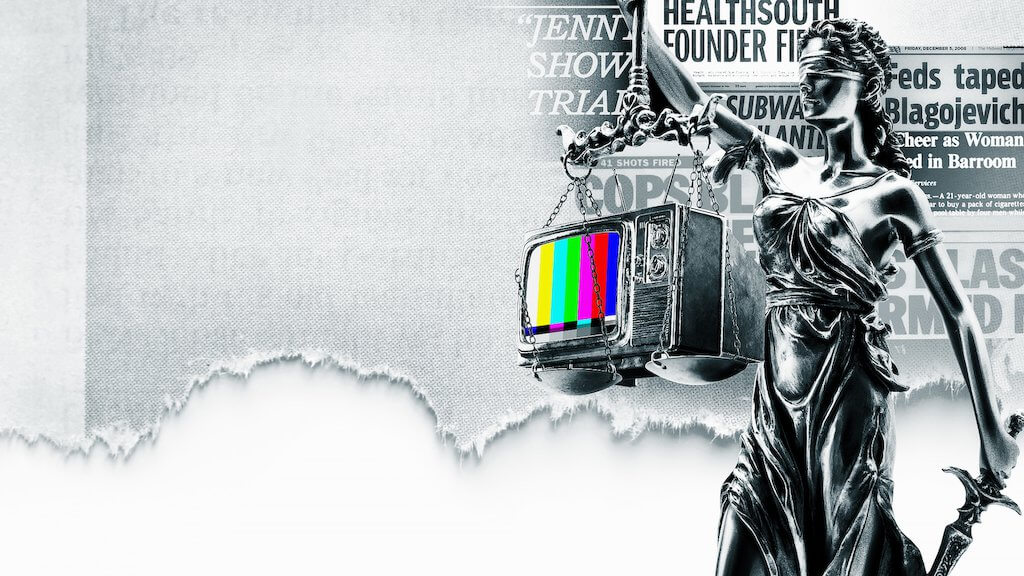
THE GAP BETWEEN FREEDOM OF PRESS AND MEDIA TRIAL IN INDIA

BY- BABITA RAWAT

Council Member (West Bengal Human Rights Council, A wing of WICCI)

Freedom of speech also includes freedom of the press, as the Supreme Court ruled in the Express Newspapers case in 1958. Although the Indian Constitution does not explicitly recognize freedom of the press like the U.S. Constitution, the Supreme Court found that the priority of written media is unacceptable, and even visual media cannot be censored beyond reasonable limits. Article 19, paragraph 2 of the Constitution is therefore incorporated into the “Film Law” or “Cable TV Network Law”.

Source- Social Media


Whether the press or the media goes beyond the scope of its law is an eternal question. The Supreme Court of Andhra Pradesh recently prohibited all media, including social media, from posting any content related to the FIR submitted by the Anti-Corruption Bureau (ACB) Guntur. Historically, the fourth pillar of Indian democracy has become a tool to promote the interests of victims, such as the Jessica Lal case, the 2006 Priyadarshini Mattoo case, and the 2005 Bijal Joshi rape case.

However, when the fourth pillar “media” hinders judicial administration, its power is enormous.

The court needs to intervene. After the famous Indian actor Sushant Singh Rajput committed suicide, the report of this incident has become a tragedy for news networks. This is of exponential importance for judicial administration. After the report, the Mumbai High Court filed several lawsuits against the media. The proclamation of the defendant’s guilt before the sentence is pronounced is called a trial in the media; it is a general report of the defendant’s guilt and imposes a certain view, regardless of the defendant’s judgment. In this case, the reputation of the late actor’s partner actress Rhea Chakraborty was severely damaged by the media in a “media trial. In a case before the Supreme Court, he prevented Sudarshan TV from broadcasting his bindas-bol show “UPSC Jihad” because he tried to discredit the community.

Source- Social Media

In R. Rajagopal v State of Tamil Nadu, the courtroom docket went directly to rule those public officials, public acts, and public facts could not be blanketed from the booklet with the aid of using injunctions besides on factors just like the identification of a rape victim. Having increased at the proper and certainly the obligation of the media to tell the citizens, the Supreme Court has additionally again and again suggested in opposition to media trials that would bog down the management of justice.

In R. K Anand v Registrar, Delhi High Court, it stated with a few severities that unfastened speech did now no longer encompass the proper to simply submit any type of record regarding a remember earlier than the courtroom docket or to perform sting operations on a few remember regarding a pending trial.

In Siddhartha Vashisht v State NCT of Delhi, the courtroom docket made a vital difference among trials using media and informative media. The case of Sahara vs SEBI is an evaluation of the case regulation at the point, and it reinforces the road among valid remark and usurpation that influences the presumption of innocence.

Is the distinction among a valid remark and an unwarranted trial with the aid of using media so vexed a query that it should, again and again, discover its manner to courts of regulation?

Source- Social Media

How then does the threat of a media trial play out, and what way of limit should save you that? The critical distinction is captured with the aid of using the phrases used withinside the Sidharth Vashisht judgment, “informative expression” and “trial with the aid of using media”. Where humans are knowledgeable of information and views, it is miles a valid expression that cannot be restrained, but unpalatable it can be to a few. When the media both frontally and suggestively broadcasts the deserves of controversy at massive in a courtroom docket (regularly known as the sub judice rule), it enters the province of courts. In crook trials, if the media publicizes or builds public opinion on guilt or innocence, it jeopardizes the presumption of innocence, a proper as vital as unfastened speech. Hence, it is miles a “trial” with the aid of using the media, that it is miles neither equipped nor authorized to hold.

In Mahmood Moosa Tarani higher referred to as the Black Friday case, a movie that became publicized as an “authentic account’ of the Bombay blasts became injuncted via way of means of the Bombay excessive courtroom docket from being screened even as the trial became on. The visible medium has been visible as extra potent. No matter their training, judges could not be predicted to stay immune from public opinion, roused to indignation via means of purported publicity of the ones “truly” guilty”.
In Navin Jindal (2014) a gag order became refused however in Navin Jindal (2015), and Swantantra Kumar a constrained restraint order became exceeded.

These are examples of the Delhi excessive courtroom docket issuing constrained restraint orders to save you pending proceedings (which include research) from media assertions on character. But amusing any such became a normal ban on reporting news, and the orders have been issued handiest after reviewing what became posted and constrained to unique factors after listening to the publisher. Most these days the Delhi excessive courtroom docket on September 22, 2020, withinside the case of Harper Collins Publishers PVT Ltd v Sanchita Gupta @Shilpi and others became handling an ex parte injunction exceeded in opposition to an ebook on Asaram Bapu and his co-accused. While spotting the significance of the rights of people to reputation, the courtroom docket held that if there’s honest dialogue, that is primarily based totally on records and which is not always ex facie malicious, there may be no bar at the dialogue or booklet. The actual media coverage of the perpetrator’s intentions and the process does not always match. A media ‘trial’ occurs while the media begins off evolved undertaking parallel proceedings, and putting forward its view as the ideal view, over the ones statutorily entrusted with the venture of research or adjudication. As part of an ongoing investigation, please report leaked recordings.

As stated in the case of Romila Thapar v Union of India, if it is harmed, then the defendant is also undesirable. Simply put, a media trial ensues while the media seeks to suitable the function of the courts in charging, convicting, or acquitting the accused. As the Supreme Court stated in Sahara v Sebi, that which influences the “presumption of innocence” must be injuncted, if there is an ongoing adjudication. But with the help of the Constitutional Law of the Court, information is also kept confidential. The Criminal Procedure Law of 1973 provides for the investigation and prosecution of serious crimes.

Source- Social Media

Broadly speaking, each crook intending may have the subsequent stages:

  1. Submit return statement or final report.
  2. Evaluation Conviction or excuse.

The Andhra Pradesh excessive courtroom docket has interfered with the degree of registration of the FIR via way of means of staying the research at its nascent degree and has long gone past the relaxation claimed earlier than it via way of means of issuing a complete ban on a booklet in any way withinside the public area This violates the information function of the media. In doing so, the excessive courtroom docket acted opposite to the regulation settled via way of means of the Supreme Court. After registration, FIR will become public and publicly accessible. As we have got visible, the Supreme Court has held that there may be no objection to a booklet this is primarily based totally upon public information or courtroom docket information and as soon as records are withinside the public area there is no proper privacy.


Download Your E-Article/E-Paper here!!


The Audiobook is only available for a week. Make sure you download it from the online link. (If you forget to download Your Audiobook don’t worry just reach out to us via [whatsapp] we will help you with the same.)


The Most Grievous Assault of Acid Attack in India

BY- APARAJITA R. JHA

Council Member (West Bengal Human Rights Council, A wing of WICCI)

Only in India it is seen that on one hand women are worshiped in temples , but on the other hand they are abused and violated in their house holds. Since time immemorial women are taught to treat their husband and sons as superior which with lack of education lead to oppression of women . Violence on women has been existing since a really long time , the violence takes place in many form like abduction , beating but one of the most heinous violence that takes place on women is acid attack. In the year 2018 total 19 people were convicted in acid attack cases whereas 240 complaints of acid attacks were filed and only 150 of these cases were investigated . The reasons for such low conviction is mostly because of less staffed police system and tampering of evidence at local level which puts a huge amount of burden on the judicial system.

Source- Social Media

LEGISLATIVE AND JUDICIAL STAND ON ACID ATTACK

It was only after the Criminal Law Amendment Act , 2013 , that acid attack was introduced in IPC before that it was dealt under either Section 302 when the victim who was attacked died due to it or under Section 307 for attempt to murder. There was absence of a specific provision for acid attack . Judiciary was continuously challenged with different types of case and a lot of discretion was given to the judges for deciding the case . In the case of Morepally Venkatasree Nargesh vs State of Andhra Pradesh the husband was convicted under section 302 and 307 for pouring acid inside his wife’ vagina out of spite which lead to her death . Similarly the judges in the case of Jahalli Police Station vs Joseph Rodrigues , convicted the accused under Section 307. The victim was attacked because she refused to take the new offer given by the boss and joined a new job , she was blinded because of the attack . The court also ordered the accused to pay a compensation of a total amount of Rs. 5 lakh to the victim’s parents but only if that was enough to get back her eyes. The cases kept on increasing and it became everyday news where either husband resorted to acid attack for matters like refusal of divorce by wife or attacks took place because of personal enmity In Ramesh Dey vs State of West Bengal , the accused attacked the victim twice as he didn’t succeed the first time. The attack was motivated by revenge . The victim faced several burnt on her body and eventually she died . The culprit was punished under various sections of IPC and was given rigorous imprisonment for 1 year and fine.
It was in 2013 that acid attack was declared as a specific offence under section 326A and 326B .While hearing the PIL in the acid attack in the leading case of Laxmi , in 2006 Supreme Court gave directions on the regularizing the sale of acid . The court directed that acid will only be sold when the person buying it provides with valid identity card having the photo and address proof. Section 326A of IPC lays down punishment relating to acid attack which can be minimum of 10 ears and can extend to life time and Section 326B for throwing acid which involves a punishment of minimum of 5 years of imprisonment and can extend to 7 years with fine. Another PIL was filed in the case of Parivartan Kendra vs Unio of India for the requirement of free medical care for acid attack victims and proper compensation under the Survivor Compensation Scheme , the Supreme Court after seeing the facts and figures ordered the States and Union Territories to discuss the matter seriously with the private hospitals and ensure that full medical support with proper medication , food should be given to the victims of acid attack , the court also rejected the idea of a different compensation board and clarified that the state government or the concerned UT would pay the necessary compensation. In 2013 a girl was attacked because she choose her career over a marriage proposal and the Supreme Court after taking into consideration the facts and situation of the case sentenced the accused to death.
It is seen that after laxmi’s case the courts are more inclined towards rehabilitation of the victims of acid attack and strict punishments are given to the accused for creating a detrimental effect.

Source- Social Media

THE CONSEQUENCES FACED BY THE VICTIMS

Acid attack leaves a perpetual mark on the victim . Physically two level of a person’s skin gets burnt from the acid i.e. from the skin to the muscle below it and with higher degree burns it can even melt down the bones. Mostly it has been seen that the victims lose their eyes and nose and they are later made by surgery for appearance, Mostly the victims lose their face and they are treated in an unwanted way by the society so the victims are not only going through the trauma of the incident and anxiety about their incident but also the cruel behaviour of the society affects them psychologically.The family of the victim also goes through a helpless situation where they cannot make the situation better and just see their loved ones going through a difficult situation. It has been often seen that the victims of acid attacks are called by weird terms as Aliens , Bhooth(Ghost) in public and that with everything else affects their self respect , dignity , empowerment and most importantly mental health. The unmarried victims mostly never gets married because of the scars on their body and face as even in 21 st century the society is not ready to accept them as a part of their family . Jobs are also refused to them because of their appearance that makes their sustenance even more difficult.

Source- Social Media

CONCLUSION & SUGGESTION

With the amendment of IPC , was a turning point for Criminal Justice System as now the focus is on the rehabilitation of the victim rather than focusing on the accused. Supreme Court passed a lot of directions related to the acid selling , producing etc. In the Laxmi vs Union of India case.
Article 21 of the constitution promises a life to dignity to all the citizen but the victims of acid attack faces a lot of hate from the society and they often face tremendous trouble to find a job for living , violating the right guaranteed by Constitution. Keeping the same in mind , there were bills passed by the legislation to rehabilitate the victims , like the NALSA scheme of 2016 and the Bill of 2017.
Several NGO’s are also independently working on the rehabilitation of survivors of acid attack. Laxmi,an attack survivor is the director of the NGO Chhanv Foundation which helps in recovery of survivors of acid attack by bridging the gap between them and the society.It also helps the victim by providing them with medical an legal aid and finding them alternate source of income. They ensure that an attack do not stop the beautiful souls to fulfil their dreams. Make Love not Scars , is another NGO working on the rehabilitation of the acid attack victims by ensuring that dignity and independence is provided to the survivors at every walk of life. This NGO acts as a safe heaven for the survivors and provide them medical, legal , educational and psychological rehabilitation. The 5 stage rehabilitation process followed by the NGO are medical , legal, educational , financial and psychological. The nation needs more NGO’s to take up rehabilitation of the victims.

Criminal law has now become more concerned on the rehabilitation and compensation scheme for the victim and it is very important for them as they have to face the lasting consequences on the act . We should focus on better rehabilitating facilities that would ensure proper growth of the victim both economically and emotionally. With proper job prospectus only the economical aspect will be covered, the government should also sensitize the public on the effects of the crime and promote acceptance .With changing time , it is also necessary that the legislation understands the dual consequence of an act and should make the offence gender neutral as it can be faced by any one and is not gender specific. The steps taken by Indian legislative system brings a ray of hope into the lives of the victim as it intends to give them a life to live with dignity .


Download Your E-Article/E-Paper here!!


The Audiobook is only available for a week. Make sure you download it from the online link. (If you forget to download Your Audiobook don’t worry just reach out to us via [whatsapp] we will help you with the same.)

NATURE AND DIMENSIONS OF TRAFFICKING OF WOMEN IN INDIA

BY- MANSI VATS

Council Member (West Bengal Human Rights Council, A wing of WICCI)

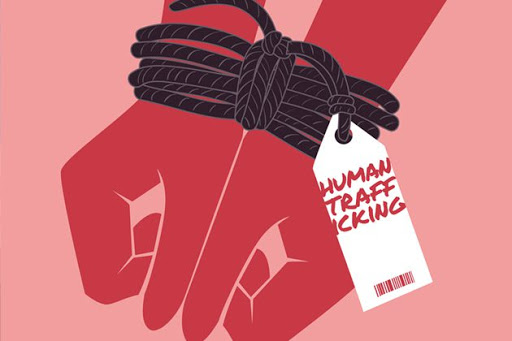
Human Trafficking is a human tragedy. It’s an outrage against any decent people- Mark Shields

Source- Social Media

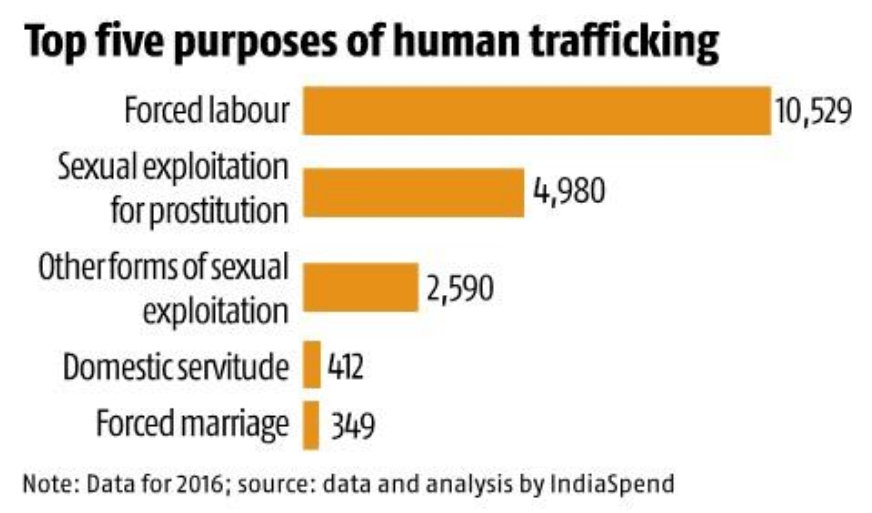
In the history of mankind it has always been found out that women are the major sufferers of every kind of exploitations whether it is Harassment at workplace, or facing violence after marriage, facing restrictions at home. Moreover, when we talk about refugees, women are the most affected gender. According to International Organization for Migration, It was found out that more than 70% of the detected trafficking victims are women. Today we face major Human Rights violation against women. According to National Crime Records Bureau (2013) there is an increase of 10.9% in human trafficking reported incidence. 3,940 cases in 2013 as compared to 3,554 cases in 2012. Due to the high demand in the market, women and girls are trafficked and it’s a shame to say that they are sold on price fixed on basis of their age and beauty. Women are sold for several purposes like forced labor, bonded labor, surrogacy, organ transplantation etc. According to NCRB crime records in our country women are trafficked mainly for sexual exploitation reason being lack of proper coordination among the government and law making bodies, that’s why the criminals are roaming free in the country without any fear of punishment.

MEANING

The general meaning of trafficking means that some trade activities which are illegal and are prohibited for trade, for example- drug trafficking, arms trafficking and human trafficking.
Human Trafficking per se is used when human beings are trafficked for many purposes like organ transplantation, prostitution, job opportunities, false promises in marriage etc. Therefore, circumstances are made as such women voluntarily give consent without knowing the consequences for the same. They are treated as commodity and sold without their consent to different places. This eventually leads to dehumanization of the women society as their fate then goes into the hands of traffickers.

ELEMENTS OF HUMAN TRAFFICKING

Certain elements are involved in the commission of offence like-

a. The act must include recruitment, transportation, transfer, or harboring;
b. The means which is adopted to accomplice the task which can be threat or use of force, coercion, abduction, deception, fraud, abuse of power or vulnerability or giving payments or benefits to a person who is in control or in charge of the victims;
c. The form of exploitation should include any form of exploitation whether it is forced labor, domestic servitude, prostitution, slavery or organ transplantation.

Therefore, when all the above specified elements are present it can be said as human trafficking offence has been committed and human rights have been infringed of victims.

DIMENSIONS

NGO’s estimates, Human Trafficking in India may affect between 20 and 65 million people.

In the year 2018, India has been coined as “the world’s most dangerous country for women” ahead of countries like Afghanistan, Syria and Saudi Arabia. The survey was widely criticized by India with questions arising as how countries like Afghanistan and Saudi Arabia, those who have granted lesser rights to women can have lower incidents than India and how have they managed to perform better. The National Commission for Women rejected it and discussed that rape, trafficking and other amount of violence against women have been increased in India as more cases are reported due to public outrage.

In the year 2004, Indian Government’s Ministry of Women and Child Development had estimated the total number of persons who were actually trafficked for commercial sexual exploitation which is to be around 2.8 billion and around 3 million were the prostitutes in the country. Trafficking is also said to be “acquiring grave dimensions worldwide if we talk in the context of globalization”.

INDIA’S STATISTICS

In the year 2010 “The Trafficking in Persons Report (TIP) states that India is a source, transit and destination country for men, women and children subjected to trafficking in persons, specially forced labour and commercial sexual exploitation.

The forced labour of an estimated 20 to 65 million citizens constitutes India’s largest trafficking problem. Men, women and children in debt bondage are forced to work in industries like brick kilns, rice mills, agriculture, and embroidery factories.

According to Trafficking in Persons Report 2015, many Indian women trafficked out end up either in the Middle East for sexual exploitation or in Europe, the USA”. According to International Organization for Migration, it is estimated that there are 32.5 million international migrants in Asia out of which our country India has the maximum number of 5.4 million in the year 2010.
In the year 2016 “According to the report (NCRB) there is a growth of 25.8 percent cases of human trafficking. In the year 2014 total 5,466 cases were reported but then in the year 2015 it is increased to 6,877 cases. The following states altogether form over 56 percent of India’s trafficking cases are; Assam-21.7 percent, West Bengal- 18.2 percent, Tamil Nadu-8.4 percent, Telangana-8.2 percent”.

FACTORS RESPONSIBLE

Personal circumstances- include peer pressure, drug abuse, fragile relationships, marital-discord, forced labor etc.
Structural factors –include Globalization, privatization, withdrawal of subsidies, economic crises, promotion of sex tourism etc. Studies by CSWB and others have revealed that most trafficked women are unmarried, divorced, separated or widowed . The culture of materialism, commodification and commercialization of sex deform family needs and individual fantasies.

In People’s Union for the Democratic Rights v. Union of India,

Supreme Court defined the word “Force” which not only includes physical or legal force but also includes force arising out of the economic or compulsion circumstances. It makes a person hell-bent as it leaves no choice of alternatives to fulfill his wants. The situation provides service even though the salary or the wages received is less than the minimum wage.

Perpetuating factors include corruption, minimal chances of prosecution; lack of government’s will in forming the policies and making adequate measures and laws for the victims. It has been expressed that people who take a strong stand against trafficking are very less. It becomes difficult to take action because everyone is unified (Trafficking camp). The families who are profited by the same are also hesitant to talk.

Other factors contributing are Illiteracy, unemployment, poverty, domestic violence, gender inequality, natural disaster, migration conflicts and economic uncertainty.

IMPACT OF HUMAN TRAFFICKING

• Social – it’s very difficult for a woman survivor to open up in a country where they are treated as an ‘object’ of amusement and pleasure. The survivors are not accepted by the society which eventually leads them into no means of income. Hence, they are compelled to voluntarily accept to be trafficked.

• Economic- Human trafficking is an illegal and hideous act because of which traffickers gain large amount of profit escaping any tax liability.

• Health Impacts- it’s a harsh reality but true that trafficked victims undergo psychological trauma, stress, anxiety and depression. In some cases they are prone to sexually transmitted disease (STD’s) such as HIV/AIDS. Therefore it becomes difficult to rehabilitate them as the diseases are not completely cured.

• Custom impact- Being a patriarchal society it is very difficult for a trafficked survivor to live. Even in the 21st century the society is bound by their own rules and regulations and various customs in the name of values. Society expects a woman to be a virgin and should devote her body and soul purely with honesty. This type of mentality is not expected in case of men and this mind set has to be changed. As criminals are not born but made similarly before giving a tag to a survivor and branding them as violators or offenders of our stringent unlawful customary practices , it’s a high time that it should to be taken into consideration and should be eradicated completely.

Source- Social Media

CONCLUSION

Human rights and women rights have become an utmost priority and hold utmost importance. They are inalienable and inseparable rights and can be called as fundamental rights because they are essential for survival. Empowerment of woman is need of the hour as an equal status must be given to her without any means of exploitation. A proper enforcement is required in a way people should respect human rights. The law makers should emphasis more on women rights and respect and promote its culture in public so that this problem can be tackled in a greater extent.

NGOs and social workers also have to play an integral role in curbing this issue by providing legal-aid and legal education at grass root level. The need of the hour is to identify the lacunae in the legislation and other causes which are responsible in the failure of this menace. Stringent steps have to be taken to find out the loopholes as number of women trafficked is growing at alarming rate. This has become a global concern as every country has been affected as origin, transit and destination place for all the trafficking activities.

Track record should be kept every year and strict rules should be formulated at Airports, Bus stops so that women are not transported to other countries. Also, hideous and rural places must be kept on check on regular basis to avoid any kind of exploitation and forced labor. Awareness should be made in a more profound manner, every village should be educated. Therefore, Government should start a volunteering program where every group of volunteers reaches backward areas and educate people through different modes of teaching. This will not only help in awaking the masses but they will be aware about the consequences as well.

Where dowry is a commodity, same way society treat woman as a commodity just to relieve a burden from their head. Women should not be treated as a liability and to make sure they accept and respect them as an asset. Society should see women through an unfiltered glass.

Download Your E-Article/E-Paper here!!


The Audiobook is only available for a week. Make sure you download it from the online link. (If you forget to download Your Audiobook don’t worry just reach out to us via [whatsapp] we will help you with the same.)


How Artificial Intelligence is Transforming the Healthcare World!

BY- JASMINE MARWAH

Council Member (West Bengal Human Rights Council, A wing of WICCI)

What is Artificial Intelligence?

Artificial Intelligence (AI) is commonly known for its ability to have machines perform tasks that are associated with the human mind – like problem solving.
But very less people know that it is also used in healthcare.

• What is Artificial Intelligence in Healthcare?

Well gone are those days when medical education was just associated with textbooks, AI has the potential to provide data-driven clinical decision support (CDS) to physicians and hospital staff – paving the way for an increased revenue potential. Also we need something that could challenge the doctors. So that physicians could understand that we don’t need lab reports for decision making instead we need brain.
Deep learning, a subset of AI designed to identify patterns, using algorithms and help us to leverage data and data given clinical decisions.

Source- Social Media

AI in Health care

1. Biomedical research
According to the California Biomedical Research Association, it takes an average of 12 years for a drug to travel from the research lab to the patient. Only five in 5,000 of the drugs begin preclinical testing and ever make it to human testing and just one of these five is ever approved for human usage. Furthermore, Path from research lab to patient is very costly too.
This was a problem until,
Drug research and discovery is one of the more recent applications for AI in healthcare. Because of AI now there is convenient assistance in automated experiments ,automated data collection, gene function annotation( A process of identifying functional elements along a sequence of genome) , literature mining(the process of applying data mining techniques to databases of published literature.)
Plus, there is a significant decrease in the cost of the drugs.

2. Translational research-
Translational Research delivers original investigations in the broad fields of laboratory, clinical, and public health research. This term is mostly used in biotechnology and life sciences. It provides assistance in biomarker discovery(biomarker is a molecule that allows the detection and isolation of a particular cell type (for example, the protein Oct-4 is used as a biomarker to identify embryonic stem cells ), drug target prioritization(The drug target prioritization is evaluated by checking the rank of known drug targets (obtained from STITCH) in the sorted list of all proteins.), genetic variant annotation.

3. Medical training-
The advent of natural speech and the ability of an AI computer to draw instantly on a large database of scenarios, means the response to questions, decisions or advice from an AI can challenge in a way that a human cannot. As I already explained,
It can challenge decisions made by a physician and also help trainees in making clinical decisions.
And training can be done anywhere; with the power of AI embedded on a smartphone, quick catch up sessions, after a tricky case in a clinic or while travelling.

• AI in Pharmacy

1. Development of new drugs-
As already explained in biomedical research, pharma businesses are using AI to increase the success rates of new drugs while decreasing operational costs at the same time. Verge genomics is currently working on this.
Verge Genomics uses AI to predict the effect of new treatments for patients suffering from ALS & Alzheimer’s.

2. Tackle previously difficult diseases-
Traditionally, pharmaceutical companies don’t focus their efforts on treatments for rare diseases because the return on investment doesn’t warrant the time and cost it takes to produce the drugs.
AI in pharmacology can also be used to find cures for known diseases such as Parkinson’s and Alzheimer’s, as well as rare diseases. This is great news considering the fact that 95% of rare diseases do not have a single FDA approved treatment, according to Global Genes. Currently healx is working on this.
Healx uses AI to help biotech companies find treatments for rare diseases.

3. Clinical trials-
Cognizant study showed that around 80% of clinical trials fail to meet enrollment timelines, and one-third of all Phase III clinical study terminations are due to enrollment difficulties. Extracting and making sense of clinical data from medical records is highly sought-after in the medical and pharma industries and AI can be the answer to it. Currently,
Deep 6 uses AI to proactively find drug trial candidates .

And now the most awaited question

Will AI replace human health care professionals?

According to a survey, more than 70% of Americans fears, robots taking over their lives.
More than 33% of people are enthusiastic about the future of robots.
And it is absolutely true , experts are very confident that AI will operate hand in hand with humans in their workplace, and not take their jobs.
1.AI can never show empathy towards ailing .

  1. Treating a patient is not linear process, it takes a diverse conversation and delving into all possible reasoning to a particular symptom to find the actual problem.
  2. AI will need to be competent like actual Health care professionals.
  3. There are limitations to what AI can do.
  4. It was never a battle between AI and humans . It is a tool which can be really useful. Creativity , ingenuity and human nature are all things that machine cannot replicate.
Source- Social Media

What do health care students actually need to know about artificial intelligence?

  1. Students need sufficient practice, knowledge and experience required for taking ultimate responsibility for their patients while applying AI tools on them.
  2. They should acquire the basic knowledge which constitutes the fundamentals of how to use AI for medicine.
  3. Don’t try to dig so much knowledge about AI in medicine on media and internet. Rather than try to develop abilities to distinguish correct information from hype and spin.

• Current development of health care industry in AI.

  1. Top 20 Start-ups in India revolutionizing Health-Care Industry with Artificial Intelligence.
    • Qure.ai
    • Tricog
    • Sigtuple
    • Nirmai Health Analytix
    • PharmEasy
  2. According to nature index 2020 artificial intelligence, India has been the third most productive country in AI research, with over 23,000 papers.

How artificial intelligence has helped in covid-19 situation?

1. It has enabled organizations to scale and adjust

Machine learning technology is playing an important role in enabling that shift by providing the tools to support remote communication, enable telemedicine, and protect food security.

One example is Clevy.io, a French start-up and AWS customer, which has launched a chatbot to make it easier for people to find official government communications about COVID-19.
Agri-tech start-up Mantle Labs, another AWS customer, is offering its cutting-edge AI-driven crop-monitoring solution to retailers free of charge for a period of three months to provide additional resiliency and certainty to supply chains in the UK.

2. Understanding how COVID-19 spreads

Machine learning is also helping researchers and practitioners analyze large volumes of data to forecast the spread of COVID-19, in order to act as an early warning system for future pandemics and to identify vulnerable populations. Researchers at the Chan Zuckerberg Biohub in California have built a model to estimate the number of COVID-19 infections that go undetected and the consequences for public health, analyzing 12 regions across the globe.

BlueDot, a Canadian start-up and AWS customer that uses AI to detect disease outbreaks, was one of the first to raise the alarm about a worrisome outbreak of a respiratory illness in Wuhan, China. BlueDot uses AI to detect disease outbreaks.

3. Speeding up research and treatment

Healthcare providers and researchers are faced with an exponentially increasing volume of information about COVID-19, which makes it difficult to derive insights that can inform treatment.
In response, AWS launched CORD-19 Search, a new search website powered by machine learning, that can help researchers quickly and easily search for research papers and documents

Machine learning can also help accelerate the discovery of drugs to help treat COVID-19. BenevolentAI, a UK AI company and AWS customer, turned its platform toward understanding the body’s response to the coronavirus. They launched an investigation using their AI drug discovery platform to identify approved drugs which could potentially inhibit the progression of the novel coronavirus.

Source- Social Media

In India,
DRDO develops artificial intelligence algorithm to detect Covid-19 presence from chest X-rays

“It can be a very useful tool especially in smaller towns in our country owing to lack of easy access to CT scans.”

Dr U K Singh, Director, CAIR

The Defense Research and Development Organization is the premier agency under the Department of Defense Research and Development in Ministry of Defense of the Government of India, charged with the military’s research and development, headquartered in Delhi, India.
In a development expected to help diagnose Covid-19 in suspected patients faster, the Defense Research and Development Organization (DRDO) and Centre for Artificial Intelligence and Robotics (CAIR) have created an artificial intelligence (AI) algorithm to help detect Covid-19 from chest X-rays.

According to its developers, the tool named Atman AI, used for Chest X-ray screening has shown an accuracy rate of 96.73 per cent. Dr U K Singh, Director, CAIR, DRDO said the development of the diagnostic tool was part of DRDO’s effort to help clinicians and partners on the frontline to help rapidly diagnose and effectively treat COVID-19 patients.

It is my hope that in this difficult time we can work together on a global scale to innovate and find new ways machine learning can contribute in the fight against COVID-19.


Download Your E-Article/E-Paper here!!


The Audiobook is only available for a week. Make sure you download it from the online link. (If you forget to download Your Audiobook don’t worry just reach out to us via [whatsapp] we will help you with the same.)


WOMEN REPRODUCTIVE RIGHTS IN INDIA

BY- ANAM QURESHI

INTERN
WEST BENGAL HUMAN RIGHTS COUNCIL
(A WING OF WICCI)
BBA. LL.B (Hons.)(Student) School Of Law
UPES, Dehradun

Reproductive rights were set up as a subset of the fundamental opportunity or rights. Every human have a major Human rights to choose freely the number of their children. Over the span of the several years, Indian courts have given a couple of imprint capable decisions perceiving women’s conceptive rights as a segment or Important component of the basic survival rights which are secured under the fundamental key right to life. In some Judgements, the courts have interestingly considered conceptive rights as Important for women’s equality and uniformity and the respect for women’s rights to autonomy and the decision making concerning pregnancy and contraception. In cases concerning maternal wellbeing, contraception, early termination of pregnancy(abortion), and child marriage, Indian courts have embraced sturdy definitions of conceptive rights that reflect common freedoms, rights and guidelines. While court choices are not uniform there are a few Judgements that have pointe out women’s reproductive rights as a crucial part of right to life, featuring the significance of the Judiciary in addressing to the barriers that deny women and girls their conceptive rights and in observing and carrying out existing decisions to ensure that constraining and punitive reproductive health laws and practices are recognized as human rights violations.

Source – Social Media

The Issues of right to reproductive wellbeing, explicitly abortion, which is of very Importance in the Indian context. raditionally The society has tried to manage to regulate each part of a women’s lives. Religion, caste and social qualities or culture have assumed significant parts in characterizing and controlling women’s fertility.

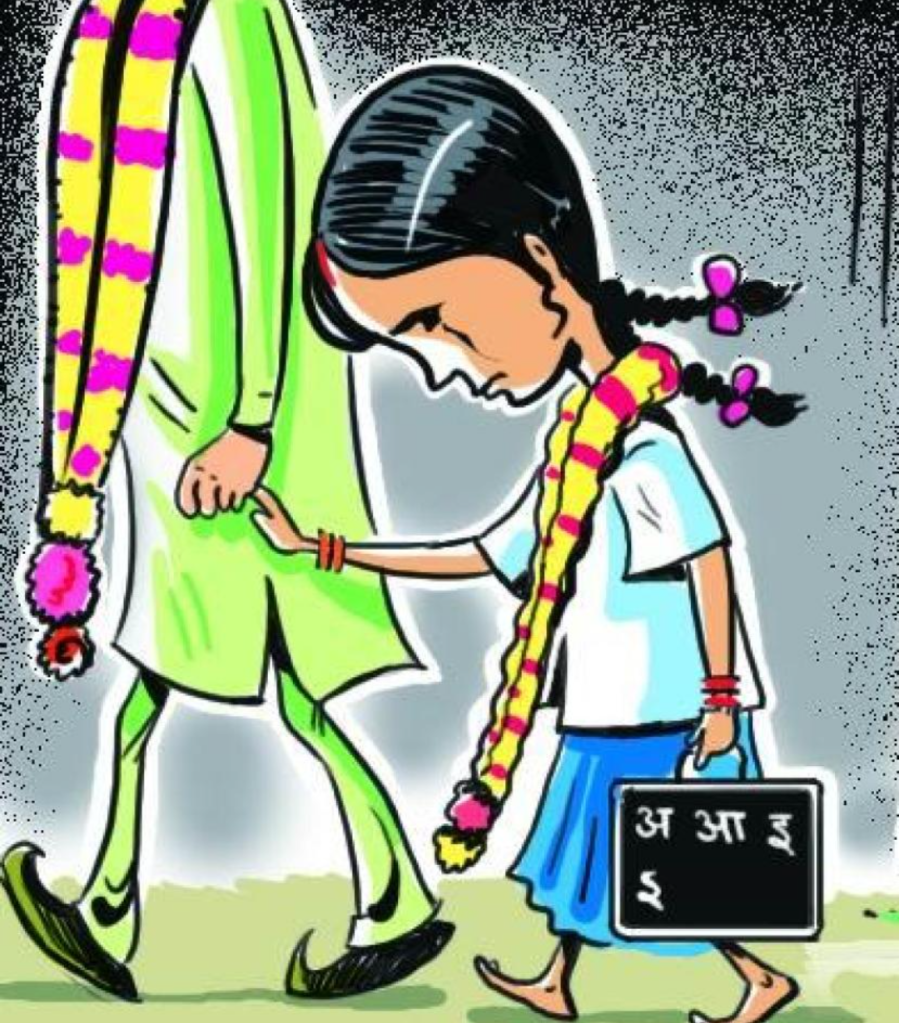
In the present scenario where society decides where a women will live, how they will live and who they will marry, whether they will study or what they do and do not. In India, disabled women or women with various disabilities and mental retardness have been reliably denied their privileges. Deficient and poor reproductive healthcare and medical services for women brings about high chances of risky fetus removal(abortion) and death which might have been prevented otherwise. In spite of the fact that India was among the primary nations in the world to create legal and strategic systems ensuring access to early abortion and contraception, women and girls keep on encountering hindrances and problems to full access of their rights, including low quality of healthcare and womens decision making power. Historically, reproductive wellbeing related laws and strategies in India have neglected to adopt a women’s rightsbased strategy, rather they are focusing on segment/demographic targets, for example, population control, while also implicitly or explicitly undermining women’s reproductive autonomy though various discriminatory provisions, for example, permission from the spouce for admittance to reproductive healthcare services. Regardless of a national law punishing marriages of young girls under 18 years old and arrangements and plans ensuring women’s maternal medical care, India keeps on representing the most elevated number of child marriages and 20% of all maternal deaths globally. Although India’s National Population Policy ensures women’s access to contraception methods, The governments keep on presenting plans about advancing female sterilization, risky substandard sterilization procedures, and denial of access to non-permanent methods.

Although abortion is legal on various grounds until a few weeks of gestation Period and also throughout pregnancy where it is necessary to save the life of the pregnant woman under the Medical Termination of Pregnancy Act, more than 50% of the 15.4 million abortions estimated to occur in India annually are risky and result in maternal deaths. U.N. human rights experts have raised concerns to the Indian government regarding human rights violations arising from various reproductive rights issues, including maternal mortality, unsafe abortion and poor quality of after abortion care, lack of access to the wide range of contraceptive methods and reliance on coercion and substandard female sterilization, child marriage, and lack of information and education on reproductive and sexual health. These experts have called for India to address these violations, as well as discrepancy in access to reproductive health care. Indian Courts have main role to play in ensuring women’s reproductive rights are protected as guaranteed by their constitutional and human rights. India has a vibrant women’s movement and NGO’s that are committed to protect the rights and choices of women. Simultaneously a large number of ladies faces social and domestic pressure, factor and limitations that limit their capacity to plan the follow up on reproductive decisions. In India, however regenerative rights are a lot of explicit to the couples, yet it’s anything but an aggregate choice of the family.

The right to make decisons freely about healthcare and medical treatment, including decisions about a person’s own fertility and sexuality, is mentioned in Article 12 and 16 of the Convention of the Elimination of all the Forms of Descrimination Against Women(1978).

Source – Social Media

Women with disabilities are denied their rights. For example a mentally challenged 20 year old girl was raped by a worker at an Instituition for destitute women. Some time after it was found that she was pregnant. Later the Doctors which included a psychiatrist concluded that she is capable of bearing the child and raising it but her mental health can be further affected by the stress of bearing and raising her child. Based on this decision the Court ordered termination of Pregnancy(MTP). On the NGO’s appeal against the decision, the Supreme Court gave the landmark decision allowing the girl to carry on with her pregnancy resulting from sexual assault. This case thus raised fundamental isuues relating to consent and to the support required while assessing consent. The case was not about abortion but it was about whether the law of the country recognizes and protects the agency of a women to take decisions of her life and body, especially when the women is a person with mental illness or disability.

Since The Supreme Court has taken the decision and permitted her to proceed with pregnancy however has neglected to address backing up and state’s responsibility for making a dependable supportive system for her as an obligation under Article 12 of the UN Rights of Persons with Disabilities Convention. This case demonstrates expressively that the Indian legal system must make extraordinary arrangements to align it with worldwide enactments. It likewise brings up the issue whether our government authorities are competent enough to protect women and women with disabilities and their reproductive rights.

What needs to be done to empower women’s rights to reproductive health?

Lacking conceptive medical care for women brings about high chances of undesirable pregnancy, dangerous and unsafe fetus removal, and preventable death and injury because of pregnancy and labor. Brutality against females, including harmful traditional practices like female genocide, negatively affects ladies’ wellbeing, prosperity and social interest. Violence in different forms also reinforces inequality and prevents women from realizing their reproductive goals.

Providing good quality reproductive health services helps protect them from health risks. Reproductive health does not affect women alone but also it is a family health and social issue as well as it affects all the family members.

Reproductive health care should include following components;

1) Family planning should be done along with strong government support, caretakers who are well trained, sensitive to local and cultural conditions, can communicate with client’s/patients needs, and are friendly and sympathetic towards them. The services provided should be affordable and a choice of different contraceptive methods should be available, Counseling ensuring consent from the concerned person in contraceptive choice, ensuring confidentiality of any kind of information, comfortable and clean facilities and speedy service.
2)Safe motherhood programmes should provide access to emergency obstetric care and wellbeing, including treatment of Infection, hemorrhage, hypertension and obstructed labour. A system for ensuring rapid transport to an equipped medical facility/medical centres for a better treatment.
3)Trained health workers to identify and treat post pregnancy or post abortion problems, as well as to counsel on different important things like infant care, hygiene, immunityof both the child and the mother, On family planning, and about maintaining good health.
4)Early termination and Post-fetus removal Care: Abortion can lead to significant health problem. Family Planning services will guarantee reduction in undesirable pregnancies and forestall early terminations(abortions) which will likewise lessen the death rates which occurs because of unsafe and risky fetus removals. In conditions where fetus removal isn’t illegal good quality wellbeing/health care services should be given to guarantee safe early termination practices and great quality post-early termination care which would fundamentally lessen maternal death rates.

Source – Social Media

Conclusion

Reproductive health and right to reproductive health is not only an Important issues for the females but it is also a family health and social issue. The ultimate aim and objective of the right to reproduction is well being of the family and individuals. At the same time it becomes the responsibility of the governing authority to give good quality reproductive health care services and protect the individuals reproductive rights while being sensitive to the their cultural issues. There is increased need for sypathy of the judicial and government while protecting the reproductive rights of people with disability especially mental retardation and mental illness.


Download Your E-Article/E-Paper here!!


The Audiobook is only available for a week. Make sure you download it from the online link. (If you forget to download Your Audiobook don’t worry just reach out to us via [whatsapp] we will help you with the same.)


CHILD PORNOGRAPHY: ‘Abuse & Coercion’ (POCSO Act)

BY- KHUSHI SHARMA

INTERN
WEST BENGAL HUMAN RIGHTS COUNCIL
(A WING OF WICCI)
BA. LL.B (Hons.)(Student) School Of Law
UPES, Dehradun

Child Pornography is the sexual exploitation of minors. In recent years, numerous cyber-crimes have been perpetrated against minors. Children’s explicit videos have recently been alleged to have been uploaded to the dark side of the internet. This kind of activity has a terrible impact on the mental health and the social life of the victim child.

Some people find it interesting to see these children engage in sexual activity. Adults who are paedophiles, hebephiles, or ephebophiles are the most common. Since the lockdown, the number of cases of child pornography has risen. According to a study conducted, persons who browse child pornography are more likely to engage in child sexual molestation. As a result, it is even more perilous to investigate the situation and come up with a solution.

Source- Social Media

The victim kid suffers severe psychological, physical, and social effects resulting from this form of crime. The victim kid is frequently diagnosed with depression, anxiety, temper problems, panic attacks, and other mental illnesses, which can last a lifetime. These youngsters are verbally attacked in society, and so as a consequence, they often lead to self-harm. Many victims also suffer from a sexually transmitted disorder.

Pornography has also been linked to risky sexual health behaviours like not using condoms and having hazardous anal and vaginal intercourse. This has an outcome not only on the victims but also on the audience. Viewers who watch pornography on a regular basis get addicted and fascinated with it. As a result, people get fascinated with the idea of doing the same things in real life. Rape, domestic violence, and other crimes are on the rise as a result of this. Pornography has increased as a result of the current pandemic.

Since the lockdown, there has been an almost two-hundred percent rise in child pornographies. These youngsters grieve inexorably and are unable to break free from the terrible cycle. This is a vicious loop that must be broken. As a result, the Indian Parliament established the Protection of Children from Sexual Offences (POCSO) Act to break the cycle and deal with situations like these. The Protection of Children Against Sexual Offenses Bill, 2011, which forbids sexual abuse of children, was voted into law by the Indian Parliament on May 22, 2012. In comparison to earlier, this act has broadened the scope of sexual assault reporting. This new law recognizes penetration methods other than penile-vaginal penetration and makes acts of juvenile immodesty illegal. Penetrative sexual assault is when a penis/object/any part of the human body is inserted into the child’s vagina/urethra/anus/mouth, or when the youngster is persuaded to do so with themselves or the other man. This statute also makes stalking any minor illegal. The protocol for reporting sexual offenses against children is outlined in the legislation. It is necessary to report sexual crimes against minors per section 19 of the act, including a suspicion that an infringement under the act has been performed. Under this act, people who indulge in child pornography can face up to five years in prison and a fine. Those who commit penetrative sexual assaults against a child under the age of 16 might face a sentence of up to 20 years in jail, with the possibility of a life sentence.

For representational purposes (Express Illustrations) source- Social Media.

This POCSO act is designed to be child-friendly. It was planned in such a manner that the victim children experience no difficulties and are not retraumatized. This act provides various benefits to the children. To begin, the police officer must guarantee that the child does not come into touch with the accused during the inquiry. The victim can alternatively have their statement recorded in their home or at a location of their choice, ideally by a female police officer or an official with at least the rank of sub-inspector, dressed in civilian clothes. The identity of the child is also kept confidential. If the victim is a female, the medical examination must be conducted by a female doctor, and it must be conducted in the midst of a parent or someone the kid trusts. If neither of these individuals is present, the examination shall be conducted in the company of women chosen by the medical institution’s director. When a sexual offense against a juvenile is done, the police may attach sections of the POCSO Act to the First Information Report (FIR). While special laws supersede the Indian Penal Code, the FIR frequently mentions parts of both. POCSO may be utilized in conjunction with sections of the Information Technology Act in situations such as owning child sexual abuse material, forcing children to generate any sort of child sexual abuse material, or exposing minors to pornography. The Rajya Sabha of the Indian Parliament, recognizing the gravity of the situation, has made several recommendations. These recommendations include certain changes in the Protection of Children from Sexual Offenses Act and the Information Technology Act, 2000. The POCSO Act makes it illegal to solicit sexual interactions with a person under the age of 18 by published material, visual depiction, audiotape, or any other portrayal. To protect the children, the POCSO act holds school administrators accountable for the safety of students in schools, transportation services, and any other programs with which the school is affiliated. According to Rajya Sabha’s suggestions, a new section was introduced to the Information Technology Act. Punitive penalties for individuals who provide pornographic exposure to minors, as well as those who view, create, or transmit child sexual abuse material, are addressed in Section 67B of this act. Along with that, Section 69A of the Act gives the Union Government the right to restrict and/or forbid all internet sites that include any sort of child sexual abuse content through its authorized authority. Aside from these two statutes, law enforcement organizations such as the Central Bureau of Investigation are permitted to break end-to-end encryption in order to track down child pornographers. The minimum fundamental technology for detecting molestation content must be enforced across all social media platforms. In addition, social media will include a method for verifying age and limiting access to objectionable/obscene content.

The Rajya Sabha has suggested that the National Commission for Protection of Child Rights (NCPCR) be recognized as the main body for dealing with the issue of child pornography. The NCPCR would be modernized and technologically equipped. A nationwide tip line number has also been established to report sexual abuse of children and the dissemination of child pornographic content. It was also suggested that every state and union territory establish an authorized State Commission for the Protection of Child Rights, which would match the NCPCR’s skills and capabilities. E-safety Commissioners should also be established at the state level to guarantee that social media and website rules are followed. Apart from these suggestions, there are a variety of other strategies to avoid child sexual abuse. We should always be in contact with any youngsters in our immediate vicinity, talking to them about child sexual abuse and ensuring their personal and sexual safety. When your kid is asked to sleepovers, celebrations, camps, trips, and other events, you should be properly informed about the intricacies of supervision and sleeping accommodations. Children should be well-informed about some topics in order to avoid being subjected to any form of sexual abuse. Some of the fundamentals include informing children about their private body parts and the need to have them discreet. Certain boundaries should also be known by the youngsters. These boundaries set that nobody should touch them without their permission. Realizing the magnitude of the problem in today’s world, we should educate youngsters in self-defense. Every youngster should know how to get out of a bad circumstance and how to defend themselves when they are being exploited. Some of the numerous strategies to keep children safe include after-school events, parent education seminars, mentorship programs, and psychological counseling. we should be a supporter of these activities in our neighbourhood. We should also educate youngsters on their legal rights. And what may be done if these rights are infringed upon. This also stops them from believing that any form of sexual assault is their fault, as many people do nowadays. Many times, we’ve observed that intervention comes only after harassment has been reported. More money should be put into initiatives that have been shown to prevent abuse before it happens. This can be accomplished through family counselling and home visits by nurses who support new parents and their children.

Source- Social Media

As evidenced by efficacy studies, child pornography is still a significant public health issue in all nations. As a result, the sole purpose of this essay was to raise public awareness about the gravity of this problem. The primary objective was to raise consciousness about the laws accessible to victims and how we can avoid such acts. The emphasis should thus be on the significance of sexual health prevention and promotion, including teaching children as early as kindergarten how to recognise potential abuse circumstances or intents, gender equality education, and encouraging healthy sexuality.


Download Your E-Article/E-Paper here!!


The Audiobook is only available for a week. Make sure you download it from the online link. (If you forget to download Your Audiobook don’t worry just reach out to us via [whatsapp] we will help you with the same.)

COVID-19 AND ITS TOLL ON THE WOMEN’S HEALTH CARE IN INDIA

BY- SIMRAN TANEJA

INTERN
WEST BENGAL HUMAN RIGHTS COUNCIL
(A WING OF WICCI)
BBA. LL.B (Hons.)(Student) School Of Law
UPES, Dehradun

“Women are working more, men are understanding their values as caregivers, women are primary breadwinners – I mean, we could go on and on. Things are different. So, we can’t keep operating like everything is the same, and that’s what many of us have done. And I think it’s up to us to change the conversation.”

Crores have been affected by Covid – 19 since the first cases were reported two years back. While evolving, detailed information relating to physical symptoms, spread, and preventive measures in the face of this pandemic has been available, less attention has been paid to the secondary effects of COVID – 19. The socio- economic impact of this virus has been disastrous, leaving so many women in endure isolatio, some lost their jobs and feeling confine with fear and worry – all while taking on increasing active roles as a care taker .The mental disturbances and anxiety women are experiencing due to Covid – 19 is astounding.

The aftermath of Covid – 19 has on women’s psychological health, signs you need to be aware of, and how to find assistance and get the help you may find that you may need.

THE MENTAL HEALTH effects OF COVID – 19

Overall Results-

The large-scale disturbance of our daily lives continues to have negative effects on emotional and mental health for 75% people. In fact, a recent survey shows that the pressure and negative mindset Covid – 19 has had on most of the citizens actually excel that felt after the 10/11 tragedy or the Great decrease, and national report that over 90% adults reports say they are facing severe annoyance directly resulting from the Covid-19.

The harmful combination of strain, uncertainty, and doubts combined with social segregation is generating a world-wide mental health crisis – within – a – crisis. investigators and healers are feverishly trying to integrate this very emotional disturbances into vast pandemic response details. A outcome of this study is that women seem to be undergo a more significant emotional effects than men.

Varied Emotional influences on Women due to Covid-19

As more surveys into the physiological and mental aftermath of COVID 19 becomes available, evidence is revealing that the stress from the pandemic is being felt more severely and having a considerable impact on women than on men:

  • A Total Brain report shows that 83% of women as compared to 36% of men are complaining increase in depression.
  • A recent Kaiser poll shows that 53% of women who responded describe a notable impact on their mental health, compared to only 37% of men.

Aggravate this already challenging emotional impact is that progressive evidence suggests women, especially those without a college degree, experienced more job loss than men during this pandemic.

Many of these women were employed in hard hit service-sector positions (hospitality, food service, etc.) and with the concurrent closure of schools and daycare they are bearing the greatly increased weight of extra load at home – all while quarantine and physical distancing proposals evacuated help from friends or grandparents as a aid. This also means that elderly women, who are more probable to live alone or in managed care are not only unable to help others in their family with newly steep in – home childcare needs, but are also feeling an increased burden of acute isolation and terror of infection.

Finally, for those women already in emotional misery and suffering before the pandemic, such as those suffering from post -natal or other trouble, or those in unsound, offensive relationships, these new proportions further provoke stress and spot a feeling of being deserted, captured, and disabled in the light of their angst and uncertainty.
It’s important to know what signs and symptoms you should be informed of in yourself and others, so that you can start taking steps towards the comfort
and aid that you deserve.

Suggestions and indications

The first step in labelling a problem is an sincere self – evaluation of how you are feeling. While we’ve all been feeling the strain of enlarged isolation, certain degree of hopelessness in the face of more bad news on the face of it every day, if you experience serious symptoms of any of the following, then it is important you have an honest discussion with your doctor about getting the help you require:

  • Constant sadness or feeling of melancholy.
  • Harmful effects of alcohol and/or drugs.
  • Radical shift in eating or sleeping habits.
  • Hunger and/ or weight changes.
  • Degrading energy or feebleness.
  • Enormous anxiety
  • Imagining things that are not there.
  • Remarkable mood swings
    Aches, headaches, or digestive problems without a fine reason.
  • Impatience
  • Stealthiness

These studies are surely not a complete list, and if you are doubtful and want a very simple, but unbiased scan on your present mental ability. Mental Health America offers a incredible mental health self – screening evaluation to help you improved understanding-what your indications may mean, and how to get assistance.
If you feel even a small idea that something is not working, then don’t wait for the situation to get worsened, try to monitor the situation-Immediately talk to your doctor or a mental health expert or counsellor to start your journey towards better today. Most health care experts are available to begin your path toward feeling good today. Most health care executives have passage to contributing simple & secured approach to take care during the pandemic, numerous with virtual/online options for you to securely get the aid in times of need.

Enduring Programs & Getting Advice

Whether it started with an online screening, a long talk with a friend, or a detailed discussion with your doctor, the crucial thing to realize is that you are not abandoned in this. While a definite plan for recommending the advice, you may need will differ for each woman, there are a few things we can all do to upgrade our mental health during this Pandemic:

Compose a routine and accustomed to it-
As women, we bear fruit on the fidelity of procedure, design & expected outcomes. Fix practical goals for a procedure that takes into account considerations the many to-do’s of your life, while leaving room for incredibly important “down” time. Share it with those around you, & discuss how their own patterns can help.

Have barriers while working at home- Numerous People have moved to a distant-work arrangement and one of the risk of working faraway is that no one notify you when it’s time to end. It’s all easy as pie to just get struck up in your to- do’s and find that your hard work by period of time . Be assured you adhere to a work agenda & to be clear at the close of the day. Your brain needs that transition!

Comprehend News in little quantity In an time when new research on infection rates, spread, constraint, and varying sanitation, health & safety compensations overshadow the headings, it can be all very easy to regularly rejuvenate that news speak to read the current happenings around the world. You should keep a watch on expanding information and movements to assure you and your dear ones stay secured and versed. You should not inhabit, drench, or lose yourself down the rebirth of COVID – 19 response.Be alert of your risks, and monitor it to prevent growing stress.

Stay Safely Connected – The pandemic has shut down many physical doors that comes between us and our support channels, but it is important that you should take out some time for liable communal cooperation. Social gatherings or connections hits you a demanding relief means of escape from the matter that it benefits to see others also dealing with this new common place, and there is evident rate in the emotional healing that comes from talking and interacting with friends.

Maintain a Proper Sleep Routine- Easier to say than to do sometimes, but getting a peaceful sleep is necessary for mental well-being. Don’t be attracted by the “I’ll just stay up later and wake up later, since there’s no go back & forth!’’ opinion that imply to trouble so many during the pandemic. Make time in your routine to stay away from screens (No screens!) before sleeping, and to have ample of time for the rest and sleep that your body and Brain needs.

Workout and diet – Most of the people have discovered that work from home means increasing desire to eat more and less workout. The gym may be closed, but the fridge is always open! Not only can a disrupted patterns of diet have a negative influence on physical health and digestion, but also disturbs your mental health.

Most apparently, you should not allow COVID- 19 to hamper your health. Taking care of oneself can better make you efficient to take care of others. During times of social distancing, it is critically important to stay connected with your companions and family members. We should help others to deal with stress through phone calls or video conferencing can help you and your dear ones feel less deserted.


Download Your E-Article/E-Paper here!!


The Audiobook is only available for a week. Make sure you download it from the online link. (If you forget to download Your Audiobook don’t worry just reach out to us via [whatsapp] we will help you with the same.)

“Rise of Child Marriage amidst the Pandemic”

BY- SUJATA KUMARI

INTERN
WEST BENGAL HUMAN RIGHTS COUNCIL
(A WING OF WICCI)
BA. LL.B (Hons.)(Student) School Of Law
UPES, Dehradun

The COVID-19 pandemic is profoundly affecting the everyday lives of girls: their physical and mental health, their education, and the economic circumstances of their families and communities. Changes like this increase the likelihood of child marriage, and over the next decade, up to 10 million more girls will be at risk of becoming child brides as a result of the pandemic worldwide. In India, child marriage has been practiced since ancient times where little youngsters and teens are offered much before their physical and mental maturity. There are numerous reasons why a few guardians agree to child marriage and a portion of the reasons could be financial need, male assurance for their little girls, child bearing, or oppressive traditional values and norms. As per UNICEF, child marriage is characterized as a marriage of a girl or boy before the age of 18 and alludes to both formal marriages and casual associations in which children under the age of 18 live with a partner as if married. And
the effect of the COVID pandemic keeps on being looked at around the world as governments keep on reacting to COVID and its economic effects. There is a critical need to address the social disturbance that the pandemic has caused, for instance, the sharp expansion in child marriage. In numerous nations, when an emergency hits, early and child marriage increments exponentially. Prior to the pandemic, India, which represents one of every three child marriages worldwide, had become a world forerunner in attempting to diminish child marriages, through schooling and mindfulness. Be that as it may, a harsh, long lockdown, which was carried out with only a couple hours’ notification, left a large number of everyday workers and transient specialists with no work, driving millions more into destitution. India’s economy shrunk by practically 24% last quarter and schools shut the nation over as a huge number of new COVID-19 cases keep on being recorded every day. A large number of families have been compelled to consider child marriage to alleviate poverty.
Save the children charity says that COVID-19 has put 2.5 million or more girls at risk of early marriage by 2025.

Reports by UNICEF and Others

This pandemic has increased the socio-economic fragility of communities in underserved rural areas and pushed young girls out of school and into early marriages. The new report of UNICEF on the effect of COVID-19 on child marriages expresses that India is among the five nations that record for half of the child marriages in the world. Madhya Pradesh recorded 46 child marriages between November 2019 and March 2020, a figure that leaped to 117 in only three months of the lockdown from April to June 2020, according to a report given by ChildLine India, a NGO.

Telangana saw a 27 percent increment in child marriages somewhat recently. As per the information given by the Women Development and Child Welfare Department. The opportune intercession of the ICDS authorities forestalled almost 10 child marriages in Karepalli mandal alone in the previous two months. Two Child marriages were thwarted by the ICDS staff in Venkatiya Thanda and Mekala Thanda in the mandal in a single day. The numbers in Rajasthan are even more alarming, with the NFHS-4 data stating that 1 in 3 girls were married by age 18 years in the state (35 per cent). Among adolescent girls aged 15-19 years in the state, six per cent have already begun childbearing. School closures due to the current pandemic are likely to exacerbate these already worrying numbers.
shockingly, according to the WCD information, in Hyderabad, post the lockdown, around 22 child marriages were deflected, notwithstanding, Hyderabad Childline authorities guarantee that the genuine number is much higher. Authorities say that urban areas, like Hyderabad, which generally witness less child marriages cases, revealed an expansion this year post the lockdown. The city saw 56 child marriages cases since the pandemic, asserted Child line authorities, a 19 percent increase from March, 2019-March, 2020. Recent data collected by the group show that most nations (168 out of 190) lawfully characterize the age at which girls can wed with no sort of assent over the age of 18. Notwithstanding, in 80% of them (134 nations) girls can get married at a younger age with the assent of their parents, a judge or another authority.

INTERNATIONAL ASPECTS

Niger has the highest rate of child marriage in the world. Before the pandemic, already 3 in 4 girls are married before their 18th birthday. In some areas, the rates are even higher: in the region of Maradi, 89% of girls are married as children.

In countries facing humanitarian crises like Niger, the COVID19 pandemic has created significant additional pressure on already overburabilities in affected populations.

World Vision staff reacted to more than twice the amount of child marriage reports during the COVID outbreak from March 2020. The aid agency recommends this flood in child marriage is conceivable because of loss of vocations during the pandemic, rising neediness and absence of admittance to instruction and backing administrations.
Around the world, an expected 650 million girls and women alive today were married in childhood, with about a portion of those happening in Bangladesh, Brazil, Ethiopia, India and Nigeria. To off-set the effects of COVID-19 and end the training by 2030 – the objective set out in the Sustainable Development Goals – progress should be essentially sped up.

WHY IS THE NUMBER OF CHILDREN BEING MARRIED INCREASING DUE TO PANDEMIC?

• Restrictions have all led to a drop in economic activity, the loss of livelihoods, and household property. The resulting economic insecurity may limit the ability of parents to provide for their children.
• Worsening household income may cause some adolescents living in especially difficult circumstances to view child marriage as the best option available to them.
• Child marriage can be a boon to a household’s income in communities where a bride price is paid bu the groom’s family to the bride’s family.
• Less time in school may also cause families to perceive lower returns to girls’ education.
• We continue to assess the situation but we all know that changes like these puts girls at higher risk of becoming child brides.

Impact on Child Bride:

• Violation of rights: Married at a young age, girls get deprived of their basic rights. Some of the basic rights as mentioned in the convention on the Rights of Child include Rights to Education, Right to Rest and Leisure, Right to Protection from Mental or Physical Abuse including rape and sexual exploitation.
• Poor Socialization: Child Brides often have to give up their education due to household responsibilities. It is said that if the woman of a house is educated, she in turn, educates her family. But if she is uneducated, she loses the opportunity to educate her own son/daughter.
• Disempowerment: Since child brides are not able to complete their education they remain dependent and unempowered which acts as a big hurdle towards achieving gender equality.
• Health Issues: Devastating repercussions on the health of Child Brides, who are neither physically nor emotionally ready to become wives and mothers. According to research, the risk of mental mortality is highest for adolescent girls in the 15 years of age. Also they have 23% greater risk of disease onset including heart attack, diabetes, cancer, and stroke; they also face a high risk of psychiatric disorders.

POINT OF VIEW ON CHILD MARRIAGE

Child marriage isn’t just an infringement of girls’ human rights and their children’s, yet additionally addresses a generous monetary weight for nations. Improving girls’ instructive accomplishment and wellbeing, just as expanded profit, dynamic force and authority over their conceptive rights are not many of the positive results of finishing Child marriage, along with a positive effect on the decrease of maternal and newborn child mortality, and of private accomplice brutality. Keeping girls out of early marriages would profit nations and social orders overall, boosting their economic growth and stability and saving the worldwide economy trillions of dollars.

“One year into the pandemic, prompt activity is expected to relieve the cost for girls and their families,” added to. “By returning schools, executing effective laws and policies, guaranteeing admittance to wellbeing and social administrations – including sexual and regenerative wellbeing administrations – and giving extensive social security measures to families, we can fundamentally decrease a girl’s danger of having her youth taken through child marriage.”

We are as yet evaluating the effect of Covid-19 on children yet we as a whole since changes like these put girls at higher danger of turning out to be child brides, as indicated by observational writing and hypothesis on the drivers of child marriage.


Download Your E-Article/E-Paper here!!


The Audiobook is only available for a week. Make sure you download it from the online link. (If you forget to download Your Audiobook don’t worry just reach out to us via [whatsapp] we will help you with the same.)

Social And Psychological Impact Of Cyber Attack

BY- ASHWARYA PANDEY

INTERN
WEST BENGAL HUMAN RIGHTS COUNCIL
(A WING OF WICCI)
BA. LL.B (Hons.)(Student) School Of Law
UPES, Dehradun

Cyber crime is any criminal demonstration identified with PCs and organizations which is called hacking, phishing, spamming or is utilized as an apparatus to perpetrate an offense (kid erotic entertainment and disdain violations) directed through the Web. It’s anything but a greater danger now than any time in recent memory because of the sheer number of associated individuals and gadgets. Digital wrongdoing is a term for any criminal behavior that utilizes a PC as its essential methods for commission. Digital hoodlums may utilize PC innovation to get to individual data, or utilize the Web for exploitive or vindictive purposes. Crooks can likewise utilize PCs for correspondence and report or information stockpiling. Crooks who are occupied with these criminal operations are frequently alluded to as programmers. Normal kinds of digital wrongdoing incorporate online bank data burglary, fraud, online ruthless violations and unapproved PC access. More genuine violations like digital psychological warfare are additionally of huge concern. Digital wrongdoings cover a wide scope of exercises, however these can for the most part be broken into two classes, (I) violations that target PC organization’s or gadgets. These sorts of violations incorporate infections and forswearing of-administration (DoS) assaults, and (ii) wrongdoings that utilization PC organizations to progress other crimes. These sorts of wrongdoings incorporate digital following, phishing and misrepresentation or data fraud. Hoodlums perpetrating digital wrongdoing utilize various techniques, contingent upon their range of abilities and their objective.

How cyber attack can occur:

The expansive scope of cyber crime can be better perceived by separating it into two generally classifications.

Type 1 of cyber crime

(a) Generally a solitary occasion from the viewpoint of the person in question.

(b) Phishing is the place where the casualty gets a probably authentic email (regularly professing to be a bank or charge card organization) with a connection that prompts an unfriendly site. When the connection is clicked, the PC would then be able to be contaminated with an infection.

(c) Programmers regularly do by exploiting blemishes in an internet browser to put a deception infection onto the unprotected casualties’ PC.

(d) Any digital wrongdoing that identifies with burglary or control of information or administrations by means of hacking or infections, fraud, and bank or online business extortion.

Type 2 cyber crime

(a) Type 2 will in general be substantially more genuine and covers things, for example, digital following and badgering, youngster predation, coercion, extortion, financial exchange control, complex corporate reconnaissance, and arranging or doing fear based oppressor exercises.

(b) It’s anything but an on-going arrangement of occasions, including rehashed communications with the objective. For instance, the objective is reached in a talk room by somebody who, over the long run, endeavors to build up a relationship.

In the end, the criminal endeavors the relationship to carry out a wrongdoing. Or on the other hand, individuals from a psychological oppressor cell or criminal association may utilize covered up messages to convey in a public gathering to design exercises or talk about tax evasion areas, for instance.

(c) Usually, it is worked with by programs that don’t fit under the arrangement wrongdoing product. For instance, discussions may occur utilizing IM (texting) customers or documents might be moved utilizing Record Move Convention (FTP).

Social impact of cyber attack:

Digital lawbreakers exploit namelessness, mystery, and interconnectedness given by the Web, consequently, assaulting the actual establishments of our advanced data society. Digital wrongdoing can include botnets, PC infections, digital harassing, digital following, digital psychological oppression, digital porn, refusal of administration assaults, hacktivism, wholesale fraud, malware, and spam. Law requirement authorities have battled to stay up with digital hoodlums, who cost the worldwide economy billions yearly. Police are endeavoring to utilize similar apparatuses digital crooks use to execute violations with an end goal to forestall those wrongdoings and deal with the blameworthy gatherings.

PC related violations date back to the beginnings of registering however the more noteworthy network between PCs through the Web has brought the idea of digital wrongdoing into public awareness of our data society.

In spite of crimeless society is fantasy, wrongdoing is ubiquitous wonder, and it is non-distinct piece of social presence, one may get aggravate by the inquiry, ‘Why there is an excessive amount of ado about crime?’No one can reject that wrongdoing is a social wonder, it is inescapable, and there is the same old thing in wrongdoing as it is one of the trademark highlights of the all social orders existed up until this point, may it be enlightened or graceless, and it is one of the fundamental senses of all human conduct! Notwithstanding, it should remember that the social worry for horror rate isn’t a direct result of it’s temperament, yet because of potential aggravation it causes to the society. Also, a few people are survivors of wrongdoing in a more explicit sense. The casualties of wrongdoing may lose anything that has esteem. Wellbeing, harmony, cash, and property are maybe essential qualities, since they add to the fulfillment of numerous desires.

Teenagers be aware:

Nowadays a most noticeably awful dread in youngster’s eyes is Digital Harassing. It is gotten not unexpected over past five years,generally from the age under eighteen are more vulnerable also, dreaded from Digital Tormenting according to examination . According to review of information, the most exceedingly terrible dread of digital wrongdoing is on young people female. Digital Tormenting is a dread when individual gets dangers, negative remarks or negative pictures or remarks from other individual. This is totally done through center advances portrayed above predominantly by means of on the web. Digital Tormenting should be possible through talking, texting and so on Where site like Facebook , Orkut , Twitter client are more influenced from Digital Tormenting . In many investigation by and large dreaded individual can arrive at a constraint of sorrow, embarrassment and undermines. Through this examination we come to dissect that if individual Bulled online the person might be discouraged up to the degree of self hurting.

Psychological impact:

The primary investigation to analyze the enthusiastic effect of cybercrime, it shows that casualties’ most grounded responses are feeling furious (58%), irritated (51%) and cheated (40%), furthermore, much of the time, they reprimand themselves for being assaulted. Just 3% don’t figure it will happen to them, and almost 80% don’t expect digital hoodlums to be brought to equity—bringing about an unexpected hesitance to make a move and a feeling of helplessness.“We acknowledge digital wrongdoing in light of a ‘learned weakness’,” said Joseph LaBrie, PhD, partner teacher of brain research at Loyola Marymount College. Despite the enthusiastic weight, the general danger, furthermore, episodes of cybercrime, individuals actually aren’t evolving their practices – with just half (51%) of grown-ups saying they would change their conduct in the event that they turned into a casualty The “human effect” part of the report digs further into the little violations or innocent embellishments customers execute against companions, family, friends and family and organizations. Almost 50% of respondents believe it’s legitimate to download a solitary music track, collection or film without paying. 24% trust it’s legitimate or totally OK to covertly see somebody else’s messages or program history. A portion of these practices, for example, downloading records, free individuals up to extra security dangers.

Cyber attack’s effect in India due to Covid:

With pandemic upsetting organization’s and with far off working turning out to be reality, digital hoodlums have been occupied with misusing weaknesses. Year 2020 saw perhaps the biggest number of information breaks and the numbers appear to be just rising.

As indicated by Kaspersky’s telemetry, when the world went into lockdown in Walk 2020, the all out number of bruteforce assaults against far off work area convention (RDP) bounced from 93.1 million worldwide in February 2020 to 277.4 million 2020 in Walk—a 197 percent expansion. The numbers in India went from 1.3 million in February 2020 to 3.3 million in Walk 2020. From April 2020 forward, month to month assaults never plunged under 300 million, and they arrived at another high of 409 million assaults worldwide in November 2020. In July 2020, India recorded its most elevated number of assaults at 4.5 million.

Portable malware expanded 15% driven by a flood in Android Mob by Adware. There was likewise a critical ascent in Microsoft Office malware which expanded by 103%.This ascent was driven by the “huge expansion” in malignant Donoff Microsoft Office records assaults which impelled another Power Shell malware up 117%, the report said.

Corona virus pandemic is completely changing us. Individuals are concerned, and with that worry comes a craving for data, wellbeing and backing. Coordinated wrongdoing bunches are misusing the dread, vulnerability and uncertainty which Corona virus brings to target people in an assortment of ways.

Info sec girls founder advised that “We are conversing with ladies on the most proficient method to secure themselves in the internet. We exhortation ladies to not share their own photos or subtleties via web-based media as it’s anything but protected.”


Download Your E-Article/E-Paper here!!


BENEVOLENT SEXISM: AN ASPECT OF GENDER INEQUALITY

BY- HARSHITA ARORA

INTERN
WEST BENGAL HUMAN RIGHTS COUNCIL
(A WING OF WICCI)
BA. LL.B (Hons.)(Student) School Of Law
UPES, Dehradun

If something sounds really nice, it cannot be sexist, right?

Getting compliments isn’t a bad thing, is it? it makes you feel noticed, yet there are many comments that, while seemingly complimentary, somehow feel wrong. In social psychology, these seemingly positive yet still somewhat unsettling comments and behaviors have a name: Benevolent Sexism.

What is Benevolent Sexism?

In 1996, Peter Glick and Susan Fiske wrote a paper on the concept of ambivalent sexism, noting that despite common beliefs, there are actually two different kinds of sexist attitudes and behavior. Hostile sexism and Benevolent sexism.

Hostile sexism is normally what comes in people’s mind when they hear “sexism” i.e., overtly negative evaluations and stereotypes about a gender for e.g., the ideas that women are incompetent and inferior to men. But what doesn’t occur in people’s mind is Benevolent sexism which represents evaluations of gender that may appear subjectively positive, but are actually damaging to people and gender equality more broadly for e.g., the ideas that women need to be protected by men. For the most part, psychologists have studied hostile forms of sexism.

Glick and Fiske assert that hostile and benevolent sexism complement each other in reinforcing traditional gender roles and preserving patriarchal social structures of women as subordinate to men. Sexism is founded in conceptualizations of one gender as being superior or having higher status than the other gender in a particular domain, which can lead to discrimination. Research has indicated that stereotypes about socially appropriate gender roles for women and men are a driving factor in the endorsement of sexism. Patriarchy, defined as men’s power and “structural control over political, legal, economic, and religious institutions”, is a feature of sexism and is related to hostile attitudes toward women.
Anthropological research suggests that patriarchy is pervasive among the majority of human societies, such that women have been systematically discriminated against, oppressed, and marginalized by men throughout history. Sexism maintains patriarchal social structures and reinforces prescribed gender roles.

Hostile sexism reflects misogyny i.e., the hatred of women by men, and is expressed through blatant negative evaluations of women. Examples of hostile sexism include beliefs about women as incompetent, unintelligent, overly emotional, and sexually manipulative. Benevolent sexism reflects evaluations of women that are seemingly positive. Examples of benevolently sexist attitudes include the reverence of women in wife, mother, and child caretaker roles, the romanticizing of women as objects of heterosexual affection, and the belief that men have a duty to protect women.
Because benevolently sexist attitudes appear positive, people often do not identify these beliefs as a form of gender-based prejudice. Social and cultural norms may encourage benevolently sexist beliefs among women and men. A classic illustration of this is the endorsement of modern-day chivalry in interactions between women and men. It can be considered traditional and polite for a man to insist that he holds a door open or carries a heavy object for a woman. However, this tradition is founded in historical representations of women as weaker than men. In these types of circumstances, people may find it difficult to distinguish between kindness, tradition, and benevolent sexism. Men and women often disagree on whether or not a specific incident should be considered sexist.

Let’s see how some comments that we hear in our everyday life are a part of benevolent sexism.

1. “Women Have Motherly Nurturing Instincts.
In an article for Fortune, leadership expert Liz Wiseman explains that the “Mama Bear” persona some women politicians have latched onto not only promotes gender stereotypes but also can lead to ineffective leadership. Any stereotype in the workplace or politics, Wiseman points out, can be flipped to women’s disadvantage. If women tell their coworkers that women get things done while men are all talk, for example, they may be more likely to put men in public roles involving oration while women get stuck with administrative tasks.

2. “Women Are More Compassionate.”
The Dalai Lama has been praised for saying that there should be more women leaders because women are more compassionate. However, such statements only express conditional support for gender equality. How would the Dalai Lama feel about a woman leader who does not fit that stereotype? Viewing women as more compassionate and gentle and men as more aggressive can penalize women who are assertive, leading people to deem them “bossy” or “too harsh.” Expectations for women to have a more soft-spoken, accommodating leadership style can lead people to criticize women who don’t adopt it.

3. “Women Are Neater.”
I feel ashamed to let others see my room in a state that many men’s room have been in. This is because women are supposed to be neat and clean and generally good around the household, while men are supposedly slobs and should be forgiven for it because boys will be boys. This belief system is dangerous because it leaves women stuck with chores while men use their own supposed incompetence to buck them. The same idea also applies to our appearances, with women feeling pressure to constantly look put together where men’s sloppiness is not preferable but still excused.

And the list continues, all of these comments can somehow feel both nice and wrong at the same time. It might sound like a compliment, but it still counts as sexism.

Why is benevolent sexism a problem?

If benevolently sexist comments seem like nothing more than compliments, why are they problematic? Is it really “sexism” if the content of the statements seems positive towards women?
Well, for one thing, benevolently sexist statements aren’t all rainbow and butterflies. They often end up implying that women are weak, sensitive creatures that need to be “protected.” While benevolent sexism may not appear to be harmful to women on the surface, these beliefs are extremely caustic to gender equity and restrict women’s personal, professional, political, and social opportunities. This is because these seemingly positive evaluations imply that women are weak and need to be protected, women should not deviate from traditional gender roles as mothers and caretakers, and women should be idolized by men for their sexual purity and availability.

As Glick and Fiske themselves note in their seminal paper:
We do not consider benevolent sexism a good thing, for despite the positive feelings it may indicate for the perceiver, its underpinnings lie in traditional stereotyping and masculine dominance (e.g., the man as the provider and woman as his dependent), and its consequences are often damaging. Benevolent sexism is not necessarily experienced as benevolent by the recipient. For example, a man’s comment to a female coworker on how ‘cute’ she looks, however well-intentioned, may undermine her feelings of being taken seriously as a professional (Glick & Fiske, 1996, p. 491-492).

In a later paper, Glick and Fiske went on to determine the extent to which 15,000 men and women across 19 different countries endorse both hostile and benevolently sexist statements. First of all, they found that hostile and benevolent sexism tend to correlate highly across nations. So, it is not the case that people who endorse hostile sexism don’t tend to endorse benevolent sexism, whereas those who endorse benevolent sexism look nothing like the “real” sexists. On the contrary, those who endorsed benevolent sexism were likely to admit that they also held explicit, hostile attitudes towards women (although one does not necessarily have to endorse these hostile attitudes in order to engage in benevolent sexism).
Secondly, they discovered that benevolent sexism was a significant predictor of nationwide gender inequality, independent of the effects of hostile sexism. In countries where the men were more likely to endorse benevolent sexism, even when controlling for hostile sexism, men also lived longer, were more educated, had higher literacy rates, made significantly more money, and actively participated in the political and economic spheres more than their female counterparts. The warm, fuzzy feelings surrounding benevolent sexism come at a cost, and that cost is often actual, objective gender equality.

To conclude, I would like to pose a question to those people who still may be tempted to argue that benevolent sexism is nothing more than an overreaction to well-intentioned compliments: What happens when there is a predominant stereotype saying that women are better stay-at-home parents than men because they are inherently more caring, maternal, and compassionate? It seems nice enough, but how does this ideology affect the woman who wants to continue to work full time after having her first child and faces judgment from her colleagues who accuse her of neglecting her child? How does it affect the man who wants to stay at home with his newborn baby, only to discover that his company doesn’t offer paternity leave because they assume that women are the better candidates to be staying at home?

At the end of the day, “good intent” is not a panacea. Benevolent sexism may very well seem like harmless flattery to many people, but that doesn’t mean it isn’t insidiously dangerous.


Download Your E-Article/E-Paper here!!


DISTORTED FEMINIST PERCEPTION OF GENDER EQUALITY

BY- NISHITA

INTERN
WEST BENGAL HUMAN RIGHTS COUNCIL
(A WING OF WICCI)
B.Com. LL.B (Hons.)(Student) School Of Law
UPES, Dehradun

In the fight for women’s rights, feminism is a topic that has lengthy discussions. Feminism is constantly changing and expanding. But is it going in the right direction? Earlier, feminists believed that women should be treated equally and should have the opportunities as same as men have and now, people are twisting this term “Feminism”.

Feminism means that everyone is equal no matter what race, gender, identity, sexuality, or religion – feminism means equality. Feminism encourages both men and women in fulfilling their roles in society. It is not the idea of making one gender more powerful than another. Feminism provides equal opportunities to everyone. It allows both men and women the freedom to do what they want whether it be at home, at school, or workplace.

Today, the word “Feminism” is turning away from its original form. Feminists are trying to push women to be the same as men in various fields. These feminists believe that feminism is just for women only. In the minds of these feminists, the women have to be active in all the fields and if they don’t, then these feminists will not support and they may even discriminate against women. Feminism is straying from its paths and taking a nasty route.

Also, there has always been a problem of gender inequality, sexual assault, harassment, etc. for women. In today’s times, still women are not allowed to unveil her face to strangers or men outside their families. On one side, people are working to provide equal rights and protection to women, and on the other side people are misusing feminism as many cases are registered where women file false reports on harassment and sexual assault and the accused has been declared as guilty without any proper investigation and research. But why don’t these women think?

This kind of thinking and perception is not about the educated or non-educated people. It’s about the upbringing mentality. It’s all about the encouragement that all women can carve their futures. But the wrong message of feminism has been spread to the world with many means of social media. These are attacking a women’s rights to determine her path. That’s why the feminists are failing to respect the rights they claim to be fighting for.

Also, there is a stigma around feminism that only women are feminists but it is not like that. Anyone can be a feminist who feels the need for gender equality. Feminism is not the matter of men and women it is the matter of raising the voice for gender equality. It is just a matter of freedom for women such as freedom to wear whatever they like, freedom to go for an outing, freedom to vote, freedom of expression, freedom to get an education, and so on. A lot of people think that women’s rights have already been accomplished but they don’t realize that there are still so many forces against women’s rights. The reality is so different. Still, women have struggled for equality and are affected by all forms of violence and discrimination in every aspect of life. Today, almost everywhere in the world, women are denied human rights just because of their gender. In a world, where women’s work is not valued as much as men’s, then the world needs feminism.

How it can be the change for the better and get back to the right path? There should be a particular goal to change the world and promote gender equality. The goal should be all feminist activities like feminist theory. Different platforms should be created to spread awareness about gender equality and the right definition of feminism like talk about the topic openly, share with others, empowers the new generation to speak out, and try to listen and learn something new about feminism and gender equality.

How it can be the change for the better and get back to the right path? There should be a particular goal to change the world and promote gender equality. The goal should be all feminist activities like feminist theory. Different platforms should be created to spread awareness about gender equality and the right definition of feminism like talk about the topic openly, share with others, empowers the new generation to speak out, and try to listen and learn something new about feminism and gender equality.

If feminists truly want to define the term “Feminism”, then feminists should respect everyone’s choices – both men and women, no matter what they may be. And this can be done through seminars, public gatherings, or social media. A proper investigation and research must be done by the authorities so that the misuse of feminism must stop. Because achieving gender equality through feminism is not just a female issue, it is an issue for all people of all genders to face up against. Feminism is a movement that everyone can and get involved with. Feminism is not just about achieving equality but it also provides equal opportunities to both genders exist.

Feminism is not only advocating women’s rights but promoting gender equality. All the feminist perspectives should come into the problems of gender inequality and all should have come up with good strategies for remedying these problems. Gender can be understood as social status, a personal identity, and a set of relationships between men and women, and among men and women. Feminists should understand the main point that gender inequality is not an individual matter, it is the matter of the whole society. Gender inequality is built into the organization of marriage and families, work and the economy, politics, religion, the arts, and other cultural activities. Making men and women equal, feminists need social and not individual solutions. Women should have the same rights as men and the same educational and work opportunities.

For equality between men and women to be achieved, women need to be empowered and protected. Men and women should be given the same responsibilities and learn to meet equal challenges so that they are capable of achieving anything they want. Whatever opportunities there are available for men, there should be equal opportunities for women.

There need to start educating people about how feminism has had a positive impact on our society. There need to all come and work together as a species rather than a gender, the feminism will have achieved its goals.

The goal of feminism will remain clear, with the goal being equality and justice. Feminism is needed to ensure that every person, irrespective of their gender, is treated equally, has equal opportunities, can achieve their full potential, and live a fulfilling life free of discrimination, injustice, and violence.

And last but not the least, everyone is not equal but everyone deserves to be treated equally – this means equality.


Download Your E-Article/E-Paper here!!


Yes, I Bleed and Thus, You are Born

BY- ANJANA VIJAY

COUNCIL MEMBER
NAARI FOUNDATION
B.A LL.B Honours Criminal Law (Student)
UPES, Dehradun

Sometimes we can learn something from those we disrespect in ignorance. I say so because I remember studying a novel named Sangati pertaining to the category of Dalit literature in which a special kuchulu (a kachcha temporary hut) is made for a girl who “comes of age” for the first time. Belonging to a poor family, being the eldest among the three children of a mother (who died while giving birth to her) and a drunk indifferent father, she could not afford a proper diet needed during those days. But the story showed that a community that only drank rice water everyday for their meals took turns to cook something healthier for the girl and feed her considering she needed rest and nutrition as she was in pain and bleeding. But, on the contrary, I find the so-called Upper castes (both the gender) or ‘educated’ or ‘rich’ people segregating, isolating, scolding, staring and traumatizing girls or women in periods. They are either unaware or indifferent or unempathetic to the bleeding girls and women of their homes.

Menstruation is one very important aspect of womanhood. Men cannot give birth so they don’t bleed every month for several days. Men cannot carry a child in womb for nine months and thus women bleed profusely after giving birth. Men can only impregnate them but a woman turns a couple to a family. Then why discriminate, be indifferent, laugh, stare, show disgust to those who are actually the ones to be venerated, even according to Vedas? Why make them feel guilty or at fault for something that’s natural and is not a woman’s choice but a blessing in disguise for humanity? Statements like ‘don’t touch the vessel of milk or else it will curdle’, ‘don’t go the temple or even near it’, ‘don’t sit on the bed or chair that everyone uses’, ‘you are such an expenditure’, ‘you have spots, learn some manners’, ‘don’t put mehndi during those days and go out as the spirits are always on the look out for such strong smells’ (seriously? They don’t have anything else to crave for?) etc. make women wonder whether menstruation is a good sign of fertility or an incident of abhorrence.

There have also been so many weird practices around menstruation in the world that enforce a woman to think at least once in a lifetime that why did she take birth as a woman at all. I would also like to bring in the reference to the short film Maya (2001) directed by Digvijay Singh. Maya’s happy idyllic life changes overnight when she reaches her puberty. Thereafter, she is prohibited from playing, talking aloud, starts doing household chores and her first cycle is announced in front of the whole village to prepare for a celebration of the same. Before Maya could understand what is happening to and with her, she is taken to a renowned temple for a religious ritual in which the girl is taken inside the temple by a line of priests to pray for her well being and bless her. She is heard outside by the family shouting terribly till she comes out limping and shaking because of the horrifying ritual rape she is subjected to in the name of religious and social practices.

There are many ways that menstrual issues are handled or discussed in the world, both supportive and harassing. What this article expects from the readers is to just think of each other as humans; men and women both feel pain, so both need to be taken care of, to be treated empathetically and to be looked at as equal creations of God. The world needs to accept that if adjusting the crotch in a public place (to handle uneasiness) is okay for men, adjusting a pad (to avoid stains) should be okay for women.


Download Your E-Article/E-Paper here!!


GENDER GAP IN SCHOOL DUE TO LACK OF MENSTURAL HYGIENE

BY- ANJALI GOYAL

COUNCIL MEMBER
NAARI FOUNDATION
B.A LL.B Honours (Student)
Jindal Global Law School, Haryana

Communities around the globe are trying to curb gender gap, however even in the twenty first century gender inequality is an issue, especially in developing countries like India. The main reason for gender disparity is that most of the societies and the governmental policies function under the garb of patriarchy. One of the solutions, I think through which this problem can be addressed is by providing basic level of education to girls, at least in India. The Gender parity Index for primary education is great in India as it is more than one, however, as we go higher in terms of standards (8th-12th class mainly), the number of girls dropping out of school increases. There are multiple reasons for the same like, girls are still considered a liability rather than an asset by her parents, so they do not want to invest in her education as they feel that in the end she has to get married and make “rotis”, there are safety issues and there is no sanitary hygiene provided by many state schools. Menstruation is not a choice for girls, and they bleed almost every month, thus menstrual hygiene in schools is big reason for girls to drop out once they hit puberty i.e. in their adolescent age. Therefore, I will try to talk about the lack of menstrual hygiene in schools which cause the gender disparity between males and females to increase.

There are people who do not even acknowledge the fact that women menstruate every month, then how can we expect something awareness about menstruation hygiene in places like school? Schools are a place where people learn their basics for life and girls should be given equal opportunities as boys, thus, they should not be deprived of education due to a taboo that exists in the society. Further, schools in villages are not always located at an accessible distance. For instance a primary school in district like “Dholpur in Rajasthan, like millions of others in districts across India is barely equipped with a functional toilet, let alone something as essential as sanitary napkin dispensers. Infrastructure in these schools is not equipped for young girls, further, menstruation remains a biological event shrouded in mystery and taboo, not to be spoken about openly.” . Due to multiple factors and taboos associated with menstruation, “millions of girls drop out of school or start taking extended periods of absence around middle school due to their menstruation cycles.”

Let us look at certain reports which further point out the increasing dropping rates of girls due to menstrual hygiene. In 2015, a Mumbai bases foundation, Dasra made a report which concluded that “on an average a girl tends to miss school six days a month due to the inability of managing their periods at school. This eventually contributes to almost 23% girls dropping out of school on reaching puberty, which critically undermines their potential as individuals and future workers . Further, an UNESCO in 2016 pointed out that, 20% of girls drop out of school after reaching puberty in India. In 2018, Ministry of statistics and program implementation published a report which stated that “Over 30% of girl students drop out of school by the time they get to class IX and the number rises to 57% in class XI.” Even the 13th report by “Annual Status of Education Report (ASER 2018) in January, published that 7.4% girls drop out of school between the age group of 11-14 years.” All these report point out the striking low rates of girls in educational institutes due to lack of menstrual hygiene which needs to be addressed by the state as a matter of this magnitude will stall the country’s progress in order to become a fully developed nation.


Download Your E-Article/E-Paper here!!


THE STATE OF LGBTQ AND THEIR RIGHTS IN INDIA

BY- NADIA HASAN

Council Member (West Bengal Human Rights Council, A wing of WICCI)

September 6, 2018 was a historic day for the LGBTQ community when Supreme Court struck down section 377 which previously criminalized the same sex activities. It was a long race for the LGBTQ community to achieve their basic rights. Justice Indu Malhotra, while delivering her judgment said that the “History owes an apology to the members of this community and their families for delaying the redressal process and that the community has suffered from centuries”. So what did she meant when she said, “communities has suffered from centuries”? She clearly implied that it was a very difficult road for the people fighting for their rights but their hard work and dedication lead them to a beautiful destination. From Naz Foundation v Govt. of NCT of Delhi (2009) where part of section 377 was struck down as unconstitutional by Delhi High Court with respect to gay sex to Suresh Kumar Koushal v Naz Foundation (2013) where Supreme Court overturned the High Court ruling and again criminalized the homosexual activities. But these ups and downs in the way of the “pride movement” never left them in despair. In the year 2017, Supreme Court upheld the right to privacy as a fundamental right in the case of Justice KS Puttaswamy (Retd.) and Anr. v Union of India and Ors. (AIR 2017 SC 4161), also the Supreme Court recognized the right of LGBTQ community as real and their protection lies at the core of the fundamental rights embedded in the Constitution of India. After years of struggle and scuffle, they finally achieved what they desired for so many years. Supreme Court unanimously struck down section 377 as unconstitutional in the Navtej Singh Johar v UOI (2018) to the extent where it criminalizes the consensual sexual conduct between the adults of same sex. The LGBTQ community was amazed and saw a silver lining in this judgment. This decision was welcomed by the people of India and people all around the world supporting this “pride movement”. They were hopeful that this decision is a beginning of a new era for the Indian society.

More than 2 years have been passed since the respective judgment; can we now say that the same-sex couples are living freely in the Indian society without any fear of persecution and abuse? The answer is “NO”. This is because there is a huge gap between the judicial and legislative development in terms of providing the basic human rights to the queer and non-binary community. Although the Judiciary has recognized the rights of the LGBTQ community through their various judgments but the legislature has failed to comply with those decisions. One such example is Transgender Persons (Protection of Rights) Bill, 2019 which came in the succeeding year from decriminalization of section 377 with an objective of protecting the rights of the transgender community by prohibiting discrimination against them. But the bill failed to serve the purposes for which it was made rather it raised anger among the transgender community and they fervidly rejected it. This bill further exposes them to institutional oppression where the right to privacy of the Trans community were snatched which led them to further harassment in the hands of the authorities. The bill is discriminatory when it comes to the prescribed punishment for the sexual offences against the Trans community. According to this bill, punishment for the sexual abuse against a transgender is only 2 years whereas the punishment given for the same offence against a woman is up to 7 years. The difference in the punishments are very big, arbitrary  and  against  the  equality  provisions  embedded  in  the  Constitution  of  India.  These drawbacks  in  such  an  important  bill  shows  how  uncommitted  the  government  is  when  it  comes to  the  LGBTQ  community.  Formulating  laws  in  compliance  with  the  landmark  judgments  of  the Supreme  Court  will  help  the  community  to  take  a  step  forward  and  lead  a  life  of  dignity.

Despite  all  the  endeavours  to  combat  discrimination  against  the  LGBTQ  community  by  the judiciary  and  legislature,  nothing  is  going  to  change  unless  the  society  will  approve  of  them. When  the  judgment  of  Navtej  Singh  Johar  case  came  in  2018,  there  was  a  hope  that  the  situation for  the  people  of  queer  community  will  improve  and  they  will  be  able  to  live  a  life  of  dignity. But  all  the  hope  started  changing  into  disappointment  when  perception  of  the  society  remains hostile  towards  them.  Although  homosexual  people  are  not  recognized  as  criminals  in  the legislature  anymore  but  they  are  yet  not  allowed  to  reveal  their  identities  in  the  society.  They  still fear  threat  of  abuse  and  harassment  in  the  hands  of  people;  they  can  be  abandoned  by  their parents  if  their  identity  came  out  before  them.  In  most  of  the  middle  class  household,  merely talking  about  the  homosexuality  remain  forbidden,  so  one  can  imagine  how  difficult  it  could  be for  the  gay  person  living  in  such  households  to  express  themselves  openly.  After  scrapping  of section  377,  everyone  was  assuming  what’s  next,  but  honestly  it  is  way  too  early  for  the  next step.  The  people  of  the  country  are  yet  not  ready  to  accept  the  homosexuals  as  their  own.  And there  are  a  lot  of  reasons  supporting  this  statement.  The  most  important  factor  is  the  formulation of  the  laws.  People  supporting  the  decriminalization  believe  that  the  next  step  of  the  evolution  is allowing  the  homosexual  and  Trans  people  the  right  of  marriage  and  adoption.  But  these thoughts  are  nearly  impossible  to  become  the  reality  until  the  legislature  will  start  working towards  the  amendment  of  the  present  marriage  and  adoption  laws  of  the  country.  The parliament  needs  to  amend  the  marriage  laws  to  make  it  gender-neutral  in  order  to  recognize  the same-sex  marriages.  Although  it  seems  a  very  difficult  task  because  in  a  country  like  India  where parents  are  yet  not  willing  to  allow  their  children  to  consummate  inter-caste  marriages  so allowing  the  same-sex  one  is  almost  a  dream.  However,  there  have  been  instances  where  such marriages  have  been  allowed  and  recognized.  In  1988  two  police  women  married  each  other  in  a Hindu  ceremony,  though  not  registered;  such  marriage  was  recognized  and  accepted  by  the family  members.  In  2009,  Haryana  High  Court  recognized  the  marriage  between  the  lesbians,  but a  more  strong  judgment  came  in  2019,  after  the  scrapping  of  section  377  where  a  bench  of Madras  High  Court  not  only  recognized  the  marriage  between  a  biological  man  and  a  Trans woman  but  directed  them  to  register  their  union  under  the  Hindu  Marriage  Act  1955.  Time  to time  such  marriages  have  been  happened  and  recognized  by  the  Indian  people  and  the  courts which  gives  hope  that  sooner  or  later  their  dream  of  legally  marrying  and  having  a  family  will  be fulfilled.

Two  years  is  a  long  time  period  but  absence  of  a  proper  legislation  for  the  protection  of  the  rights of  LGBTQ  people  clearly  shows  the  Government’s  unwillingness  to  work  towards  their  benefit. Time  after  time  sexual  minorities  have  to  face  discrimination  and  persecution  either  by  the authorities  or  by  their  own  people.  Queer  partners  still  struggle  to  adopt  or  have  a  family  in India.  The  only  reason  is  our  strict  adoption  regulations.  In  Hindu  Adoption  and  Maintenance Act,  2005  husband  and  wife  are  collectively  allowed  to  adopt  a  child.  These  gender  specifying terms  made  it  difficult  for  the  queer  partners  to  distinguish  themselves  as  mother  and  father.  The Adoption  Regulation  Act  is  a  secular  law  and  allows  parents  from  all  religions  to  adopt  a  child but  this  act  also  has  no  room  for  the  same-sex  partners.  These  restrictions  on  the  LGBTQ  people shows  that  there  still  exist  discrimination  and  they  are  yet  not  equal  before  the  law  despite  being section  377  stand  as  decriminalized.  Apart  from  adoption,  the  new  surrogacy  bill  which  was passed  to  reduce  the  commercialization  of  surrogacy  and  to  protect  the  surrogate  mother prohibits  the  single  and  homosexual  parents  to  have  a  child  through  the  process  of  surrogacy. This  is  another  level  to  discriminate  the  LGBTQ  people  and  make  them  feel  more  inferior.  These were  just  few  examples  where  homosexuals  and  Trans  people  are  largely  exploited  and humiliated.  The  list  is  quite  bigger  than  that.  If  we  see  the  educational  institutions,  there  is  no formulated  law  to  protect  the  LGBTQ  community  from  bullying;  such  cases  mostly  go  unsolved and  unnoticed.  Similarly  they  face  a  lot  of  discrimination  and  harassment  at  their  workplaces because  the  Government  never  cared  to  amend  workplace  laws  to  make  it  more  LGBT  friendly. Presently  Sexual  Harassment  of  Women  at  workplace  (Prevention,  Prohibition  and  Redressal) Act,  2013  is  active  to  protect  the  women  from  sexual  harassment  at  workplaces.  This  act  is simply  for  the  protection  of  the  women  and  there  is  no  scope  for  the  protection  of  transgender  or homosexual  people.  The  government  needs  to  understand  that  these  laws  must  be  amended  in order  to  make  a  safe  workplace  environment  for  the  queer  people.  If  needed,  the  government must  focus  in  formulating  laws  that  have  strong  anti-discriminatory  policies  and  are  genderneutral  so  that  protection  of  the  sexual  minorities  are  validated  and  they  also  enjoy  being  in  a place  where  they  are  treated  equal  to  others  and  accepted  unconditionally.

LGBT  people  are  fighting  their  battle  of  equality  from  centuries  and  decriminalization  of  section 377  is  their  mini  triumph  but  the  battle  is  still  not  finished.  Even  today  they  are  not  accepted  as  a normal  human  being  by  the  society.  They  are  not  treated  as  equals  and  have  not  been  given  same rights  as  the  heterosexuals.  The  judiciary  has  done  its  part  by  decriminalizing  such  a  draconian law,  now  it  is  high  time  for  the  legislature  to  fulfill  its  part  by  formulating  and  amending  laws  in such  a  way  so  that  it  benefits  the  entire  LGBTQ  community.  Their  rights  must  be  recognized  as basic  human  rights  which  every  single  human  being  deserves  to  enjoy.  They  should  be  allowed to  marry,  adopt  or  take  child  through  surrogacy.  In  many  instances,  right  to  marry  has  been recognized  by  the  Supreme  Court  as  a  part  of  fundamental  rights,  though  it  is  not  expressly mentioned.  In  case  of  Lata  Singh  v  State  of  Uttar  Pradesh,  Supreme  Court  interpreted  right  to marry  as  a  part  of  Article  21  of  the  Indian  Constitution.  Hence  depriving  them  the  right  of marriage  is  in  the  violations  of  the  fundamental  rights.  Further,  the  Government  and  other institutions  need  to  create  awareness  among  the  people  of  the  society  regarding  this  issue because  the  society’s  perception  plays  a  huge  part  in  any  step  of  evolution.  All  the  hard  work  and the  laws  will  be  wasted  if  thinking  of  the  society  will  not  shift.  Their  conservative  mind  needs  to be  polished  in  order  to  bring  change  and  win  the  battle  of  equality  and  “pride”.    Hence  we  may not  confidently  say  that  only  by  decriminalizing  a  particular  section  has  given  the  full  freedom and rights to the homosexual and transgender communities but their condition is more or less the same as it was before the decriminalization process. They still hide their identities from the people and from their family. They still fear abuse and humiliation in case they reveal themselves. They are still being deprived of their rights to marry, adopt and inherit. They have not been given proper protection in case of any sexual offences against them and the list goes on. So in short we can say that a very little or nothing has changed. Decriminalizing section 377 was like removing the tip of an iceberg where the bigger part is still standing tall in the waters. It will take time and support from the people and the government to win this battle of pride and to give the LGBTQ people the rights and freedom which they deserve.


Download Your E-Article/E-Paper here!!


The Audiobook is only available for a week. Make sure you download it from the online link. (If you forget to download Your Audiobook don’t worry just reach out to us via [whatsapp] we will help you with the same.)

Covid-19 Pandemic in India through the Psycho – Social Lens.

BY- APARAJITA R.JHA

Council Member (West Bengal Human Rights Council, A wing of WICCI)

The Covid-19 pandemic has taken the world by storm and has been a major influence in the daily lives of almost every individual on the planet be it directly or indirectly. We shall be primarily focusing on the psychosocial impacts of the virus in India. For simplicity’s sake an understanding of meaning of psychosocial impact needs to be discussed briefly. The word can be simply broken down into its two constituents, psychology and sociology. Psychological Impacts are the effects caused by the environmental and biological factors on the social and psychological aspects of one’s life. COVID 19 had impacted the lives of the people both positively and negatively , as some used the quarantine to work from home which has allowed them to be close to the family however majorly it had negative impact on people.

EFFECTS OF QUARANTINE, LOCKDOWNS AND ISOLATION ON MENTAL HEALTH

The situation is worsened with the imposition of quarantine measures and lockdown. The psychological effects of loss of control, excess information and physical distance would lead to anxiety, distress and depression, but when coupled with financial instability, lack of access to basic needs and uncontrollable nature of the disease would lead to condition of mental torment and agony. Moreover, due to the increased anxiety in the masses, an urge to know their health conditions would only lead to the situation to worsen.
The fear in a pandemic is not only restricted to the fear of contracting the disease but also includes elements of separation, loss of freedom, uncertainty and helplessness. These aspects may lead to drastic effects like such which includes the heightened risks of suicide. It shall also be taken into consideration that the current society is one that possess speed, in both travel and communication, the sudden stoppage of which would affect individuals emotionally.

EFFECTS OF SOCIAL MEDIA ON MENTAL HEALTH

Being in the 21st century, information is on the tip of our fingers and although beneficial in most scenarios , during the pandemic , it takes a negative form. Due to the abundance of cheap internet facilities and increase in the use of social media and other sophisticated and accessible forms of communication, there is an increase in the anxiety and distress in the masses. This is not only having an immediate negative effect on the mental health of individuals; it may also carry forward in the future as well.

India have imposed restriction on the movement of the citizens, have done it to contain the transmission of the virus, but this does not rule out the interaction over the internet. Any news circulated in the social media can be either the legitimate information or one that is spreading misinformation. However, there is not any mechanism which the layman can use to detect the same other than only trusting particular source which again is not an ideal method as there is no strait jacket formula to understand what is legitimate and what is not.

In a time of crisis, any form of misinformation spreading through websites could prove to be detrimental. Information spreading through unverified and unreliable sources could at these times be considered as facts as some of these news may give hope to the masses. For instance the cure suggested by Ram Dev Baba, had no medical backing , however, people believed as there it is cloaked by the hope that the masses sees in the product even though the product was merely an immunity booster. Many would use this as marketing strategies against the gullible and scared individuals. The most affected one would be the under-developed and developing countries as they would not be well aware or informed about the same, and owing to the financial crisis , they would look for a cure that would let them restart their day to day work which acts as their source of income.

EFFECT OF STIGMATIZATION ON MENTAL HEALTH

Taking the example of the SARS outbreak in the year 2003, the stigma was such that it carried on even after years of getting affected by the disease, which incapacitated many from returning back to their normal lives. The Corona Virus outbreak has just taken the same to a notch above, since the numbers are unimaginable and stigmas of fear, racism, discrimination and marginalization would just act as a catalyst to the already prevalent socio-economic impacts of the virus. The situation is such that this would give rise to a snowball effect ,where the fear would lead the individuals to seek medical and professional attention which would give result in the rise in the transmission of the disease. Again, as seen in the SARS and H5NI outbreak it was seen that the psychology played a huge role in the willingness of individuals to seek medical help or even disclose the fact that they might to suffering from the disease due to fear of isolation and discrimination. This is not only detrimental to the individuals suffering from the disease but also hampers the overall management and control of the disease due to cases not being brought to the forefront.

Stigmatization can also bring about certain social evils like discrimination and racism. The case of Indian from the North Eastern regions is a great example of the same. The NE residents of India typically have mongoloid feature that resembles that resembles features of the Chinese nationals. They have been subjected to discrimination in the past, the same was increased due to the fact that it was believed that the virus originated from China.

The stigma towards certain profession has also been observed where the forefront workers also called the Coronavirus Warriors are being illtreated due to the fear of contracting the disease with contact with these men. In a country like India, a large chunk of the population are migrant workers. With the sudden lockdowns they were the ones who are affected the most while the ones residing in the urban areas of the country particularly the rich faced lesser economic backlash. They migrant workers along with the daily wage earners, house helps, labourers and many more, who were already in a unstable financial condition were now pushed towards unimaginable hardships.

PSYCHOSOCIAL IMPACTS COUPLED WITH THE ECONOMIC COLLAPSE

The economic implications of the pandemic also play a huge role in the mental health of an individual. When contemplating about the post-pandemic scenario , everyone would be thinking of the time required to get back to normalcy, however, with the economic set-backs faced in the pandemic, this process could be perceived to be a tedious one.

The pandemic had adversely affected Indian economy. The Indian tourism which accounts for 9.2% of the GDP has suffered a major blow because of the travel restrictions, the aviation sector and many more industries have also suffered for the same reasons. India even though was hit hard by the second wave and most of the States went for lockdown the industries were allowed to operate after complying with the COVID protocol as the country could not face any more economic loss. The country’s economy has resulted in the suffering of many individuals as they lost their jobs during the pandemic and they had no resort to find for an alternative as everything was shut due to the pandemic. The economic recession resulted into the loss of as many as 41 lakh jobs.

The unemployment and poverty during COVID had taken a toll on the mental health of the people. The fear of losing job and the increase in competition has increased anxiety and stress among the people. There are reports which have shown that the employees are expected to work even when their family members are sick with the COVID-19 virus, and the employees do perform such task because of presence of “hustling” culture. The capitalistic firms turned towards virtual unpaid internships , without even considering the extreme financial need of the people during such difficult times. The immense work pressure with health crisis has resulted into exhaustion and worsening the mental health situation. The employees of the country are being driven towards mass burnout.

During pandemic more than half of all women had suffered income loss when compared to a third of men . When compared with the burnout rates of women, there has been a spike increase from 34% in 2019 to 75% in 2020. Studies showed that the burn out of women were more than men in the pandemic. The increase in depression and anxiety because of the pandemic has affected the male and female differently, it was seen that globally there was an increase of intimate partner violence in dyadic relationships.

WHY ARE MENTAL HEALTH ISSUE GOING UNADDRESSED?

Even though various programs were adopted by the government to increase mental health awareness like National Mental Health Program and District Mental Health Program but it is still not accessible to a major part of the population . Studies have shown people do not visit a mental health facility because of the stigma attached to it . The awareness via social media and news is not of major help as most of the Indians lack the education to understand the same. Economic inequality and uneven distribution of mental facilities also acts as a barrier. It is indeed true that there is an eventual growth of conversations around mental health but however it is centered around those who already have an access to it . With less to no information of mental health problems among majority of the population it becomes very difficult for them to recognize the symptom. Generally people are unable to express their emotional stress which leads to them suffering but in silence. Studies have shown that the existing norms and social beliefs makes it more difficult for men to seek for help .

CONCLUSION

A greater investment and saving capacity of the country will only come with an economy which is physically and mentally healthy. A strong resilience against the pandemic can only be built with strong mental health specially among the young adults. However, ignoring the same will only push us closer to severe losses. Government needs to play a strong role in helping us come out of such a sever condition by investing more in mental health programs and increasing job security of the people. The victims suffering from insecurities can only overcome from the same when financial provisions will be coupled with mental awareness. Workforce absenteeism due to depression or other mental health causes can be reduced by strengthening the community and providing specialist mental heal services. It is the state of mind that guides the path for a better physical wellbeing and unless the individuals in the country are at the peak of their health the country will not be able to break out of the chains of such a crisis.


Download Your E-Article/E-Paper here!!


ANALYSIS OF ANTI-TERRORISM LAW & WAY FORWARD

BY- VANDANA TIWARI

Council Member (West Bengal Human Rights Council, A wing of WICCI)

Human Rights as per The United Nations is the “Rights to freedom of opinion and expression, which moreover includes the freedom to hold opinions without a deduction being made to seek, receive and impart information and philosophies through media.” It protects the morality of every individual and ensures that their rights are not violated. Regardless of ethnicity, nationality, race, sex, language or any other status. Every human being is a special asset to the country and that they shall be treated with highest respect and taken care of which is what implies to Human dignity. However, while enacting anti-terrorism laws, where do these rights get disappeared. Terrorism resides deep amongst our lives as can be seen over the trail, may it be the attacks of 26\11 or series of bombing in 1993, the reason behind which has usually varied from either religious beliefs or call it the differential opinions over unemployment and poverty.

Hence, it is crucial that the enactment of ani-terrorism laws is not done while compromising with the human rights. A balance needs to be maintained between the individual liberty and the country’s sovereignty. In India, the Anti-terrorism laws are being enforced in the following ways:

Taking a closer look, we find human and rights are merely two simple words which when put together constitute the base of our existence, but besides these various threats to human rights, the most challenging one has always been – terrorism. Be it economy or politics or social life, terrorism has banged every part of our lives. So, with a broader aspect, contrary to independence is what stands terrorism and independence is vain without human rights. The most affected locations are the bordering states of India, which hold severe threat from terrorism which led India to enforce various laws to counter with terrorism. A few amongst these are the 1987 Prevention of Terrorism Act, Terrorism and Disruptive Activities (Prevention) Act, 2002, Indian Penal Code, section 124-A, Waging war against India and Armed Forces (Special Power Act 1958), etc. Respecting human rights, forwarding social justice, enhancing democracy and to hold aloft the superiority of the rule of law is the best way to defeat and dessert terrorism.

Terrorism and Human Rights are like leeches feeding on each other and eventually destructing mutually and hence there is no way both can exist together. If there is terrorism means no human rights leading to no respect for dignity and life of humans and democratic values. Moreover, it also is a hindrance in resolving and settling down conflicts and disputes by civil methods. This problem of terrorism overpasses and exceeds all borders whether it be international, national, political or economic. So, we see, the solution to all this brings us to alarm and call for a global support, international cooperation and cross-nations actions with worldwide efforts. Terrorism is an important world issue not just because it involves violence but because it costs the life and rights of the innocent. It is an action took voluntarily by the inhumane to terrorize the non-guilty.

Terrorism is enforced irrespective of cast, creed, religion or region. This globalized international terror is unfortunately funded and preserved by a lot of gouts who are Swiss accounts for terrorists and false passports. And with enhanced and advanced technology, a wide range of mini portable and easy to use gadgets and weapons are incoming to the possession of these terrorists. Quality improvement of these weapons also takes place hence enhancing the fatality and posing a greater threat to humans.

League of nation convention (1937)

Terrorism is use of terror as means of coercion. It is the unlawful use of threats to civilian to accomplish their agendas.
To protect civilians from such activities every government is backed by their own measures along with law to ensure human rights in three different levels

a) To protect human right of the innocent people who were victimized in the terrorist act
b) Prevention of human right of terrorists in legal and judicial beginning from search operation, punishment, trial etc.
c) Promotion of human right to cut the root of terrorism by educating people and inculcating awareness.

1.For THE PREVENTION of UNLAWFUL ACTIVITIES Act, 1967:

The purpose of this statute is to solve problems in the context of terrorist activities on the territory of the country. According to a recent amendment, the government can now tag people as terrorists without judicial review, if there are sufficient grounds to believe that they are. Previously, it was limited to the organizations and community groups.

2.SECTION 121-127) OF the INDIAN PENAL CODE is :

These rules also apply to the determination of the fines and penalties for the conduct of the war, the Government of India.

The only area of law that governs alone, the counter-terrorism system in India in 1967, the UAPA, which has been amended several times since its adoption. In India, the National Security Service’s anti-terrorism agency, which is responsible for the fight against terrorism and the protection of the State from internal disturbance. This unit was created by the Ministry of interior (MOI) in 1986, among the National Security Act of 1986. However, this organ has had a number of disadvantages as well. According to a study by the Observer and the Foundation from 2006 to 2008, the police in Mumbai and received 26 warnings of a possible attack.

However, the lack of co-ordination between the authorities and led to a 4-day attack on 26/11. At this stage, but he felt the need for a more effective body, the National counter-terrorism Center, and the co-ordination of the efforts in the fight against terrorism between the Union and the State . It has been suggested that this office is to work within the IB framework, and the analysis of the intelligence related to terrorism and related crime, and the maintenance of the required databases, and the development of appropriate measures and on the assessment of the threat from the two levels of government: the European and the State . However, the agency has not yet been determined, and it cannot be ruled out on the town.

THE SUPREME COURT IN KESHVA NANDAN BHARATI

The constitution of India in its preamble has tried to fit itself with all possible essence of social order under rule of law. The state with the aim of achieving the unity and integrity in nation through human rights has enshrined the achievement of important goals like social, economic and political justice, equality of status, opportunity and dignity among people and above all right to education, shelter and a healthy environment for people without discrimination.

With the concern related to terrorism and such activities our government came with Terrorist and disruptiveActivities(Prevention)Act,1985(repealed),Terrorist and disruptive Activities (Prevention)Act,1987(repealed),Prevention of Terrorist Act,2002(repealed),the Maharastra Control of Organized Crime Act,1999(state law) ,apart from the present existing law, Unlawful Activities (Prevention0act,1967 and National Security Act,1980.

The impact of terrorism on human rights

Terrorism aims at the very destruction of human rights, democracy and the rule of law. It attacks the values that lie at the heart of the Charter of the United Nations and other international instruments: respect for human rights; the rule of law; rules governing armed conflict and the protection of civilians; tolerance among peoples and nations; and the peaceful resolution of conflict. Terrorism has a direct impact on the enjoyment of a number of human rights, in particular the rights to life, liberty and physical integrity. Terrorist acts can destabilize Governments, undermine civil society, jeopardize peace and security, threaten social and economic development, and may especially negatively affect certain groups. All of these have a direct impact on the enjoyment of fundamental human rights.

The destructive impact of terrorism on human rights and security has been recognized at the highest level of the United Nations, notably by the Security Council, the General Assembly, the former Commission on Human Rights and the new Human Rights Council.

Conclusion

As the fight against terrorism is always against the basic human right standards.Instead of pitching the idea of liberty and security against each other, it is states obligation to compliant with the standards of human rights and can win the everlasting war against terrorism.This will also aid in avoiding legal shortcomings and will be more effective in comparison to those strategies that themselves violate human rights standardsm.In reality the mechanism of human rights is to respond to conflict and provide a peace and stability and there theta are applicable in dealing with terrorist threats and all other notions that revolve around terrorism.

The act of terrorism is against the everything that a state is obliged to protect like right to life and torture,former infringes the duty of the latter doesn’t imply that the state has failed in its responsibilities.


Download Your E-Article/E-Paper here!!


The Audiobook is only available for a week. Make sure you download it from the online link. (If you forget to download Your Audiobook don’t worry just reach out to us via [whatsapp] we will help you with the same.)


SEXUAL HARASSMENT – DOES POSH APPLIES TO WORK FROM HOME AS WELL?

BY- APARAJITA SINGH

Council Member (West Bengal Human Rights Council, A wing of WICCI)

Unwittingly, the new age of social distancing has spawned a massive global experiment in mass remote working. While the workers’ job patterns have changed as a result of the restructured working policy, the challenges have remained the same. One of the most significant obstacles is workplace sexual harassment, which appears to be an issue for working women.

The Sexual Harassment of Women at Workplace (Prevention, Prohibition, and Redressal) Act, 2013 (“POSH Act”) currently governs sexual harassment in the workplace.

As a result, this article focuses on the question of whether the POSH Act effectively regulates sexual harassment in remote working or whether additional legislation is needed to protect women who work from home.

There has been a paradigm change from what was once considered a workplace since the Corona virus lockdown began. In the past, a workplace was described as an office or a business. Along with the Corona virus quarantine has came a government directive encouraging workers to work from home, and as time went by, work from home became the norm for the vast majority of people, firms, Industries.This paradigmatic shift resulting in working from home departs from the traditional meaning of workplace and, home is simultaneously accorded the status of a workplace. These developments raise pertinent questions such as:

1) Is the Prevention of Sexual Harassment at Workplace Act still applicable when sexual harassment occurs while working from home via online medium?
2) What types of non-physical sexual assault are covered by the Act?
3) What legal options are available to victims of online sexual abuse when the courts are partly closed due to the Corona virus lockdown?

THE POSH ACT, 2013 RECOGNISES WORK FROM HOME:

The response to this question can be found in Sections 2 and 3 of the Sexual Harassment of Women at Workplace Act of 2013, which describes sexual harassment. Section 2(n) sub clauses (ii), (iii), (iv), and (v) deal with unwelcome actions or behaviour that may occur when working in remote locations, such as:

(1) Demand or request sexual favours.
(2) Making sexually coloured remarks.
(3) Displaying pornographic material.
(4) Any other unwelcome physical, verbal or non-verbal conduct of sexual nature.

Section 2(o) of the Act describes “workplace” in an inclusive and non-exhaustive manner, which includes “a dwelling place or a home” under sub clause (vi). The spirit of the Act, on the other hand, applies to domestic servants and helpers who are working in a dwelling place or a house as it means that the workplace requires a dwelling place or a house. Section 3 broadens the definition of sexual harassment by stating that all of the following situations, which are relevant to sexual harassment, can also constitute sexual harassment: implied or explicit “

(1) Guarantee of preferential treatment in the victim’s employment.
(2) Threat of adverse treatment in the victim’s employment.
(3) Threat regarding current or potential employment status.
(4)Humiliating treatment likely to endanger the victim’s health or safety when interfering with work or creating an intimidating, aggressive, or hostile work environment.”

Nonetheless, in the unprecedented extraordinary times of Coronavirus lockdown, the definition of workplace shall include work from home under Section 2(o) if the literal rule of interpretation is applied (vi). As a result, sexual harassment that occurs online when operating from home comes under the Prevention of Sexual Harassment at Work place Act 2013.

The Act recognises the following types of non-physical sexual harassment :

The response to this question can be found in Sections 2 and 3 of the Sexual Harassment of Women at Workplace Act of 2013, which describes sexual harassment.
Section 2(n) sub clauses (ii), (iii), (iv), and (v) deal with unwelcome actions or behaviour that may occur when working in remote locations, such as

(1) Demand or request sexual favours
(2) Making sexually coloured remarks
(3) Displaying pornographic material
(4) any other unwelcome physical, verbal or non-verbal conduct of sexual nature.”

Section 3 broadens the definition of sexual harassment by stating that all of the following situations, which are relevant to sexual harassment, can also constitute sexual harassment: implied or explicit

(1) Guarantee of preferential treatment in victim’s employment
(2) Threat of adverse treatment in victim’s employment
(3) Threat regarding current or potential employment status.
(4) Interference with work or creating an intimidating or offensive or hostile work environment
(5) Humiliating treatment likely to affect victim’s health or safety.

As a result, this broad description encompasses a number of issues that women face when working from home, including: sending personal and inappropriate messages, Jokes/forwards/videos/drawings/picture that are sexual in nature.

Over the phone or through video conferencing, sexual descriptions are given. On the phone, there is a lot of idle talk that is pornographic. During a conversation, unwelcome comments are produced. Stalking on the internet (in all types of social media) is a type of digital stalking. By posing inappropriate questions; you are invading someone’s personal space. Making sexual remarks about one’s weight, body shape, height, or figure. As a result, in response to the question posed, it can be inferred that the act itself contains examples of sexual assault that can be encountered when working from home online.

The Redressal Mechanism:

1) As a result, these are the types of sexual assault that are protected by the Prevention of Sexual Harassment at Workplace Act, 2013, and that one can experience when working from home online.

2) Within seven days of receiving the complaint, the respondent will be served with a note.

3).The investigation required by Chapter V of the Act must be completed in ninety days.

4).Within ten days, the investigation report will be forwarded to the employer or district officer.

5).The district officer or the employer must completely execute the directives within sixty days.

The Remedies:

Interim relief or compensation are available under the Prevention of Sexual Harassment at Workplace Act, 2013.

Interim Assistance:

The Internal Complaints Committee and the Local Complaints Committee will provide temporary relief while the investigation is ongoing, according to Section 12 of the Act. Interim relief may take the form of, for example:

a) The move of the aggrieved woman or the respondent to a different job.
b) Granting the aggrieved woman leave for up to three months, or
c) Any other relief deemed appropriate by the committee.
In the case of working from home, however,

In the case of work from home, however, the committee will provide temporary relief in the following ways:

(a).The aggressor or the aggrieved woman being transferred to a separate team or project where the essence of the job does not require all parties to communicate.
(b). Any other orders prohibiting the aggressor from contacting the aggrieved woman.

Compensation:

After the claims have been proven by, Section 13 allows the committee to grant compensation.

1).Deducting the respondent’s salary,
2).Ordering the respondent to pay compensation and if the respondent fails to pay the compensation, the committee will issue an order to the concerned District Officer for the recovery of the amount as an arrear of land revenue.

Under the Prevention of Sexual Harassment at Workplace Act, 2013, these are the solutions and recourse mechanisms that can be promoted and implemented through the internet. Online reports can be sent to the Internal Complaints Committee and the Local Complaints Committee.
The Internal Complaints Committee and the Local Complaints Committee will provide temporary relief while the investigation is ongoing, according to Section 12 of the Act. Interim relief may take the form of, for example.

a). the move of the aggrieved woman or the respondent to a different job.
b). Granting the aggrieved woman leave for up to three months.
c). any other relief deemed appropriate by the committee.

Conclusion:

Employees have a fundamental right to a protected workplace, and sexual harassment is a serious breach of that right. As a result, employers and companies bear the primary responsibility for eliminating all types of sexual abuse in the workplace. The POSH Act is effective in ensuring a healthy and stable work atmosphere for women in both physical and virtual environments. Assuming that If the above guidelines are followed, it will result in a successful implementation of this Act, which would go a long way toward protecting women’s rights at the workplace.


Download Your E-Article/E-Paper here!!


The Audiobook is only available for a week. Make sure you download it from the online link. (If you forget to download Your Audiobook don’t worry just reach out to us via [whatsapp] we will help you with the same.)


The Shadow Pandemic of Domestic Violence that raged along with Covid-19.

BY- AYUSHI DIXIT

Council Member (West Bengal Human Rights Council, A wing of WICCI)

If we are to fight discrimination and injustice against women we must start from the home for if a woman cannot be safe in her own house then she cannot be expected to feel safe anywhere. According to UN reports one out of three women in the world face some kind of violence. The deplorable practise of domestic violence has been deep rooted in the society not only in India but also in the west. Middle East suffers the most due to increased domination of patriarchy in the formation of laws and policies. A recent report by UN Women estimates that at least 37% of women in Arab countries have experienced some level of domestic violence. High-profile incidents and demonstrations have, in recent months, highlighted the prevalence of the issue. In May, 17-year-old Menna Abdel Aziz made the news in Egypt and around the world when she posted a TikTok video showing her facial bruises after an alleged sexual assault. Though a police investigation would eventually back her story, she still had to face charges of “misusing social media networks, inciting debauchery, and violating Egyptian family values.”

The situation has just gotten worse over the years and Covid-19 created an unprecedented disruption. When the world was struggling with the deadly virus, the women across the world were struggling to just stay alive at their home because they had to be isolated with their abusers. The hashtag #antidomesticviolenceduringepidemic was searched more than 3000 times in Chinese social media As per the statistics released by the National Commission for Women (NCW) India in early April 2020 there has been 100 % increase in complaints related to violence against women after the nationwide lockdown was imposed in March 2020.

Major reasons behind this surge.

a) As identified by sociology and gender literature, there is a direct relationship, which means that, when families spend more time together, violence may occur without any specific reason—a dynamic that can be attributed to human psychology 3.
b) Due to mass lay-offs and the reduction in the income due to pandemic resulted in economic stress. Even if a family does not have a history of abuse, economic distress during a pandemic due to financial strain and a lack of social support can fuel violence.
c) The shift of responsibilities also resulted in the surge. The basic work which doesn’t fall under the societal constructed norms of the dominant gender affects the ego.
d) The increased interactions and the revelation of the hidden/unknown habits that may not be compatible with each other in a family setup.

India and the twin public health emergencies.

As mentioned above there have been 100% rise in the number of cases of violence against. During the first four phases of the COVID-19-related lockdown, Indian women filed more domestic violence complaints than recorded in a similar period in the last 10 years. But even this unusual spurt is only the tip of the iceberg as 86% women who experience domestic violence do not seek help in India. As a matter of fact Canada reported more domestic violence cases than India. This indicates that women in India have acclimatized themselves with violence. This gets validated by a remark given by Rekha Sharma, Chairperson of National Commission for Women. She says that, in most of the calls made to the helpline number by the victims, they very easily accepted that they have been subject to violence for many years, but since there has been restriction in the movement, they are not able to share it with anyone and hence they are reaching out.

The definition of Domestic Violence includes four categories of abuse namely: physical, sexual, verbal/emotional and economic. “Physical Abuse” is any act or conduct which causes bodily pain, harm, or danger to life, limb, or health or impair the health or development of the aggrieved person. It also includes assault, criminal intimidation and criminal force.

“Sexual Abuse” is any sexual conduct that abuses, humiliates, degrades, or otherwise violates the dignity of a woman. The definition of sexual abuse is not exclusive in nature and hence time and again the courts have recognised other forms of sexual abuse, such as forced sexual intercourse, demands to indulge in oral sex or watch pornography.

“Verbal and Emotional Abuse” includes insults, ridicule, and humiliation, name calling especially with regard to not having a child or not having a male child and repeated threats to cause physical pain to any person whom the aggrieved is interested in. Verbal and Emotional abuse can also take place in several forms such as character assassination of the aggrieved woman, name calling, unwarranted comments regarding not bringing dowry, threatening to commit suicide as a method of coercion, preventing a woman to get married as per her choice etc.

Lastly, “Economic Abuse” is depriving the aggrieved woman from all sorts of financial resources to which she is entitled to under any law or custom or legal order or which she requires out of necessity, such as for running the household, taking care of the children etc. It also includes alienation of the movable or immovable assets in which she has interest too, prohibiting the aggrieved woman or putting restriction on her to continue the use of resources or facilities. Courts have also interpreted not giving food to the aggrieved person, interfering with the aggrieved person’s ability to get an employment, forcing a woman to leave her job etc. as a form of economic abuse .
But unless there is a physical harm or unless a woman suffers a mental condition directly caused due to domestic violence, the society ,even the victim herself rests in denial.

Steps taken by the Indian Government.

Notwithstanding the issue raised by the NGO’s and the demography as well there were no solid steps taken in order to curb domestic violence. The Delhi High Court in response to the petition filed by the NGO directed the centre to make better regulations about the implementation of the Domestic Violence Act. To which the centre explained it’s already established mechanism (which was clearly failing). The court disposed the petition. The Jammu and Kashmir High Court took suo moto cognizance and on 18 April 2020, offered slew directions that include creation of special funds and designating informal spaces for women such as grocery stores and pharmacies where women could report abuse without alerting the perpetrator. The Karnataka High Court, too has asked the state government about the helplines and action taken on domestic violence complaints. The state in its reply stated that helplines, counselors, shelter homes and protection officers are working round the clock to help victims of violence. In Tamil Nadu, protection officers appointed under the Domestic Violence Act 2005 are allowed to move during the lockdown and some women in dangerous situations are being rescued and have been moved to shelter homes . In UP, the state government has initiated a special helpline for victims of domestic abuse under the title `Suppress Corona not your voice’

A way forward.

Implementation of Laws: We have the criminal law amendment act of 2018, criminal law amendment act of 2013, Protection of Women from Domestic Violence, 2006, Dowry Prohibition act 1961 etc. Notwithstanding the basket full of laws, the data is extremely unfortunate. The implementation needs to be regulated because the laws are very much in place. Women are hesitant to approach the police because the prevalent insensitivity, the culture of victim blaming and moral policing. There needs to be change at the training level of the police and its reinforcement. The state should interfere more and take more accountability. The law won’t become deterrent unless the state wants it to become deterrent. The ‘Nirbhaya Fund’ has been lying unused for seven years. It should be brought in use to introduce better helpline numbers for victims. It should also be used to create a proper channel well equipped with psychologists, psychiatrist, marriage counsellors etc.

The culture of dowry needs to be completely abolished: Dowry is a menace which we have completely failed to fight. Most of the cases of domestic violence are instigated due to dispute regarding dowry.
Bring boys into the picture: It’s high time that the responsibility of safety should be shifted from the victims to the perpetrators. Boys need to be educated at home about the equal existence of all the genders. Apart from empowering, educating women about their rights, boys should be taught to not step over the boundaries of law and humanity.

Other measures: A makeshift arrangement of safe spaces (space away from the abuser) by creation of temporary shelter homes should also be considered. Educating and using available human resources like ASHA workers and other health workers, who are currently conducting door to door surveys about covid-19, in identifying subtle signs of DV would be prudent.

Our honourable Vice President spoke on domestic violence and quoted a few words from Manusmriti and said, “Yatra naryastu pujyante ramante tatra Devata”(where women are worshipped, there gods rejoice).

When a person is worshipped, its human existence, its emotions is subjected to shut eyes and ears. Hence, worshipping women is definitely not the solution but counting her as a human is.


Download Your E-Article/E-Paper here!!


The Audiobook is only available for a week. Make sure you download it from the online link. (If you forget to download Your Audiobook don’t worry just reach out to us via [whatsapp] we will help you with the same.)


ECONOMIC AND LEGAL IMPLICATIONS OF COVID-19

BY- MANSI VATS

Council Member (West Bengal Human Rights Council, A wing of WICCI)

The end approaches, but the apocalypse is long lived- Jacques Derrida.

It is true that we people are in a stage where it is difficult to analyze and interpret a situation which is devastatingly increasing every single day.

Covid-19 has impacted the whole world and that has rendered most countries helpless. This includes not only developing countries but developed countries as well like US, Italy and Spain. Until now, the pandemic’s rate of spread has been steadily rising, resulting in hundreds of thousands of deaths on a global scale. With such a large number of infected people, the only way to keep the infection from spreading to the rest of the population was to alienate people from one another.

On March 22, 2020, the Indian government announced a nationwide lockout, preventing people from leaving their homes. This was a significant development that substantially aided the government’s response to the pandemic. The virus’s transmission chain has broken down, and the exponential curve that indicates an increase in the number of reports was steadily decreasing but since April 2021 the situation with the second wave of corona virus has led to an increase in no. of casualties with lack of oxygen in the country. The rise in prices of Oximeters, medicines and food had only led India into a phase of Recession.

Economic Implications

The Gross Domestic Product (GDP) estimates for India downwards by 0.2% points for fiscal year 2020 and by 0.5% for the fiscal year 2021. The FICCI survey reports a huge impact of the shutdown caused due to COVID-19 on 53% of businesses in India.

The salaries are being cut and the employees being laid off by various airlines and hotels. The Centre for Monitoring Indian Economy reported that the unemployment rate in India has risen to 26% from 7% within a month after the lockdown was imposed.

FOOD AND AGRICULTURE

Not only the industries but the agriculture has also been severely affected due to the pandemic. The tea estates were unable to harvest their first flush due to the logistical problems because of the lockdown. This will lead to a significant decrease in revenue in the Darjeeling region and might also cause a drop up to 8% in exports.

As Agriculture is the main strength of the country and entails in the government’s essential category, the effect on primary agricultural output and agro-input use is expected to be minimal. Several state governments have already permitted the free flow of fruits, vegetables, milk, and other goods. The effect of ambiguous restrictions on online food grocery platforms is important. Several state governments have already permitted the free movement of fruits, vegetables, milk, and other foodstuffs. Unclear limits on travel and the halting of logistics vehicles have a major effect on online food grocery platforms. In the short term, the steps announced by the RBI and the Finance Minister would benefit the industry and employees.

AVIATION AND TOURISM

The first sectors to be severely impacted by the pandemic were aviation and tourism. COVID, it seems, would have a greater impact on these sectors than 9/11 and the 2008 financial crisis. The Aviation Sector and Tourism both contribute about 2.4 percent and 9.2 percent of our GDP, respectively. In fiscal year 2018-19, the tourism industry served approximately 43 million people. These two industries are dealing with critical cash flow since the pandemic. Both white-collar and blue-collar employment will be affected. According to IATO estimates, travel restrictions could cost these industries about 85 billion rupees. In the fields of contactless boarding and travel technology, the Pandemic has sparked a surge of creativity.

TELECOM

Even before the COVID 19, there were dramatic changes in India’s telecom sector as a result of brief price wars between service providers. Owing to limitations, most important services and industries were able to continue operating throughout the pandemic thanks to the introduction of the “work from home” policy. There has been a 10% rise in demand. Telcos, on the other hand, are anticipating a dramatic decline in new subscriber additions. As a policy recommendation, the government could help the sector by easing regulatory requirements and providing a moratorium on spectrum dues, which could be used by companies to expand their networks.

OIL AND GAS INDUSTRIES

The Indian oil and gas industry is significant in the global context; it is the world’s third-largest energy user, only behind United States and China, and accounts for 5.2 percent of global oil demand. Due to covid-19 which resulted in complete lockdown, industries saw a decrease in demand as transport fuels (which account for two-thirds of total demand in the oil and gas sector), as auto and industrial manufacturing dropped and products and passenger movement (both bulk and personal) fell. Despite the fact that oil prices fell during this period, the government increased excise and special excise duty to compensate for the revenue loss, as well as the road cess. To stimulate demand, the government may consider passing on the benefits of lower crude prices to end consumers at retail outlets as a policy recommendation.

PHARMACEUTICALS

Since the start of the Covid-19 pandemic, the pharmaceutical industry has been on the rise, especially in India, the world’s largest producer of generic drugs. It has been surging in India, exporting Hydroxychloroquine to the world, particularly to the US, UK, Canada, and the Middle East, with a market size of $55 billion at the start of 2020. The pandemic has caused a recent increase in the price of raw materials imported from China. Generic drugs have been hit the hardest because of the industry’s heavy dependence on imports, broken supply chains, and labor shortages affected by social distancing. Simultaneously, the pharmaceutical industry is suffering as a result of government-imposed export bans on essential drugs, machinery, and PPE kits in order to ensure adequate supplies for the region. The rise in demand for these medications, combined with their limited availability, is making things more difficult. In such a difficult moment, easing financial burden on pharmaceutical firms, tax relief, and solving the labor shortage may be the differentiating factors.

LEGAL IMPLICATIONS

FORCE MAJEURE

Despite the fact that the term ‘force majeure’ does not exist in Indian law, its doctrine may be traced back to Section 56 of the Indian Contract Act, 1872. A force majeure clause in a commercial agreement specifies the circumstances under which performance under the contract shall be excused or temporarily suspended.

The underlying principle in the case of a Force majeure event is that if an event or circumstance occurs that is beyond a party’s reasonable control and is unavoidable, and prevents or delays that party from performing some or all of its contractual obligations, that party will be released from those obligations/ liability. When force majeure is invoked, the contract is not only suspended, but the affected party is also obliged to continue performing its obligations to the degree that it is not impeded by the event of force majeure. The party asserting force majeure must demonstrate that it used all reasonable efforts to avoid or reduce the force majeure event and its consequences.

The Central Electricity Regulation Committee (CERC) recently ruled that “demonetization” is a suitable criterion for invoking the party’s force majeure provision. However, this contradicts the Hon’ble Supreme Court’s ruling in Energy Watchdog v. CERC , in which the reach of the force majeure provision was carefully limited. In this case, India acknowledged a new dimension to the interpretation of force majeure events and their expanding extent.

PANDEMIC SCENARIO

The outbreak’s global impact has resulted in significant disruptions to commercial activities and day-to-day business transactions. It is critical to note that numerous governments have issued lockdown and suspension orders as a result of specific ordinances and general government regulations. As a result, it is very reasonable to assert that the pandemic’s consequences have the impact of a rigid interference. In the event of a pandemic, the scope and extent of a force majeure clause must be determined based on the parties’ agreement’s “definition of force majeure,” as well as the jurisprudence surrounding the terms “extraordinary events” and “circumstances beyond the reasonable control and expectation of the parties.” Even though the agreement’s force majeure provision includes the phrase epidemics and pandemics, the party impacted must normally prove that the force majeure clause interfered with the contractual portion’s execution. n light of the current situation, which has arisen as a result of the COVID-19 epidemic, the Indian government has taken steps to protect the interests of parties to commercial contracts. The Ministry of Finance, Government of India, recently clarified the ‘Manual for Procurement of Goods, 2017’ in an office memorandum dated 19.02.2020, and proclaimed that in the event of any disruption in the supply chains, The Force Majeure Clause (FMC) in the contract will cover any circumstance resulting from the spread of the Corona virus in China or any other country.

It is further clarified that such a circumstance should be regarded as a natural calamity, and that the Force Majeure clause may be applied, when applicable, after following the proper procedure. The Ministry of Finance has issued the aforementioned Manual for various Ministries/Departments that have been given the authority to establish their own procurement arrangements under the Delegation of Financial Power Rules, which must be followed in accordance with the ‘Procurement Guidelines. ‘The Ministry of New and Renewable Energy took a similar step with regard to “solar project developers.”

The Ministry has announced, via an Office memorandum dated 20.03.2020, that anyone who misses contractual obligation dates due to COVID -19 can utilize force majeure provisions to avoid financial penalties. In these difficult circumstances, such an initiative by the Indian government is a significant step forward. At the same time, even in the face of such documented events, the issue of force majeure and its application to a specific contract would have to be revisited at the stage of litigation or arbitration. There has to be sufficient evidence to establish that the party’s obligations under the contract could not be fulfilled by any other means or method.

Delayed deliveries and shipments

COVID-19 is reported to have hampered the delivery of several cargoes that were ready to ship but couldn’t get there in time. This could be due to restricted capacity at the loadport, quarantine limitations put on certain ships, a ship’s unwillingness to comply with her charterer’s orders to travel to a pandemic-affected port, or partial or whole closures of ports, terminals, and other facilities. In certain circumstances, the delay hasn’t hampered loading operations, but has hampered the preparation and/or production of documentation required to obtain payment from the customer. Difficulties in bringing surveyors on board to collect samples for certification or delays in dealing with customs requirements are examples of this type of problem. Whatever the cause of the individual non-performance, traders must act quickly and cooperatively to save the contract and avoid time-consuming and costly litigation. While it is true that the seller has a strict responsibility to ship at the specified time and from the specified place, if any, English law also imposes a general responsibility on any party claiming damages for breach of contract to limit its losses. Cooperation and flexibility are frequently associated with terms such as “business sense,” “reasonableness,” and – when applicable – “good faith,” which may be useful later in resolving disputes through mediation, arbitration, or litigation.

Lack of Personal Protective Equipment (PPE)

The Supreme Court ordered the government to give PPE to Heath Care Workers (HCWs), but it did not include any provisions for monitoring compliance with its own directives.

In Parmanad Katara, the Supreme Court ordered that private hospitals must admit non-COVID emergency patients as well. But in reality non-Covid emergency patients have not been admitted into a private hospital, which is such a shame to Humanity.


Download Your E-Article/E-Paper here!!


The Audiobook is only available for a week. Make sure you download it from the online link. (If you forget to download Your Audiobook don’t worry just reach out to us via [whatsapp] we will help you with the same.)
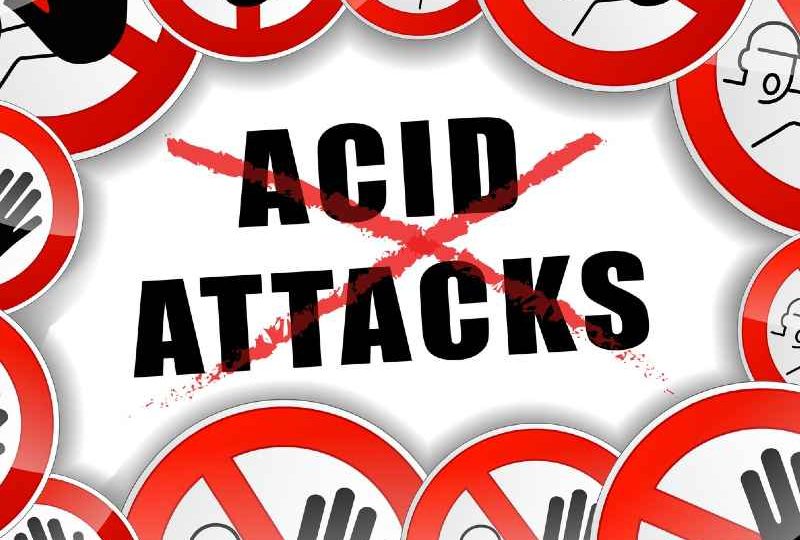

Why is Period Poverty a major problem in India? and “What are the Medical Implications of it”?

BY- JASMINE MARWAH

Council Member (West Bengal Human Rights Council, A wing of WICCI)

Before entering the main Topic, I would like to clarify some basic questions.

Many people are not aware of ‘What is Period Poverty?’ and ‘Is India suffering from Period Poverty’?

‘Period poverty’ describes the struggle many low-income women and girls face while trying to afford menstrual products and the increased economic vulnerability women and girls face due the financial burden posed by menstrual supplies.

• There are women across the globe not experiencing menstruation due to various medical conditions. Because as they are not aware of it , which is a consequence of the lack of discussion, 71% of girls in India remain unaware of ‘what is period’ before they experience it. Now days in India, In schools there is sex-education curriculum addressing the issues around menstruation, but mostly reaches after they have already experienced it and moreover it’s restricted to some of the schools in India.

Next question, Is India suffering from period poverty’? And “Is it a major issue?”

• According to the report, most of the schools in South Asia fell short of the WHO standards of one toilet for every 25 girls. Menstrual hygiene is considered as a global public health and human rights issue. There is a need for separate toilet for boys and girls

• “Girls have an irrevocable right to education, which is lost if they feel unable to attend lessons because of a lack of sanitary products or clean, private toilets at school,” Why 71% of girls in India are unaware about ‘periods’ before their first period? Because of taboos and superstitions of Indian society and lack of discussion. So the answer to the question whether is it a major issue or not , well period poverty is one of the major crisis , India is dealing with right now, ( not recognized by our government but major drawback of our health care system).

Reasons of period poverty in India

• Increased risk of disease:

Menstrual unhygiene is the fifth biggest killer of women in the world. According to the report of Indian Ministry of Health, only 12% of menstruators in India have exposure to proper period products. The rest of 88% however, are largely dependent on unsafe materials like rags, cloth, hay, sand and ash as their only alternatives. This exposes them to infectious uro-genital diseases ,And as I mentioned earlier due to less female toilets , girls are less likely to properly manage their own hygiene.

• Cultural stereotypes have a huge impact:

Menstruation in India is often seen as a shameful conversation.
In India, periods have long been a taboo and considered impure. According to some religious beliefs ,They are often excluded from social and religious events, denied entry into temples and shrines and even kept out of kitchens. The reason of this is, As described earlier, there is no required curriculum surrounding menstrual health in school because, due to limited and non-availability of female teachers across the country especially in remote areas can be identified as serious issue which remains unattended. The cultural taboo attached to menstruation prohibits male teachers from engaging in any such discussions.

• High cost of sanitation facilities:

Millions of families across India can’t afford to buy menstrual hygiene products. For low-income households, the cost of sanitary pads is often unattainable. Furthermore, Since most adolescents do not have access to toilets at home, girls are more likely to pay for restrooms in public, which is another unaffordable expense.
For a daily-wage laborer’s daughter , it’s a toss-up between spending on food for the family or purchasing sanitary napkins.

• Period poverty in India affects education:

As mentioned earlier,” Right to Education for Girls” is lost as many underprivileged girls on average, have to miss six days of class each month due to shame surrounding their periods or lack of sanitary products. This contributes to the number of girls in India who drop out of school each year, around 23 percent. Girls that leave school are stunted in their careers and are more likely to become child brides( A very young bride (8-16 years old). Often married to older man). India has the highest number of child brides in the world, with 15.5 million children being married by the age of 18.

What are the Medical Implications of period poverty? And how to improve it?

• According to point 3 “High cost of sanitation facilities” in last question
Sanitation facility in close proximity provides a considerable level of comfort for girls who suffer from severe cramping or dysmenorrhea(painful menstruation). Besides, it also ensures that a female gets enough privacy in order to clean up properly, and maintain better hygiene .
• It has also been suggested by Cleveland Clinic, Ohio that up to 50% of women will experience some form of digestive distress during their periods. This distress also demands the availability of easily accessible sanitation facilities.
When women do not have access to proper sanitation and hygiene facilities, it creates a higher risk for contagion for any infectious disease.
• Common outcomes of unhealthy menstruation management can be vaginal itching, dermatitis( inflammation of the skin), urinary tract infections (UTIs), which can be fatal if the kidney is damaged, genital tract infection, alteration in the pH balance of vaginal secretions (white and green discharge and others)., bacterial vaginosis with skin irritation(An overgrowth of bacteria in the vagina; characterized by itching, burning, or pain, and possibly a “fishy” smelling discharge.)
All leading to increased susceptibility to cervical cancer. These infections also tend to impact women the most when they’re pregnant or trying to get pregnant.
These are some alternatives of sanitary pads that can be used as in some women, Wearing Sanitary pad for long hours can cause irritation, rash, bad odor, etc. but in case comparison between the two , sanitary pads are non negotiable.
• Menstrual cups are hygiene products that are non-toxic, reusable and environmentally friendly for collecting menstrual fluid. Menstrual cups are made of medical grade silicone that go inside the vagina. As a health care professional I would recommend those women to use it who have at least once done intercourse, as the vaginal opening gets bigger, so it would be less painful, And major drawback for this is a women of lower class
Would not have enough time to insert it and as it’s painful , so they are more like likely to resist it .
• Tampons are also hygiene product that absorbs menstrual fluid. They are also inserted into the vagina and the disadvantage of using this is that it absorbs bodily fluid along with the blood.
These are the Initiatives to bring about change at the ecosystem level affecting better health and hygiene for all.
• There are choices in Sanitary napkins too like cloth sanitary pads and even clean sun-dried cotton cloth based on their comfort and accessibility to these options is important.
Menstrual health will be achieved not only through smart and safe products, but the shift in attitudes and behavior towards better hygiene is also much needed.

Impact of pandemic on period poverty!!

Menstrual health experts say the current coronavirus crisis has worsened matters further in India. The country was under a strict lockdown which has severely impacted production and supplies of menstrual hygiene products to less profitable areas. Coronavirus sparks a sanitary pad crisis in India. But still there were many organizations in India who helped in these distributing Sanitary napkins during these hard times like Samparan , Naari , International red cross society etc.

What are we doing to improve period poverty? And What more can we do?

• Removal of taxes:

India scrapped a 12% tax on sanitary products in 2018 after months of campaigning by activists. Campaigners had argued that menstrual hygiene products were not a luxury and periods were not a choice that a woman could simply opt out of. However, tax exemption is only a small step towards a much longer journey of making menstrual health and hygiene an accessible reality for every woman in the country.

• Having non profit organizations and campaigns to minimize period poverty:

Many positive strides have been taken to address the issues of period poverty. Binti ,Naari,Goonj, Sacchi Saheli etc . are aiming to minimize the issue. The nonprofit is fighting for menstrual equality through education, distribution of sanitary products and government advocacy.
Movies like PadMan , phullu and #YesIBleed campaign caused a small stir in the country, but still statistics say that in India 60% of adolescent girls missed school on account of menstruation and about 80% still use home-made pads.
Documentaries have also aided in global education surrounding period poverty. For example, “Period. End of Sentence.” Partnered with Action India (a nonprofit aiming to create gender equality) to create a documentary about the situation. The Netflix original was successful in fundraising enough money to install a vending machine of menstrual products in Hapur, India. It was also awarded an Oscar for “best documentary short film, gaining public recognition for its efforts.

• Initiating a conversation-

Its time we realize that menstruation is just a biological process and the secrecy surrounding it must go. Women need to know the reals facts about menstruation. Natural/Biological process happens in men also but in a different way. Menstrual blood which is considered so impure also nurture fetus in the womb. So if a child cannot be an impure, specifically male child than how the menstrual blood is impure? That is the reason, why it is important to normalize menstruation and destroy taboos around this natural process. It is important for us to engage in dialogue around menstruation beyond gender binary. It’s time to give them the freedom and knowledge to deal with the pain. Social media is a powerful tool and it should be used to spread positivity and awareness among the people.


Download Your E-Article/E-Paper here!!


The Audiobook is only available for a week. Make sure you download it from the online link. (If you forget to download Your Audiobook don’t worry just reach out to us via [whatsapp] we will help you with the same.)

ONE NATION & TWO PRICES FOR COVIDSHIELD

BY- MONALISA MUKHERJEE

Council Member (West Bengal Human Rights Council, A wing of WICCI)

This article deals with the recent concern of price discrimination of Covidshield vaccines in the Centre & the States. With a surge in the number of covid cases in India, it has become important more than ever to implement a ‘National Immunization Programme’ and give vaccines to everyone free of cost. Revolving around this issue, this article further deals with the discrimination in prices given the private hospitals in can sell the vaccine at a higher cost than the Centre & States and how it is a major hindrance to the whole process of eradicating the virus from the whole nation.

WHAT IS THE CONCERN?

COVISHIELD is manufactured by the “Serum Institute of India (SII)”1. With the advent in the number of covid cases coupled with the hike in vaccine prices, humans are seen to have been dealing with two pandemics in India. This differential pricing has invited shrewd criticism from people all over the coutry.


India is a developing country, with the ration of poor people to rich is higher on former, with healthcare expenses being the least important priority given that major part of the pandemic went by creating the basic awareness of “social distancing” & to “wear a mask”; and therefore a rise or rather an unnatural price differentiation between the centre & states and the private hospitals has led to a sticky situation.


The Hon’ble SC in various suo moto cases have asked the government to look into this concern and to start a “National Immunization Scheme” since it is impossible for those who earn wages per day less than the price of vaccine to get immunized and also because it is mandatory for the people between the age group of 18-45 to get registered on the website first; considering all the basic issues which still prevail, the court had come up with the suggestion to provide vaccine to everyone free of cost- but as we know it isn’t the scenario. Though a few states like Andhra Pradesh, Telangana, Chattisgarh and Kerala have stated that they will be providing vaccine to everyone free of cost.


Another concern which arises is for those who cannot genuinely afford the vaccine, will not be able to get vaccinated and priority will be given those who can get it from the private hospitals at a higher price- thus defeating the whole purpose of eradicating the virus from the whole country!

DIFFERENTIAL PRICING

The Hon’ble SC in one of the suo moto cases of Covid-19 said that, “it’s very very disturbing” referring to the differential pricing of vaccine for the private hospitals compared to the pricing given to the Centre & States.

The current pricing charged by the Serum Institute of India, manufacturer of the ‘Covid-shield’ vaccine are:

CENTRE & STATES
INR 300/-

PRIVATE HOSPITALS
INR 600/-

As rightly stated by the SC that the private manufacturers cannot be left to decide which state should get how much quantity of vaccines. This will lead to one state getting more vaccinated than the other leading to an unequal distribution of vaccines and depriving the poor people of their basic right to live a healthy life.
It must be the duty of the government buy the vaccines and distribute it free of cost during these crucial times- ‘when money should be the least important thing’, but ironically even after a major unemployment rise, money is something which people are hoping to have more than a healthy life to live since the former will be the only way to live.

Until April 30, 100% of the vaccines produced will be routed through the Centre to its own vaccination centres, state government hospitals and private hospitals. From May 1, 50% of the vaccines made by a manufacturer will go to the Centre, while the other 50% will be for state governments, private hospitals and the open market.

At private hospitals, people who were 45 and above could get either vaccine for Rs.250. This is because the Centre had capped the price of vaccines at Rs.250 and thus no hospital could charge people more than that.

IMPLICATIONS DUE TO DIFFERENTIAL PRICING

With a sudden hike at the prices of the covidshield vaccine, especially with a differential pricing has led an obvious outburst in the citizens of this country.


After the announcement of extending the vaccination drive from the age group of 18-45 years (earlier started only for those >45 years) the prices had been rised to Rs.400 (which later was priced down to Rs.300) for the centre & states; and Rs.600 for the private hospitals, which has several underlying implications which has been failed to be considered while deciding such high prices:


• Firstly, stating with the obvious, times when there would be a shortage of vaccines at government hospitals people would be left with the only option of rushing to private hospitals and end up paying higher price;

• Secondly, the ones who are able to afford the vaccines at higher prices will have an edge and the balance of convenience is inclined towards such people, leading to the poorer one to remain in-immune to the virus- thus defeating the whole purpose of curbing out the virus from the whole country;

• Thirdly, getting vaccinated for a virus which has such serious implications and has the whole world into a global pandemic, needs to have a proper execution and most certainly must be provided to every individual otherwise it is indirectly depriving such people of their basic fundamental ‘Right to Life’;

• Lastly, this differential pricing has not been founded on the basis of any intelligible differentia and is per se not only discriminatory but also arbitrary use of the powers vested in the hands of the manufacturer.

FUNDAMENTAL RIGHT BEING DENIED

As mentioned earlier, and also argued by several lawyers in front of the Hon’ble SC, not implementing a national immunization policy supplementing with a differential pricing of vaccine doses is prima facie depriving people of their ‘Fundamental Right to Live’3.


“The West Bengal government moved the Supreme Court on May 7, 2021, to seek a cap on differential vaccine pricing and to direct the Centre to fix a uniform rate. The state asked for free vaccines to be given under a universal campaign. West Bengal, in a prayer, as part of an affidavit filed by the state in the suo motu case taken up by the SC on COVID asked for the Centre to seek the advice of the National Pharmaceutical Pricing Authority on the vaccine policy. Pointing out that the costs of the two vaccines, Covaxin and Covidshield are different and likely to double, the state, as per the report, said in its affidavit.”


The State has further sought directions to the Centre to take immediate steps for compulsorily licensing the vaccines and expand vaccine production through the
18 manufacturing companies in India to boost vaccine availability at an administered price.


“The COVID-19 vaccination policy must be underpinned by the principle that we are as strong as our weakest link; a single person deprived of vaccination would be to the collective detriment of a large section of society; any immunization policy must pass the muster of Part III of the Constitution of India and must be in furtherance of a person’s fundamental right to health enshrined under Article 21 of the Constitution.” The affidavit has said.

A SUGGESTIVE APPROACH

Considering the density of the situation, the only feasible option would be for the government to take charge of the vaccines. It’s a pandemic, and it is the duty of the government to make sure every situation of this country is safe from this deadly virus; otherwise depriving anyone left the right to live!


Implementing a national immunization scheme would be a suggestive approach and every citizen irrespective of whether it may or may not be able to afford the vaccine, or as a matter of that fact, get themselves registered via the website- shall get vaccinated.


The government must take cognizance of the matter and also try to break the monopoly of supplying vaccines, as the manufacturers of a vaccine cannot be given a discretionary power to decide prices of a vaccine which is required by the whole mass in the country.
Those between the ages of 18 years and 44 years are expected to pay for the vaccines, as they are not considered part of the country’s priority groups of vulnerable citizens under the government’s ongoing vaccination programme. Since the Centre will provide free vaccinations only to persons above 45, it would have been better if the state governments provided free vaccinations to all younger adults from low-income families, migrant workers, and many such other reasons.

It shouldn’t be ‘One Nation Two prices’ instead ‘One Nation One Price’.


Download Your E-Article/E-Paper here!!


The Audiobook is only available for a week. Make sure you download it from the online link. (If you forget to download Your Audiobook don’t worry just reach out to us via [whatsapp] we will help you with the same.)

An Analysis of the concept of Female Genital Mutilation

BY- BABITA RAWAT

Council Member (West Bengal Human Rights Council, A wing of WICCI)

India is the largest democracy-based country in the world with a population of 130 million. However, women in India have faced endless problems at home and in public since their youth. Female genital mutilation (FGM) is a manner completed on girls in growing nations and is underreported; it entails slicing or changing the woman’s genitalia. The fitness results of FGM consist of bacterial and viral infections, obstetrical complications, and mental problems. Although efforts had been made to remove FGM, the dynamics that perpetuate the exercise have societal roots. Intervention strategies to sell extrude from in the network are vital for the successful eradication of the exercise. For prevention, similarly, research is had to expand packages that enhance awareness.

‘When men are oppressed, it’s a tragedy. When women are oppressed, it’s tradition’

Female genital mutilation is not only an inhumane practice but also a violation of certain basic and legal rights of women; however, it is another activity that lowers dignity and takes women in its clutches. Abuse leaves women psychologically and explicitly harmed. These brutal practices not only violate human rights, but also a woman’s most important and legitimate privileges. Female circumcision or genital circumcision includes any strategy that involves the partial or absolute evacuation of the outer woman. According to reports, around 75 are practiced mainly in the Bohra community. Sexual inequality and harmful social standards are factors that explain why this destructive practice occurs.

The World Health Organization decides on the dire consequences of female genital mutilation and works to ban it. Female genital mutilation (FGM) has health implications, often from following strategy that can cause severe drainage, illness, or blood damage, and even death, mental harm, and loss of sexual sensation. It can injure and even reopen scar tissue. Blisters, abscesses, and incontinence can even occur. Therefore, female genital mutilation should no longer claim that it is a religious practice under Article 25 of the Constitution of India. The Constitution of India is being undermined because a child, regardless of gender, has the fundamental right to equality, but the practice of female genital mutilation on a girl is a strict violation of Article 14 of the Supreme Court: Stop Female Genital Mutilation violates constitutional rights and promotes gender Courts interpret laws and use IPC and POCSO law to deal with them.


The Supreme Court of India deals with various cases of female genital mutilation and focuses on the main issues:


• Female genital mutilation violates Article 21 of the Constitution of India, which is a fundamental right to life and consecrated freedom in the Constitution of India. It also implies violating the right to privacy.


• The physical “integrity” of a girl is lost through this practice.


• Female genital mutilation abuses Article 15 of the Indian Constitution, which is also a fundamental right that forbids discrimination based on caste, gender, religion, or place of birth.


• The court ruled that it was a criminal offense under the POCSO.

• Violation of the rights of women and children in certain cases of “khatna” or as we know how female genital mutilation is described by the Supreme Court.


• Touching the female genitals, except for medical purposes, results in a criminal offense that could therefore be punished by the IPC and does not require penetration.

Case Law

In the case of Sunita Tiwari v. Indian Trade Union, human rights defender Sunita Tiwari filed a lawsuit requesting the prohibition of public interest action (PIL). Female genital mutilation is the removal of female genital organs. In India, this practice is widely adopted by the Shia Muslim sect Davudi Bora community. This approach is to regulate and control the sexual desire of women. She believes that this custom degenerates women and violates the human rights of women and children. This is in conflict with the right to life, personal freedom, equality, and privacy. He also pointed out that this violated the Universal Declaration of Human Rights. Even the World Health Organization considers this a serious violation of human rights. Worry about health issues and may lead to irreparable physical and mental disabilities. Although we do not have a clear law, the United Nations General Assembly passed a resolution in 2012 prohibiting female genital mutilation. Some countries (such as the United States and Australia) have banned its use, but India has no specific laws. The argument against PIL is that most of the PIL community opposes it and regards it as a religious practice, thus defending its protection under Articles 25 and 26 of the Constitution of India. Community lawyers believe this practice is safe and healthy. They argued that circumcision was circumcision rather than dismemberment, and therefore questioned the relevance of the case. The case has been transferred to the Constitutional Chamber of the Supreme Court to determine whether female genital mutilation is an important religious practice. In this case, no decision has been made yet. Serious violations of human rights, so higher courts can make judgments based on basic human rights, dignity, and equality for any legitimate reason.

Conclusion

Female genital mutilation is a serious and worrying problem worldwide. The appearance of sexual inequality and the empowerment of girls are essential to solving this problem. In India, a certain community is facing a violation of women’s human rights. Although India has not yet enacted strict laws to contain this threat, the international declaration and the United Nations’ views on the matter have alleviated the threat. Health and material can alleviate this problem to some extent. The most effective way to reduce calories in female genitalia is to spread sex education and change social traditions with the help of the previous generation.


Download Your E-Article/E-Paper here!!


The Audiobook is only available for a week. Make sure you download it from the online link. (If you forget to download Your Audiobook don’t worry just reach out to us via [whatsapp] we will help you with the same.)


Human Rights Violations: A Curse to the Society and Humanity

BY- TANYA SHARMA

Council Member (West Bengal Human Rights Council, A wing of WICCI)

“We can disagree and still love each other unless your disagreement is rooted in my oppression and denial of my humanity and right to exist”
– James Baldwin

Human Rights can be defined as the moral principles, or norms, or basic rights which are inherent to all human beings in the world irrespective of nationality, sex, national or ethnic origin, color, religion, language, or any other status, since birth until death. These rights are not granted by any state but are regularly protected in municipal and international law. Human rights belong to each and every one of us equally and are universal, inalienable, indivisible, interdependent, equal and non-discriminatory in nature. Acting as both rights and obligations, these rights ranges from the most fundamental, i.e. the right to life to those that make life worth experiencing, like the right to food, work, well being, education, and freedom. But is this exactly happening in reality? Is everyone enjoying their human rights? The answer to this is unfortunately ‘NO’. The newspapers, TV channels, Digital and Social Media are flushed with the cases of rape, murder, torture, sexual harassment, slavery, child abuse, custodial death, kidnapping, etc.


Especially a woman, right since her birth, becomes victim of a crime or target of a crime. The National Crime Records Bureau of India in its 2012 report stated that there is delineated crime percentage of 46 for every 100,000, rape and sexual assault of 2 per 100,000, dowry deaths figure of 0.7 per 100,000 and the estimate of domestic abuse by the spouse or his relative as 5.9 per 100,000. A woman faces many problems regarding her rights since her birth, may it be her being born as a girl child, her education rights, her marriage rights, her abortion rights or being sexually or mentally abused at her office or in-laws’s house, or may her being raped or gang raped or marital raped or being an acid attack survivor or being a woman with disability or waiving away her inheritance rights under family pressure or being traded away as a product for sex and slavery. A woman struggles and fights for her rights in each and every aspect of her life. In the landmark case of Centre for enquiry into Health and Allied Themes (CEHAT) v Union of India , the Supreme Court of India banned all advertisements relating to pre-natal sex determination techniques and directed the Central and State Governments to enact the provisions of PNDT Act immediately. In the famous case of Laxmi v Union of India , a petition was filed by an acid attack victim, named Laxmi, seeking measures to regulate the sale of acid and provide adequate compensation to the victim. The Supreme Court in this case imposed ban over the counter sale of acid and directed the dealers to sell acid unless the buyer provides a valid identity proof and states the need for the purchase. Also the Court made it mandatory for the dealer to submit the details of the sale within 3 days to the Police. In another case of Vishaka v State of Rajasthan , the Apex Court defined the term “sexual harassment” and put the onus on the employers to provide a safe working environment for women. In the other famous case of Lata Singh v State of Uttar Pradesh , the Supreme Court held that an adult woman has the right to marry or live with anyone of her choice and ordered the police to initiate criminal action against people who commit violence against those who decide to do inter-religious or inter-caste marriages. Also, in the case of State of Tamil Nadu v Suhas Katti , the defendant sent defamatory and obscene messages to the plaintiff online in a Yahoo message group because she refused to marry him. The Court, considering the provisions of Information Technology Act, 2000, convicted the accused to undergo a fine and with rigorous imprisonment of 2 years. For the offense of rape abuses, the Supreme Court in the cases of The Chairman, Railway Board v Chandrima Das and in the case of Bodhisattwa Gautam v Subhra Chakraborty held that Rape is not only a mere offence under the Indian Penal Code but is a heinous crime against the society as a whole also it abuses and violates the right to life and right to live with human dignity of the rape victim. There are many other landmark judgments provided by our courts which are used as a tool to uphold the basic rights of women.


Here, a question arises, “Are Men Safe?” Its answer is ‘NO’. Even men become victim to rape, sexual harassment and domestic violence. According to a study , 52.4% of men face sexual orientation based brutality and out of 1000 men, 51.5% experienced savagery from the spouses or intimate partners once in the course of their life and 10.5% in the last 12 months. The most well-known spousal brutality was sentimental (51.6%) followed by physical abuse (6%). Also men have to face false accusations and trials as some women use “women-favoring laws” as a tool to harass the men. There are certain reasons due to which domestic violence cases against men go unreported, these reasons are: firstly, the general stereotype against males that “men don’t cry” and due to this males feel ashamed to be judged and labeled as wimpy and effeminate by the society; secondly, males are feared of fake cases and losing their families; thirdly, men face societal and family pressure and are ashamed of opening up about violence and; lastly, the society will deny the fact that a man could also be a victim of domestic violence and they feel that domestic violence can only happen to women.
Children who are considered as the gifts from God and future of tomorrow are subjected to crimes namely, rape, child pornography, physical and emotional abuse, sex trafficking of minors, grievous hurt, etc. There have been 31.2 per cent cases of crimes against children registered under the POCSO Act also as per the ‘Crime in India’ 2019 report of the National Crime Record Bureau, there has been an increment in crimes against children by 4.5 per cent as compared to 2018 and an increment in registration of cases under the POCSO Act by 18.9 per cent. The NCRB report also stated as many as 148,185 crimes in the country against children in 2019.
Violation of human rights means cursing humanity and society but talking about the current situation where a deadly and infectious disease, COVID-19 has grasped the world in its inevitable clutches, the situation has gone even worse. Especially in our country, people are pleading the government to ensure equitable health care system, uphold free speech and reduce prison population. COVID-19 infections in India broke the global record on 27th April, 2021 by 320,000 recorded cases, nearly 2800 deaths and total to more than 17 million cases since the pandemic began in 2020 . There has been shortage of oxygen supplies, medicines, ventilators, hospital beds, ambulances, and cremation and burial services. Here, our government was expected to have invested in the country’s weak infrastructure since the pandemic began but unfortunately the government failed to do so because they were allowing and participating in large-scale gatherings, including election campaign rallies and in promoting a Hindu religious event where millions of people participated. To solve all the evolving issues, the government should remove all the hurdles coming in the supply chains of essential medical goods and services and should ensure requisite supply of oxygen, life-saving medicines, ventilators and testing kits. According to the International Covenant on Economic, Social and Cultural Rights, the highest attainable standard of physical and mental health should be provided to all. This is what exactly ‘Right to Health’ means, in which effective steps are taken by the government to ensure health facilities, goods and services which are available in sufficient quantity and accessibility, and without discrimination. Regarding ‘free speech’ Human Rights Watch said that the government should censor free speech as that would ultimately limit effective communication about the pandemic and undermine trust in government actions. Also the United Nations Office of the High Commissioner for Human Rights asked the India Government to release every person detained without sufficient legal basis namely, political prisoners and those detained for critical and dissenting views, in order to reduce and prevent the surging rates of infection in prisons and detection centres. Thus, the Indian Government should take immediate steps in order to prevent detained individuals, especially older people or people with disabilities or with underlying health conditions from the serious effects of COVID-19.
In general, to stop human rights violation, the state should bear the primary burden of responsibility for protecting and encouraging human rights. Specific laws should be made and must be enacted with strict vigilance. In case of occurrence of violations of human rights, the government should intervene and prosecute those who are responsible because when a government ratifies a treaty, it ensures respect, protect, and fulfillment of human rights. Not only Government but also the civil society should take up the responsibility in preventing human rights violations. If the government is violating human rights, directly or indirectly, then civil society should stand against it and hold them accountable. Also the established businesses and institutions should comply with the discrimination laws so that each and every person must be treated equally. The International Committees also keep a check on the governments and their track record with human rights and if any breach occurs, they are brought to the attention of International Tribunals or are tried in an International Court. Thus, violations occur every time, so instead of ignoring it we should stand against it and that is the only way we can bring a change in our society and will be able to make this planet a worth living place for all of us.


Download Your E-Article/E-Paper here!!


The Audiobook is only available for a week. Make sure you download it from the online link. (If you forget to download Your Audiobook don’t worry just reach out to us via [whatsapp] we will help you with the same.)


HOW FAIR IS COMPENSATION FOR HUMAN RIGHTS VIOLATIONS IN INDIA?

BY- NIRALI JAIN

Council Member (West Bengal Human Rights Council, A wing of WICCI)

The Human Rights are considered as those rights which are essential for the protection and for the maintenance of the dignity of the individuals and also to create the conditions in which each of the human being which can also help to develop his personality to the fullest of extent. Each individual are entitled to possess and enjoys all those rights without any of the criteria of his or her caste, the creed, the colour, the religion, the race, the age, the sex, the place of birth and also the nationality etc. These rights are universal in nature. Since the human rights are not to be created by any of the legislation, they are also resemble to the natural rights. By the virtue of their well being human, they are also entitled with the certain of the basic and to the inalienable rights which are also commonly called as the human rights. Human rights are also considered as the basic rights in which each of the human being who inherits the moment one which is conceived in the mother’s womb. With the birth of an individual, the human rights also become very operative. They are also based on their intrinsic justification and not on their enactment or for the recognition by the certain individuals. The question of the violation of such of the inherent right which is itself is a great of the challenge for the humanity. There is also a great campaign to protect and also to reinstate the human rights from its violation. Many of the Governmental as well as the non-governmental, which also includes the national and also the international organizations and of the work on to this direction. There are also the NGO’s which can also intervene at any of the point of time with any of the remedial to measures in the positive way by counseling, the educating the victims, also emancipating and also empowering them.

INDIAN citizens, who are arrested, or detained, or tortured, and also even killed unlawfully while in the police custody are not to be guaranteed the right to the compensation. The International standards also require to the reparations and even to the compensation for the victims of the violations of the fundamental rights. In India the compensation for these of the offences is also rarely issued and only at the judge’s discretion. India has also made a declaration on the Right to the Compensation when it is to be signed to the International Convention on the Civil and also to the Political Rights which is also known as ICCPR.
In India, the compensation is not considered as an enforceable right. An effective of the compensation of the system that would be deter to the government officials from the criminal activity and also encourage the victims to be bring their cases to the court. Currently, to the system or the lack of thereof does neither in the India. A mandatory right to be the compensation that must be considered as the established for the victims of the State which also imposed abuse.
The South Asia Human Rights Documentation Centre which is also known as SAHRDC which also highlighted the reality that also without the compensation of the democracy is the seriously been threatened: “The protection of the state from having pay just for the compensation for the human rights violations to the undermines of the legitimacy of the government.”

Respect for human rights also means providing relief when they are violated. The right to receive compensation for the violation of fundamental rights derives from the rights that were violated. It is, in fact, intrinsic to them. Thus, for example, a person’s right over her body means, inter-alia, that it is forbidden to attack or injure her without justification. However, the right over one’s body also entails the right to receive compensation in case of an unjustified attack in order to give the injured person the necessary tools to recover physically and mentally, or at least, to provide her with the treatments and accessories needed for achieving a quality of life which most closely resembles that which she would have had if it were not for the injury. A person who has been blinded will never again see a sunset; a person who was unlawfully imprisoned for five years will never regain her youth or the experiences she missed, a person whose family had been torn apart will never relive the family life which is no more. The monetary payment is both acknowledgement of the violated right and its importance and a rough attempt to compensate for the damage. Sometimes, the very acknowledgement of the harm and its severity provides some relief.

Putting human rights at the foundation of the rules of governance stems from the fact that they are valuable for human beings. Freedom of movement and speech, the freedom to demonstrate, personal autonomy, human dignity which is possible in an egalitarian society are just a few examples of rights without which human existence becomes wretched. These rights are not commodities with a fixed market value which are transferred from one hand to another, but they are no less necessary for our quality of life than those assets normally valued in monetary terms. Examining socieity from an economic perspective which does not take these values into account would lead to skewed calculations which do not reflect society’s real needs. It would result in preferring interests which are normally assessed monetarily over the most fundamental needs of human beings. In fact, most human beings have very little capital – financial or other, and they are, in any case, invulnerable to property damage of this kind. However, rights such as the right to dignity, liberty and taking part in the life and resources of society – these are universal rights. A legal system which compensates financial damages more than harm to human dignity, for example, is a system which has an inherent bias toward the wealthy and large corporations and disfavors the majority of society. An economic analysis of the law would require, for this reason also, meaningful compensation for the violation of human rights. Poor compensation thereof would lead to a situation where it is financially feasible to infringe such rights in order to promote other goals which society considers less important.
Compensation for the violation of human rights is essential not only in order to bring the injured individual to a state which most closely resembles the one in which he would have been if it were not for the infringement, it is also essential to ensure that human rights will not become empty letters. A right whose violation has no consequence will quickly lose any real substance. Therefore, violation of human rights must yield rapid and effective consequences on two levels: the criminal– locating those responsible and bringing them to trial; and the civil – compensating the victim. A society which does not bring to trial those who violate human rights and does not compensate their victims is a society without accountability and one which implicitly permits abuse of the weak.

RudulSah v State of Bihar (1983)


This is the case which is considered as the first case in which the Supreme Court of the India which is interpreted to the Constitution, specifically the Article 32, which also include to the right to the compensation for the victims of the unlawful imprisonment. In this case, the petitioner was acquitted on the date 3 June year 1968, but not to be released from the jail until to the date 16 October of the year 1982 the fourteen years later. The RudulSah petitioned to the court which is seeking of his release as well as the compensation for the fourteen years of the unlawful imprisonment. The Court here held that the petitioner’s of the right to life and also the liberty under the Article 21 of the Constitution which was also had been violated and that of the compensation for the deprivation of the fundamental right which could also be granted under the Article 32 of the constitution. The Article 21 of the Constitution of India which states that : “no person must be deprived of his life or to the personal liberty of the except which is also according to the procedure which is also established by the law.”
In this case court also granted the Rs.35,000 as the compensation.
In the case of Bhim Singh, MLA v State of J&K and Ors. (1986), the Supreme Court which ordered to the state of the Jammu and Kashmir to be grant as the Mr. Bhim Singh, who is the Member of the Legislative Assembly of the Jammu and Kashmir, to the Rs. 50,000 for which his illegal to the detention from the 10 September in the year 1985 to the 14 September on the year 1985. The Court also stated, “If the personal with the liberty of the Member of the Legislative Assembly is also be played with in this of the fashion, one which can only be the wonder what may also be happen to the lesser mortals!”
The Court which is went on to the write, The “Custodians of the law and also to the order that should not to become the depredators of the civil liberties. Their is also the duty which is to be protect and not to be abduct.” The Citing of the RudulSah as to the precedent the Court was also found that within its to the power of the right which is award to the Bhim Singh monetary of the compensation which is also the holding that there was “no the doubt” that his constitutional of the rights that were violated. The Court also stated, that “In the appropriate cases we have to be the jurisdiction to the compensate of the victim by the awarding of the suitable monetary of the compensation. We is also be consider this is also an appropriate case.”
In the case of the NilabatiBehera v State of Orissa (1993), in this case the petitioner’s son was also be taken into the police custody and also be killed; his body was also found on a the railway track. Once again in this case the Supreme Court was also utilised by the Article 32 of the constitution which is to be grant the monetary compensation. In this decision, the Supreme Court also established that the High Courts could also issue the compensation as per Article 226 of the Constitutionof India . The Court also ordered that the State of Orissa to be pay the amount of Rs. 1, 50,000 to the petitioner, the deceased’s father, for the violation of the human rights.
Although these all cases also helped to be establish the right to the compensation, the Supreme Court of india has not to be interpreted this is the right as the absolute or the mandatory. In the case of the Sube Singh v State of Haryana (2006), In this case the Court held that the “before ordering to the compensation, the courts will also examine whether the violation of the right to life which is the ‘patent and also incontrovertible’, the shakes of the conscience of the court, and which is also results in the death or to the disability of the arrested person.”
In the case of , D.K. Basu v State of West Bengal, In this case the Supreme Court also held, that “for the violation of the fundamental right to the life or to the basic of the human rights… this is the Court that has to be taken the view that the defense of the sovereign of the immunity is not be available to the State… for all the established violation of the rights that has to be guaranteed by the Article 21 of the Constitution of India.” However, that is also be awards for the compensation and to be the determinations that was also the case of the involves the violation of the fundamental right and thus, for the sovereign immunity which is also inapplicable are to be still the decisions that is to be made by the individual of the judges on there is the discretion. As the SAHRDC reported, The “courts often be unjustly dismiss to the compensation which is also be claims in the fundamental rights of the cases.” Thus, the de facto and the de jure immunity which is remains an the additional barrier, which is also aside from the lack of the mandatory compensation, which is also be drastically to the limits which is the reparation for the victims and also allows to the human rights abuses which is also to be continue throughout the India.


Download Your E-Article/E-Paper here!!


The Audiobook is only available for a week. Make sure you download it from the online link. (If you forget to download Your Audiobook don’t worry just reach out to us via [whatsapp] we will help you with the same.)


CALL FOR BLOGS AND ARTICLES

Call for unique piece of writing [ Issue 2021]

The Independent Pioneer is offering publication for unique and unpublished Articles in Volume 1 Issue 1. We invite all professors, scholars, academicians, students, independent writers at large for publishing articles in any field. The manuscript must comprehensively analyze the issue that the Author seeks to highlight.

THEME:

Any appropriate theme related to Law, External affairs, Finance and Recent issues is acceptable.

Please send us your topic through mail or whatsapp for approval.

ELIGILBILITY:

Any appropriate theme related to Law, External affairs, Finance and Recent issues is acceptable.

Entries from individuals, independent writers, professors rather than the above mentioned post can also send us their piece of writing for approval.

CITATION STYLE:

The Blue-book Uniform System of Citation (20th edition) or any standard citation method must be followed.

FORMAT OF MAIN TEXT AND THE FOOTNOTES:

  1. Font of the manuscript must be “Times New Roman”.
  2. Font Size must be “12”.
  3. Line Spacing must be “1.5”.
  4. Font size of footnotes must be “10”.
  5. Line spacing of footnotes must be “1.0”.

WORD LIMIT:

  1. The Word Limit for each article is 1500-2000 words.

CO-AUTHORSHIP:

Co-Authorship of a maximum of one person is permitted.

HOW TO SUBMIT:

The author must send the draft of their manuscript at the ip.official@theindependentpioneer.com. The Subject of the e-mail should be titled “Author’s Name – Manuscript Title”. The manuscript must be submitted in (.doc or .docx) format.
ALL SUBMISSIONS MUST BE ACCOMPANIED BY:

The Manuscript should be accompanied by a Cover Letter specifying the Author’s name, Designation, Institute, Course, Academic Year, Contact Number & Email. Authors are requested not to put their names anywhere in the main manuscript, It must only be provided in a separate document.

PUBLICATION POLICY:

  1. Copyright of all publication shall remain with The Independent Pioneer. However, the author will be adequately acknowledged at the end of the publication.
  2. The abstract should be written in the Manuscript. Please note that there is no requirement of prior submission of the abstract, as papers are selected for publication only on the basis of the full manuscript.
  3. The author(s) bear sole responsibility for the accuracy of facts, opinions, or views stated in the submitted Manuscript.
  4. If there are any images in the manuscript, add appropriate captions and sources in the word document so that we are aware of the locations where such pictures need to be added. All images must be attached as separate attachments to ensure their quality is maintained.
  5. Plagiarism should be less than 10% and in case of gross plagiarism found in the contents of the submitted manuscript, the manuscript shall be subject to rejection.
  6. Final Discretion of Acceptance of the Manuscript lies with the Editorial Board after undergoing the procedure.
  7. All the submissions send to us must be original and attached with a declaration of originality. Submissions should not have been published nor should they be under consideration for publication in any other publications.
  8. The Editors reserve the right to delete or edit any article or part thereof whose content is found to be offensive, defamatory, out-rightly unethical, or if it is suggestive of racism, sexual or religious discrimination, illegal or terror activities, etc.

PERKS:

A soft copy of the certificate will be provided after successful publication.

IMPORTANT DATES:

Last date and day for submission of full manuscript: June 15, 2021 (Tuesday).

PUBLICATION FEE AND REVIEWING FEE:

Single Author: Rs. 300

With Co- Author: Rs. 600

CONTACT INFORMATION:

Phone/WhatsApp – 7003546107

Email – ip.official@theindependentpioneer.com

RAISE YOUR VOICE

We Are Here To Listen To IT !! [ ISSUE 2021]

Welcome to the official blog of the TV review team for The Independent Pioneer.

We approve and publish all videos on our official website as well as our youtube channel. Our editorial team helps us with video post-production and captioning and subtitling of published videos.

We use this P2 to post our progress, status reports, and occasional geeky video debates. Use the “Subscribe to Blog via Email” widget to follow along!

Video Submission Guidelines!!

Please send us an email or contact us via whatsapp mentioning your name and your topic and a short brief description of the same for approval.

You have to contact us as per guidelines for approval of topic and approval of time limit as per topic,which will be provided to you by our editorial team.

Presentation Guidelines

  • Shorter videos are generally better. The average video should be no longer than 3 minutes in length, but some topics (like a full talk) may require more time.
  • Each video should cover one topic.
  • Use the script that has been written for your topic.
  • Do not add editorial or self-promotional comments. Relatedly, do not introduce yourself.
  • No advertising, production logos/credits, or lower-thirds graphics in the video. There is a producer credit line (text) when you submit your video. Please consult this post about logos in the slide decks and videos.

Audio Quality

  • Use a quality mic to make sure your audio is clear and crisp.
  • Record in a quiet place to ensure there is no background noise or static.
  • Avoid Aahh’s, Mmm’s or plosives (sound spike made when using p’s or t’s) when speaking.
  • Consider using a script for consistency.

Visual Requirements

  • Record in a 16:9 aspect ratio (720p = 1280×720 or 1080p = 1920×1080)
  • Adjust the recording area to screen capture only the area needed for the tutorial and to make sure all the mouse movements are captured.
  • Avoid showing any part of your desktop or other icons/programs that are on your computer in the screen capture.

Where to make submissions ?

If you’re ready to submit, upload your video. Our content is moderated by volunteers, and so it might take a little while before your content is published. Make sure you include your email address in the submission so we can contact you with any questions.

After topic approval and video time limit provided to you by our editorial team go to our website click on ( Raise your Voice) in opportunities section and you can submit your video here!!

CONTACT INFORMATION:

Phone/WhatsApp – 7003546107

Email – ip.official@theindependentpioneer.com

CALL FOR PAPERS

Call for paper [Volume 1, Issue 1]

The Independent Pioneer is offering publication for unique and unpublished Research Papers and Articles in Volume 1 Issue 1. We invite all professors, scholars, academicians, students at large for publishing papers in field of Law, and all other fields. The manuscript must comprehensively analyze the issue that the Author seeks to highlight.

THEME:

Any appropriate theme related to Law, External affairs, Finance, Recent issues and Cyber is acceptable.

Please send us your topic through mail or whatsapp for approval.

ELIGILBILITY:

Entries from scholars including students pursuing Bachelors or Masters in law and engineering would be accepted.

Entries from individuals rather than the above mentioned post can also send us their piece of writing for approval.

CITATION STYLE:

The Blue-book Uniform System of Citation (20th edition) or any standard citation method must be followed.

FORMAT OF MAIN TEXT AND THE FOOTNOTES:

  1. Font of the manuscript must be “Times New Roman”.
  2. Font Size must be “12”.
  3. Line Spacing must be “1.5”.
  4. Font size of footnotes must be “10”.
  5. Line spacing of footnotes must be “1.0”.

WORD LIMIT:

  1. The Word Limit for each research paper is 4000-8000 words.

CO-AUTHORSHIP:

Co-Authorship of a maximum of one person is permitted.

HOW TO SUBMIT:

The author must send the draft of their manuscript at the ip.official@theindependentpioneer.com. The Subject of the e-mail should be titled “Author’s Name – Manuscript Title”. The manuscript must be submitted in (.doc or .docx) format.

ALL SUBMISSIONS MUST BE ACCOMPANIED BY:

The Manuscript should be accompanied by a Cover Letter specifying the Author’s name, Designation, Institute, Course, Academic Year, Contact Number & Email. Authors are requested not to put their names anywhere in the main manuscript, It must only be provided in a separate document.

PUBLICATION POLICY:

  1. Copyright of all publication shall remain with The Independent Pioneer. However, the author will be adequately acknowledged at the end of the publication.
  2. The abstract should be written in the Manuscript. Please note that there is no requirement of prior submission of the abstract, as papers are selected for publication only on the basis of the full manuscript.
  3. The author(s) bear sole responsibility for the accuracy of facts, opinions, or views stated in the submitted Manuscript.
  4. If there are any images in the manuscript, add appropriate captions and sources in the word document so that we are aware of the locations where such pictures need to be added. All images must be attached as separate attachments to ensure their quality is maintained.
  5. Plagiarism should be less than 10% and in case of gross plagiarism found in the contents of the submitted manuscript, the manuscript shall be subject to rejection.
  6. Final Discretion of Acceptance of the Manuscript lies with the Editorial Board after undergoing the procedure.
  7. All the submissions send to us must be original and attached with a declaration of originality. Submissions should not have been published nor should they be under consideration for publication in any other journal.
  8. The Editors reserve the right to delete or edit any article or part thereof whose content is found to be offensive, defamatory, out-rightly unethical, or if it is suggestive of racism, sexual or religious discrimination, illegal or terror activities, etc.

PERKS:

A soft copy of the certificate will be provided after successful publication.

IMPORTANT DATES:

Last date and day for submission of full manuscript: July 30, 2021 (Friday).

PUBLICATION FEE AND REVIEWING FEE:

Single Author: Rs. 700

With Co- Author: Rs. 1000

CONTACT INFORMATION:

Phone/WhatsApp – 7003546107

Email – ip.official@theindependentpioneer.com

Design a site like this with WordPress.com
Get started