

BY- MANSI VATS

The end approaches, but the apocalypse is long lived- Jacques Derrida.
It is true that we people are in a stage where it is difficult to analyze and interpret a situation which is devastatingly increasing every single day.
Covid-19 has impacted the whole world and that has rendered most countries helpless. This includes not only developing countries but developed countries as well like US, Italy and Spain. Until now, the pandemic’s rate of spread has been steadily rising, resulting in hundreds of thousands of deaths on a global scale. With such a large number of infected people, the only way to keep the infection from spreading to the rest of the population was to alienate people from one another.
On March 22, 2020, the Indian government announced a nationwide lockout, preventing people from leaving their homes. This was a significant development that substantially aided the government’s response to the pandemic. The virus’s transmission chain has broken down, and the exponential curve that indicates an increase in the number of reports was steadily decreasing but since April 2021 the situation with the second wave of corona virus has led to an increase in no. of casualties with lack of oxygen in the country. The rise in prices of Oximeters, medicines and food had only led India into a phase of Recession.
Economic Implications
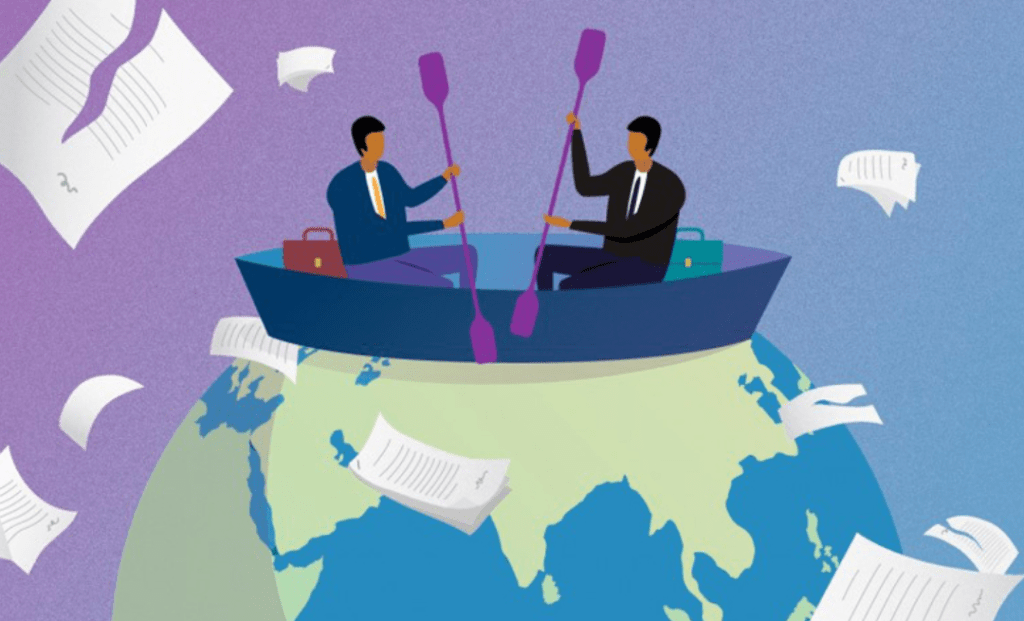
The Gross Domestic Product (GDP) estimates for India downwards by 0.2% points for fiscal year 2020 and by 0.5% for the fiscal year 2021. The FICCI survey reports a huge impact of the shutdown caused due to COVID-19 on 53% of businesses in India.
The salaries are being cut and the employees being laid off by various airlines and hotels. The Centre for Monitoring Indian Economy reported that the unemployment rate in India has risen to 26% from 7% within a month after the lockdown was imposed.
FOOD AND AGRICULTURE
Not only the industries but the agriculture has also been severely affected due to the pandemic. The tea estates were unable to harvest their first flush due to the logistical problems because of the lockdown. This will lead to a significant decrease in revenue in the Darjeeling region and might also cause a drop up to 8% in exports.
As Agriculture is the main strength of the country and entails in the government’s essential category, the effect on primary agricultural output and agro-input use is expected to be minimal. Several state governments have already permitted the free flow of fruits, vegetables, milk, and other goods. The effect of ambiguous restrictions on online food grocery platforms is important. Several state governments have already permitted the free movement of fruits, vegetables, milk, and other foodstuffs. Unclear limits on travel and the halting of logistics vehicles have a major effect on online food grocery platforms. In the short term, the steps announced by the RBI and the Finance Minister would benefit the industry and employees.
AVIATION AND TOURISM
The first sectors to be severely impacted by the pandemic were aviation and tourism. COVID, it seems, would have a greater impact on these sectors than 9/11 and the 2008 financial crisis. The Aviation Sector and Tourism both contribute about 2.4 percent and 9.2 percent of our GDP, respectively. In fiscal year 2018-19, the tourism industry served approximately 43 million people. These two industries are dealing with critical cash flow since the pandemic. Both white-collar and blue-collar employment will be affected. According to IATO estimates, travel restrictions could cost these industries about 85 billion rupees. In the fields of contactless boarding and travel technology, the Pandemic has sparked a surge of creativity.
TELECOM
Even before the COVID 19, there were dramatic changes in India’s telecom sector as a result of brief price wars between service providers. Owing to limitations, most important services and industries were able to continue operating throughout the pandemic thanks to the introduction of the “work from home” policy. There has been a 10% rise in demand. Telcos, on the other hand, are anticipating a dramatic decline in new subscriber additions. As a policy recommendation, the government could help the sector by easing regulatory requirements and providing a moratorium on spectrum dues, which could be used by companies to expand their networks.
OIL AND GAS INDUSTRIES
The Indian oil and gas industry is significant in the global context; it is the world’s third-largest energy user, only behind United States and China, and accounts for 5.2 percent of global oil demand. Due to covid-19 which resulted in complete lockdown, industries saw a decrease in demand as transport fuels (which account for two-thirds of total demand in the oil and gas sector), as auto and industrial manufacturing dropped and products and passenger movement (both bulk and personal) fell. Despite the fact that oil prices fell during this period, the government increased excise and special excise duty to compensate for the revenue loss, as well as the road cess. To stimulate demand, the government may consider passing on the benefits of lower crude prices to end consumers at retail outlets as a policy recommendation.
PHARMACEUTICALS
Since the start of the Covid-19 pandemic, the pharmaceutical industry has been on the rise, especially in India, the world’s largest producer of generic drugs. It has been surging in India, exporting Hydroxychloroquine to the world, particularly to the US, UK, Canada, and the Middle East, with a market size of $55 billion at the start of 2020. The pandemic has caused a recent increase in the price of raw materials imported from China. Generic drugs have been hit the hardest because of the industry’s heavy dependence on imports, broken supply chains, and labor shortages affected by social distancing. Simultaneously, the pharmaceutical industry is suffering as a result of government-imposed export bans on essential drugs, machinery, and PPE kits in order to ensure adequate supplies for the region. The rise in demand for these medications, combined with their limited availability, is making things more difficult. In such a difficult moment, easing financial burden on pharmaceutical firms, tax relief, and solving the labor shortage may be the differentiating factors.
LEGAL IMPLICATIONS
FORCE MAJEURE
Despite the fact that the term ‘force majeure’ does not exist in Indian law, its doctrine may be traced back to Section 56 of the Indian Contract Act, 1872. A force majeure clause in a commercial agreement specifies the circumstances under which performance under the contract shall be excused or temporarily suspended.
The underlying principle in the case of a Force majeure event is that if an event or circumstance occurs that is beyond a party’s reasonable control and is unavoidable, and prevents or delays that party from performing some or all of its contractual obligations, that party will be released from those obligations/ liability. When force majeure is invoked, the contract is not only suspended, but the affected party is also obliged to continue performing its obligations to the degree that it is not impeded by the event of force majeure. The party asserting force majeure must demonstrate that it used all reasonable efforts to avoid or reduce the force majeure event and its consequences.
The Central Electricity Regulation Committee (CERC) recently ruled that “demonetization” is a suitable criterion for invoking the party’s force majeure provision. However, this contradicts the Hon’ble Supreme Court’s ruling in Energy Watchdog v. CERC , in which the reach of the force majeure provision was carefully limited. In this case, India acknowledged a new dimension to the interpretation of force majeure events and their expanding extent.

PANDEMIC SCENARIO
The outbreak’s global impact has resulted in significant disruptions to commercial activities and day-to-day business transactions. It is critical to note that numerous governments have issued lockdown and suspension orders as a result of specific ordinances and general government regulations. As a result, it is very reasonable to assert that the pandemic’s consequences have the impact of a rigid interference. In the event of a pandemic, the scope and extent of a force majeure clause must be determined based on the parties’ agreement’s “definition of force majeure,” as well as the jurisprudence surrounding the terms “extraordinary events” and “circumstances beyond the reasonable control and expectation of the parties.” Even though the agreement’s force majeure provision includes the phrase epidemics and pandemics, the party impacted must normally prove that the force majeure clause interfered with the contractual portion’s execution. n light of the current situation, which has arisen as a result of the COVID-19 epidemic, the Indian government has taken steps to protect the interests of parties to commercial contracts. The Ministry of Finance, Government of India, recently clarified the ‘Manual for Procurement of Goods, 2017’ in an office memorandum dated 19.02.2020, and proclaimed that in the event of any disruption in the supply chains, The Force Majeure Clause (FMC) in the contract will cover any circumstance resulting from the spread of the Corona virus in China or any other country.
It is further clarified that such a circumstance should be regarded as a natural calamity, and that the Force Majeure clause may be applied, when applicable, after following the proper procedure. The Ministry of Finance has issued the aforementioned Manual for various Ministries/Departments that have been given the authority to establish their own procurement arrangements under the Delegation of Financial Power Rules, which must be followed in accordance with the ‘Procurement Guidelines. ‘The Ministry of New and Renewable Energy took a similar step with regard to “solar project developers.”
The Ministry has announced, via an Office memorandum dated 20.03.2020, that anyone who misses contractual obligation dates due to COVID -19 can utilize force majeure provisions to avoid financial penalties. In these difficult circumstances, such an initiative by the Indian government is a significant step forward. At the same time, even in the face of such documented events, the issue of force majeure and its application to a specific contract would have to be revisited at the stage of litigation or arbitration. There has to be sufficient evidence to establish that the party’s obligations under the contract could not be fulfilled by any other means or method.
Delayed deliveries and shipments
COVID-19 is reported to have hampered the delivery of several cargoes that were ready to ship but couldn’t get there in time. This could be due to restricted capacity at the loadport, quarantine limitations put on certain ships, a ship’s unwillingness to comply with her charterer’s orders to travel to a pandemic-affected port, or partial or whole closures of ports, terminals, and other facilities. In certain circumstances, the delay hasn’t hampered loading operations, but has hampered the preparation and/or production of documentation required to obtain payment from the customer. Difficulties in bringing surveyors on board to collect samples for certification or delays in dealing with customs requirements are examples of this type of problem. Whatever the cause of the individual non-performance, traders must act quickly and cooperatively to save the contract and avoid time-consuming and costly litigation. While it is true that the seller has a strict responsibility to ship at the specified time and from the specified place, if any, English law also imposes a general responsibility on any party claiming damages for breach of contract to limit its losses. Cooperation and flexibility are frequently associated with terms such as “business sense,” “reasonableness,” and – when applicable – “good faith,” which may be useful later in resolving disputes through mediation, arbitration, or litigation.

Lack of Personal Protective Equipment (PPE)
The Supreme Court ordered the government to give PPE to Heath Care Workers (HCWs), but it did not include any provisions for monitoring compliance with its own directives.
In Parmanad Katara, the Supreme Court ordered that private hospitals must admit non-COVID emergency patients as well. But in reality non-Covid emergency patients have not been admitted into a private hospital, which is such a shame to Humanity.
Download Your E-Article/E-Paper here!!
The Audiobook is only available for a week. Make sure you download it from the online link. (If you forget to download Your Audiobook don’t worry just reach out to us via [whatsapp] we will help you with the same.)


 The Independent Pioneer