

BY- AYUSHI DIXIT

If we are to fight discrimination and injustice against women we must start from the home for if a woman cannot be safe in her own house then she cannot be expected to feel safe anywhere. According to UN reports one out of three women in the world face some kind of violence. The deplorable practise of domestic violence has been deep rooted in the society not only in India but also in the west. Middle East suffers the most due to increased domination of patriarchy in the formation of laws and policies. A recent report by UN Women estimates that at least 37% of women in Arab countries have experienced some level of domestic violence. High-profile incidents and demonstrations have, in recent months, highlighted the prevalence of the issue. In May, 17-year-old Menna Abdel Aziz made the news in Egypt and around the world when she posted a TikTok video showing her facial bruises after an alleged sexual assault. Though a police investigation would eventually back her story, she still had to face charges of “misusing social media networks, inciting debauchery, and violating Egyptian family values.”

The situation has just gotten worse over the years and Covid-19 created an unprecedented disruption. When the world was struggling with the deadly virus, the women across the world were struggling to just stay alive at their home because they had to be isolated with their abusers. The hashtag #antidomesticviolenceduringepidemic was searched more than 3000 times in Chinese social media As per the statistics released by the National Commission for Women (NCW) India in early April 2020 there has been 100 % increase in complaints related to violence against women after the nationwide lockdown was imposed in March 2020.
Major reasons behind this surge.
a) As identified by sociology and gender literature, there is a direct relationship, which means that, when families spend more time together, violence may occur without any specific reason—a dynamic that can be attributed to human psychology 3.
b) Due to mass lay-offs and the reduction in the income due to pandemic resulted in economic stress. Even if a family does not have a history of abuse, economic distress during a pandemic due to financial strain and a lack of social support can fuel violence.
c) The shift of responsibilities also resulted in the surge. The basic work which doesn’t fall under the societal constructed norms of the dominant gender affects the ego.
d) The increased interactions and the revelation of the hidden/unknown habits that may not be compatible with each other in a family setup.
India and the twin public health emergencies.
As mentioned above there have been 100% rise in the number of cases of violence against. During the first four phases of the COVID-19-related lockdown, Indian women filed more domestic violence complaints than recorded in a similar period in the last 10 years. But even this unusual spurt is only the tip of the iceberg as 86% women who experience domestic violence do not seek help in India. As a matter of fact Canada reported more domestic violence cases than India. This indicates that women in India have acclimatized themselves with violence. This gets validated by a remark given by Rekha Sharma, Chairperson of National Commission for Women. She says that, in most of the calls made to the helpline number by the victims, they very easily accepted that they have been subject to violence for many years, but since there has been restriction in the movement, they are not able to share it with anyone and hence they are reaching out.
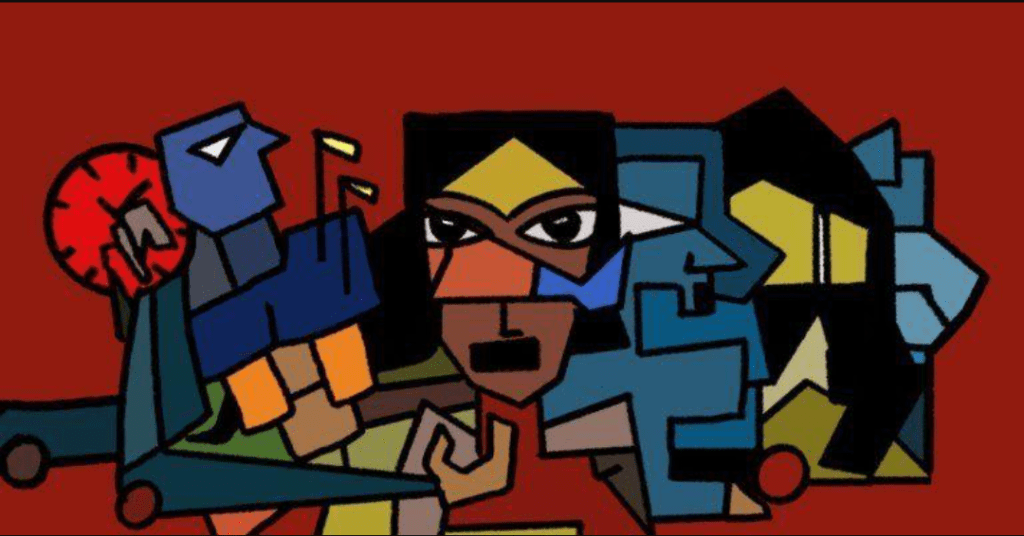
The definition of Domestic Violence includes four categories of abuse namely: physical, sexual, verbal/emotional and economic. “Physical Abuse” is any act or conduct which causes bodily pain, harm, or danger to life, limb, or health or impair the health or development of the aggrieved person. It also includes assault, criminal intimidation and criminal force.
“Sexual Abuse” is any sexual conduct that abuses, humiliates, degrades, or otherwise violates the dignity of a woman. The definition of sexual abuse is not exclusive in nature and hence time and again the courts have recognised other forms of sexual abuse, such as forced sexual intercourse, demands to indulge in oral sex or watch pornography.
“Verbal and Emotional Abuse” includes insults, ridicule, and humiliation, name calling especially with regard to not having a child or not having a male child and repeated threats to cause physical pain to any person whom the aggrieved is interested in. Verbal and Emotional abuse can also take place in several forms such as character assassination of the aggrieved woman, name calling, unwarranted comments regarding not bringing dowry, threatening to commit suicide as a method of coercion, preventing a woman to get married as per her choice etc.
Lastly, “Economic Abuse” is depriving the aggrieved woman from all sorts of financial resources to which she is entitled to under any law or custom or legal order or which she requires out of necessity, such as for running the household, taking care of the children etc. It also includes alienation of the movable or immovable assets in which she has interest too, prohibiting the aggrieved woman or putting restriction on her to continue the use of resources or facilities. Courts have also interpreted not giving food to the aggrieved person, interfering with the aggrieved person’s ability to get an employment, forcing a woman to leave her job etc. as a form of economic abuse .
But unless there is a physical harm or unless a woman suffers a mental condition directly caused due to domestic violence, the society ,even the victim herself rests in denial.
Steps taken by the Indian Government.
Notwithstanding the issue raised by the NGO’s and the demography as well there were no solid steps taken in order to curb domestic violence. The Delhi High Court in response to the petition filed by the NGO directed the centre to make better regulations about the implementation of the Domestic Violence Act. To which the centre explained it’s already established mechanism (which was clearly failing). The court disposed the petition. The Jammu and Kashmir High Court took suo moto cognizance and on 18 April 2020, offered slew directions that include creation of special funds and designating informal spaces for women such as grocery stores and pharmacies where women could report abuse without alerting the perpetrator. The Karnataka High Court, too has asked the state government about the helplines and action taken on domestic violence complaints. The state in its reply stated that helplines, counselors, shelter homes and protection officers are working round the clock to help victims of violence. In Tamil Nadu, protection officers appointed under the Domestic Violence Act 2005 are allowed to move during the lockdown and some women in dangerous situations are being rescued and have been moved to shelter homes . In UP, the state government has initiated a special helpline for victims of domestic abuse under the title `Suppress Corona not your voice’
A way forward.
Implementation of Laws: We have the criminal law amendment act of 2018, criminal law amendment act of 2013, Protection of Women from Domestic Violence, 2006, Dowry Prohibition act 1961 etc. Notwithstanding the basket full of laws, the data is extremely unfortunate. The implementation needs to be regulated because the laws are very much in place. Women are hesitant to approach the police because the prevalent insensitivity, the culture of victim blaming and moral policing. There needs to be change at the training level of the police and its reinforcement. The state should interfere more and take more accountability. The law won’t become deterrent unless the state wants it to become deterrent. The ‘Nirbhaya Fund’ has been lying unused for seven years. It should be brought in use to introduce better helpline numbers for victims. It should also be used to create a proper channel well equipped with psychologists, psychiatrist, marriage counsellors etc.
The culture of dowry needs to be completely abolished: Dowry is a menace which we have completely failed to fight. Most of the cases of domestic violence are instigated due to dispute regarding dowry.
Bring boys into the picture: It’s high time that the responsibility of safety should be shifted from the victims to the perpetrators. Boys need to be educated at home about the equal existence of all the genders. Apart from empowering, educating women about their rights, boys should be taught to not step over the boundaries of law and humanity.
Other measures: A makeshift arrangement of safe spaces (space away from the abuser) by creation of temporary shelter homes should also be considered. Educating and using available human resources like ASHA workers and other health workers, who are currently conducting door to door surveys about covid-19, in identifying subtle signs of DV would be prudent.
Our honourable Vice President spoke on domestic violence and quoted a few words from Manusmriti and said, “Yatra naryastu pujyante ramante tatra Devata”(where women are worshipped, there gods rejoice).
When a person is worshipped, its human existence, its emotions is subjected to shut eyes and ears. Hence, worshipping women is definitely not the solution but counting her as a human is.
Download Your E-Article/E-Paper here!!
The Audiobook is only available for a week. Make sure you download it from the online link. (If you forget to download Your Audiobook don’t worry just reach out to us via [whatsapp] we will help you with the same.)


 The Independent Pioneer