BY- JASMINE MARWAH

Before entering the main Topic, I would like to clarify some basic questions.
Many people are not aware of ‘What is Period Poverty?’ and ‘Is India suffering from Period Poverty’?
• ‘Period poverty’ describes the struggle many low-income women and girls face while trying to afford menstrual products and the increased economic vulnerability women and girls face due the financial burden posed by menstrual supplies.
• There are women across the globe not experiencing menstruation due to various medical conditions. Because as they are not aware of it , which is a consequence of the lack of discussion, 71% of girls in India remain unaware of ‘what is period’ before they experience it. Now days in India, In schools there is sex-education curriculum addressing the issues around menstruation, but mostly reaches after they have already experienced it and moreover it’s restricted to some of the schools in India.
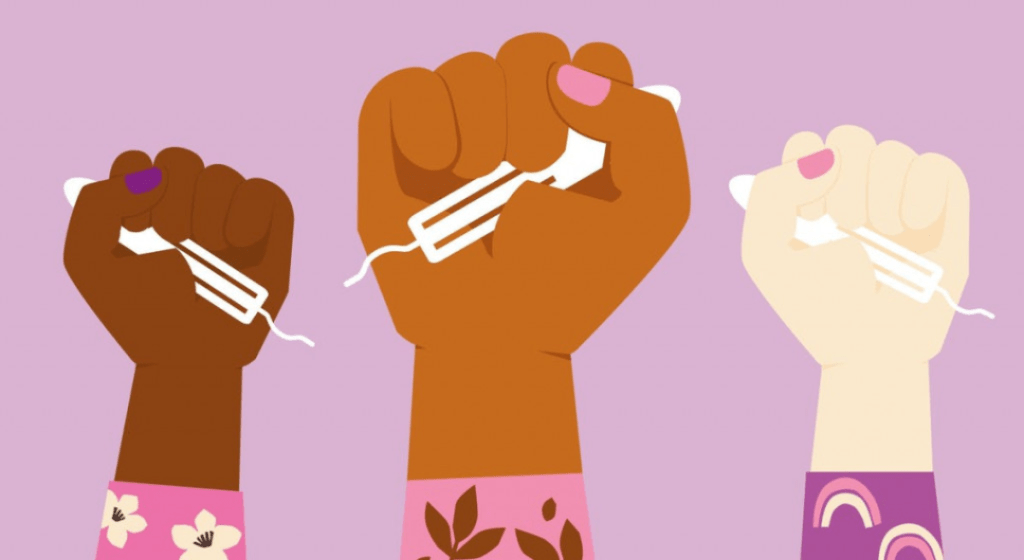
Next question, ‘ Is India suffering from period poverty’? And “Is it a major issue?”
• According to the report, most of the schools in South Asia fell short of the WHO standards of one toilet for every 25 girls. Menstrual hygiene is considered as a global public health and human rights issue. There is a need for separate toilet for boys and girls
• “Girls have an irrevocable right to education, which is lost if they feel unable to attend lessons because of a lack of sanitary products or clean, private toilets at school,” Why 71% of girls in India are unaware about ‘periods’ before their first period? Because of taboos and superstitions of Indian society and lack of discussion. So the answer to the question whether is it a major issue or not , well period poverty is one of the major crisis , India is dealing with right now, ( not recognized by our government but major drawback of our health care system).
Reasons of period poverty in India
• Increased risk of disease:
Menstrual unhygiene is the fifth biggest killer of women in the world. According to the report of Indian Ministry of Health, only 12% of menstruators in India have exposure to proper period products. The rest of 88% however, are largely dependent on unsafe materials like rags, cloth, hay, sand and ash as their only alternatives. This exposes them to infectious uro-genital diseases ,And as I mentioned earlier due to less female toilets , girls are less likely to properly manage their own hygiene.
• Cultural stereotypes have a huge impact:
Menstruation in India is often seen as a shameful conversation.
In India, periods have long been a taboo and considered impure. According to some religious beliefs ,They are often excluded from social and religious events, denied entry into temples and shrines and even kept out of kitchens. The reason of this is, As described earlier, there is no required curriculum surrounding menstrual health in school because, due to limited and non-availability of female teachers across the country especially in remote areas can be identified as serious issue which remains unattended. The cultural taboo attached to menstruation prohibits male teachers from engaging in any such discussions.
• High cost of sanitation facilities:
Millions of families across India can’t afford to buy menstrual hygiene products. For low-income households, the cost of sanitary pads is often unattainable. Furthermore, Since most adolescents do not have access to toilets at home, girls are more likely to pay for restrooms in public, which is another unaffordable expense.
For a daily-wage laborer’s daughter , it’s a toss-up between spending on food for the family or purchasing sanitary napkins.
• Period poverty in India affects education:
As mentioned earlier,” Right to Education for Girls” is lost as many underprivileged girls on average, have to miss six days of class each month due to shame surrounding their periods or lack of sanitary products. This contributes to the number of girls in India who drop out of school each year, around 23 percent. Girls that leave school are stunted in their careers and are more likely to become child brides( A very young bride (8-16 years old). Often married to older man). India has the highest number of child brides in the world, with 15.5 million children being married by the age of 18.
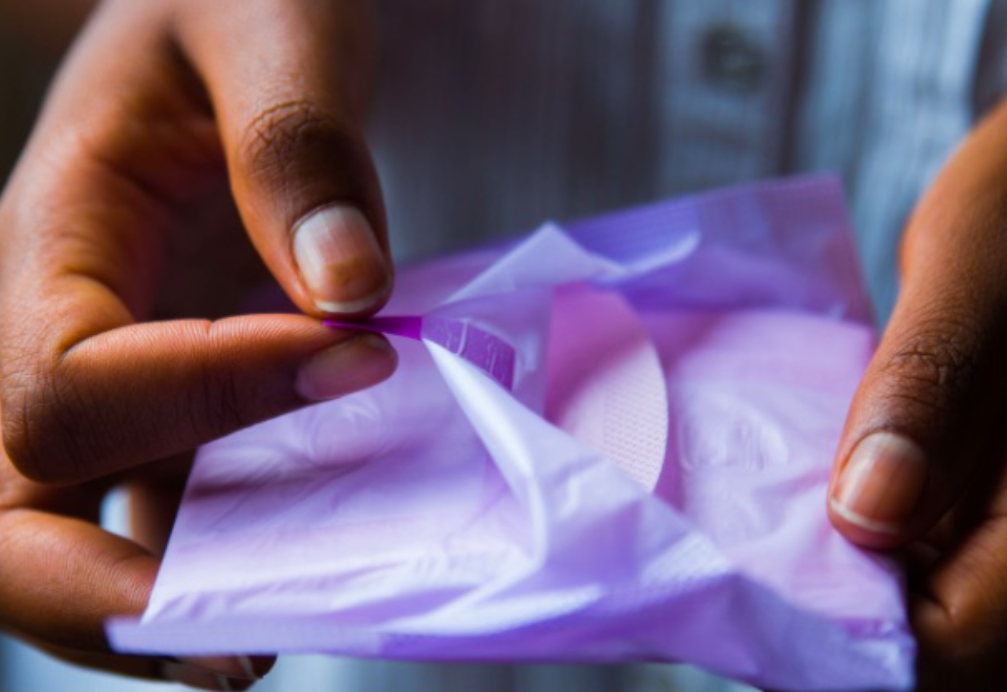
What are the Medical Implications of period poverty? And how to improve it?
• According to point 3 “High cost of sanitation facilities” in last question
Sanitation facility in close proximity provides a considerable level of comfort for girls who suffer from severe cramping or dysmenorrhea(painful menstruation). Besides, it also ensures that a female gets enough privacy in order to clean up properly, and maintain better hygiene .
• It has also been suggested by Cleveland Clinic, Ohio that up to 50% of women will experience some form of digestive distress during their periods. This distress also demands the availability of easily accessible sanitation facilities.
When women do not have access to proper sanitation and hygiene facilities, it creates a higher risk for contagion for any infectious disease.
• Common outcomes of unhealthy menstruation management can be vaginal itching, dermatitis( inflammation of the skin), urinary tract infections (UTIs), which can be fatal if the kidney is damaged, genital tract infection, alteration in the pH balance of vaginal secretions (white and green discharge and others)., bacterial vaginosis with skin irritation(An overgrowth of bacteria in the vagina; characterized by itching, burning, or pain, and possibly a “fishy” smelling discharge.)
All leading to increased susceptibility to cervical cancer. These infections also tend to impact women the most when they’re pregnant or trying to get pregnant.
These are some alternatives of sanitary pads that can be used as in some women, Wearing Sanitary pad for long hours can cause irritation, rash, bad odor, etc. but in case comparison between the two , sanitary pads are non negotiable.
• Menstrual cups are hygiene products that are non-toxic, reusable and environmentally friendly for collecting menstrual fluid. Menstrual cups are made of medical grade silicone that go inside the vagina. As a health care professional I would recommend those women to use it who have at least once done intercourse, as the vaginal opening gets bigger, so it would be less painful, And major drawback for this is a women of lower class
Would not have enough time to insert it and as it’s painful , so they are more like likely to resist it .
• Tampons are also hygiene product that absorbs menstrual fluid. They are also inserted into the vagina and the disadvantage of using this is that it absorbs bodily fluid along with the blood.
These are the Initiatives to bring about change at the ecosystem level affecting better health and hygiene for all.
• There are choices in Sanitary napkins too like cloth sanitary pads and even clean sun-dried cotton cloth based on their comfort and accessibility to these options is important.
Menstrual health will be achieved not only through smart and safe products, but the shift in attitudes and behavior towards better hygiene is also much needed.
Impact of pandemic on period poverty!!
Menstrual health experts say the current coronavirus crisis has worsened matters further in India. The country was under a strict lockdown which has severely impacted production and supplies of menstrual hygiene products to less profitable areas. Coronavirus sparks a sanitary pad crisis in India. But still there were many organizations in India who helped in these distributing Sanitary napkins during these hard times like Samparan , Naari , International red cross society etc.
What are we doing to improve period poverty? And What more can we do?
• Removal of taxes:
India scrapped a 12% tax on sanitary products in 2018 after months of campaigning by activists. Campaigners had argued that menstrual hygiene products were not a luxury and periods were not a choice that a woman could simply opt out of. However, tax exemption is only a small step towards a much longer journey of making menstrual health and hygiene an accessible reality for every woman in the country.

• Having non profit organizations and campaigns to minimize period poverty:
Many positive strides have been taken to address the issues of period poverty. Binti ,Naari,Goonj, Sacchi Saheli etc . are aiming to minimize the issue. The nonprofit is fighting for menstrual equality through education, distribution of sanitary products and government advocacy.
Movies like PadMan , phullu and #YesIBleed campaign caused a small stir in the country, but still statistics say that in India 60% of adolescent girls missed school on account of menstruation and about 80% still use home-made pads.
Documentaries have also aided in global education surrounding period poverty. For example, “Period. End of Sentence.” Partnered with Action India (a nonprofit aiming to create gender equality) to create a documentary about the situation. The Netflix original was successful in fundraising enough money to install a vending machine of menstrual products in Hapur, India. It was also awarded an Oscar for “best documentary short film, gaining public recognition for its efforts.
• Initiating a conversation-
Its time we realize that menstruation is just a biological process and the secrecy surrounding it must go. Women need to know the reals facts about menstruation. Natural/Biological process happens in men also but in a different way. Menstrual blood which is considered so impure also nurture fetus in the womb. So if a child cannot be an impure, specifically male child than how the menstrual blood is impure? That is the reason, why it is important to normalize menstruation and destroy taboos around this natural process. It is important for us to engage in dialogue around menstruation beyond gender binary. It’s time to give them the freedom and knowledge to deal with the pain. Social media is a powerful tool and it should be used to spread positivity and awareness among the people.
Download Your E-Article/E-Paper here!!
The Audiobook is only available for a week. Make sure you download it from the online link. (If you forget to download Your Audiobook don’t worry just reach out to us via [whatsapp] we will help you with the same.)

 The Independent Pioneer