

BY- BABITA RAWAT

Freedom of speech also includes freedom of the press, as the Supreme Court ruled in the Express Newspapers case in 1958. Although the Indian Constitution does not explicitly recognize freedom of the press like the U.S. Constitution, the Supreme Court found that the priority of written media is unacceptable, and even visual media cannot be censored beyond reasonable limits. Article 19, paragraph 2 of the Constitution is therefore incorporated into the “Film Law” or “Cable TV Network Law”.
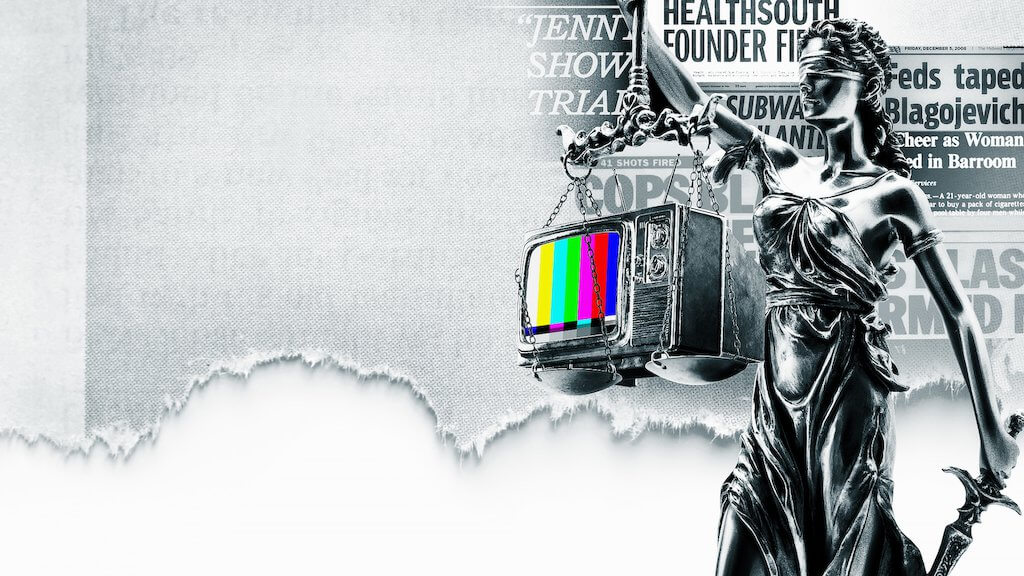
Whether the press or the media goes beyond the scope of its law is an eternal question. The Supreme Court of Andhra Pradesh recently prohibited all media, including social media, from posting any content related to the FIR submitted by the Anti-Corruption Bureau (ACB) Guntur. Historically, the fourth pillar of Indian democracy has become a tool to promote the interests of victims, such as the Jessica Lal case, the 2006 Priyadarshini Mattoo case, and the 2005 Bijal Joshi rape case.
However, when the fourth pillar “media” hinders judicial administration, its power is enormous.
The court needs to intervene. After the famous Indian actor Sushant Singh Rajput committed suicide, the report of this incident has become a tragedy for news networks. This is of exponential importance for judicial administration. After the report, the Mumbai High Court filed several lawsuits against the media. The proclamation of the defendant’s guilt before the sentence is pronounced is called a trial in the media; it is a general report of the defendant’s guilt and imposes a certain view, regardless of the defendant’s judgment. In this case, the reputation of the late actor’s partner actress Rhea Chakraborty was severely damaged by the media in a “media trial. In a case before the Supreme Court, he prevented Sudarshan TV from broadcasting his bindas-bol show “UPSC Jihad” because he tried to discredit the community.
In R. Rajagopal v State of Tamil Nadu, the courtroom docket went directly to rule those public officials, public acts, and public facts could not be blanketed from the booklet with the aid of using injunctions besides on factors just like the identification of a rape victim. Having increased at the proper and certainly the obligation of the media to tell the citizens, the Supreme Court has additionally again and again suggested in opposition to media trials that would bog down the management of justice.
In R. K Anand v Registrar, Delhi High Court, it stated with a few severities that unfastened speech did now no longer encompass the proper to simply submit any type of record regarding a remember earlier than the courtroom docket or to perform sting operations on a few remember regarding a pending trial.
In Siddhartha Vashisht v State NCT of Delhi, the courtroom docket made a vital difference among trials using media and informative media. The case of Sahara vs SEBI is an evaluation of the case regulation at the point, and it reinforces the road among valid remark and usurpation that influences the presumption of innocence.
Is the distinction among a valid remark and an unwarranted trial with the aid of using media so vexed a query that it should, again and again, discover its manner to courts of regulation?
How then does the threat of a media trial play out, and what way of limit should save you that? The critical distinction is captured with the aid of using the phrases used withinside the Sidharth Vashisht judgment, “informative expression” and “trial with the aid of using media”. Where humans are knowledgeable of information and views, it is miles a valid expression that cannot be restrained, but unpalatable it can be to a few. When the media both frontally and suggestively broadcasts the deserves of controversy at massive in a courtroom docket (regularly known as the sub judice rule), it enters the province of courts. In crook trials, if the media publicizes or builds public opinion on guilt or innocence, it jeopardizes the presumption of innocence, a proper as vital as unfastened speech. Hence, it is miles a “trial” with the aid of using the media, that it is miles neither equipped nor authorized to hold.
In Mahmood Moosa Tarani higher referred to as the Black Friday case, a movie that became publicized as an “authentic account’ of the Bombay blasts became injuncted via way of means of the Bombay excessive courtroom docket from being screened even as the trial became on. The visible medium has been visible as extra potent. No matter their training, judges could not be predicted to stay immune from public opinion, roused to indignation via means of purported publicity of the ones “truly” guilty”.
In Navin Jindal (2014) a gag order became refused however in Navin Jindal (2015), and Swantantra Kumar a constrained restraint order became exceeded.
These are examples of the Delhi excessive courtroom docket issuing constrained restraint orders to save you pending proceedings (which include research) from media assertions on character. But amusing any such became a normal ban on reporting news, and the orders have been issued handiest after reviewing what became posted and constrained to unique factors after listening to the publisher. Most these days the Delhi excessive courtroom docket on September 22, 2020, withinside the case of Harper Collins Publishers PVT Ltd v Sanchita Gupta @Shilpi and others became handling an ex parte injunction exceeded in opposition to an ebook on Asaram Bapu and his co-accused. While spotting the significance of the rights of people to reputation, the courtroom docket held that if there’s honest dialogue, that is primarily based totally on records and which is not always ex facie malicious, there may be no bar at the dialogue or booklet. The actual media coverage of the perpetrator’s intentions and the process does not always match. A media ‘trial’ occurs while the media begins off evolved undertaking parallel proceedings, and putting forward its view as the ideal view, over the ones statutorily entrusted with the venture of research or adjudication. As part of an ongoing investigation, please report leaked recordings.
As stated in the case of Romila Thapar v Union of India, if it is harmed, then the defendant is also undesirable. Simply put, a media trial ensues while the media seeks to suitable the function of the courts in charging, convicting, or acquitting the accused. As the Supreme Court stated in Sahara v Sebi, that which influences the “presumption of innocence” must be injuncted, if there is an ongoing adjudication. But with the help of the Constitutional Law of the Court, information is also kept confidential. The Criminal Procedure Law of 1973 provides for the investigation and prosecution of serious crimes.

Broadly speaking, each crook intending may have the subsequent stages:
- Submit return statement or final report.
- Evaluation Conviction or excuse.
The Andhra Pradesh excessive courtroom docket has interfered with the degree of registration of the FIR via way of means of staying the research at its nascent degree and has long gone past the relaxation claimed earlier than it via way of means of issuing a complete ban on a booklet in any way withinside the public area This violates the information function of the media. In doing so, the excessive courtroom docket acted opposite to the regulation settled via way of means of the Supreme Court. After registration, FIR will become public and publicly accessible. As we have got visible, the Supreme Court has held that there may be no objection to a booklet this is primarily based totally upon public information or courtroom docket information and as soon as records are withinside the public area there is no proper privacy.
Download Your E-Article/E-Paper here!!
The Audiobook is only available for a week. Make sure you download it from the online link. (If you forget to download Your Audiobook don’t worry just reach out to us via [whatsapp] we will help you with the same.)


 The Independent Pioneer
That gap will probably get more widened in the forthcoming years . Good Read btw
LikeLike