

BY- ANAM QURESHI

WEST BENGAL HUMAN RIGHTS COUNCIL
(A WING OF WICCI)
BBA. LL.B (Hons.)(Student) School Of Law
UPES, Dehradun
Reproductive rights were set up as a subset of the fundamental opportunity or rights. Every human have a major Human rights to choose freely the number of their children. Over the span of the several years, Indian courts have given a couple of imprint capable decisions perceiving women’s conceptive rights as a segment or Important component of the basic survival rights which are secured under the fundamental key right to life. In some Judgements, the courts have interestingly considered conceptive rights as Important for women’s equality and uniformity and the respect for women’s rights to autonomy and the decision making concerning pregnancy and contraception. In cases concerning maternal wellbeing, contraception, early termination of pregnancy(abortion), and child marriage, Indian courts have embraced sturdy definitions of conceptive rights that reflect common freedoms, rights and guidelines. While court choices are not uniform there are a few Judgements that have pointe out women’s reproductive rights as a crucial part of right to life, featuring the significance of the Judiciary in addressing to the barriers that deny women and girls their conceptive rights and in observing and carrying out existing decisions to ensure that constraining and punitive reproductive health laws and practices are recognized as human rights violations.
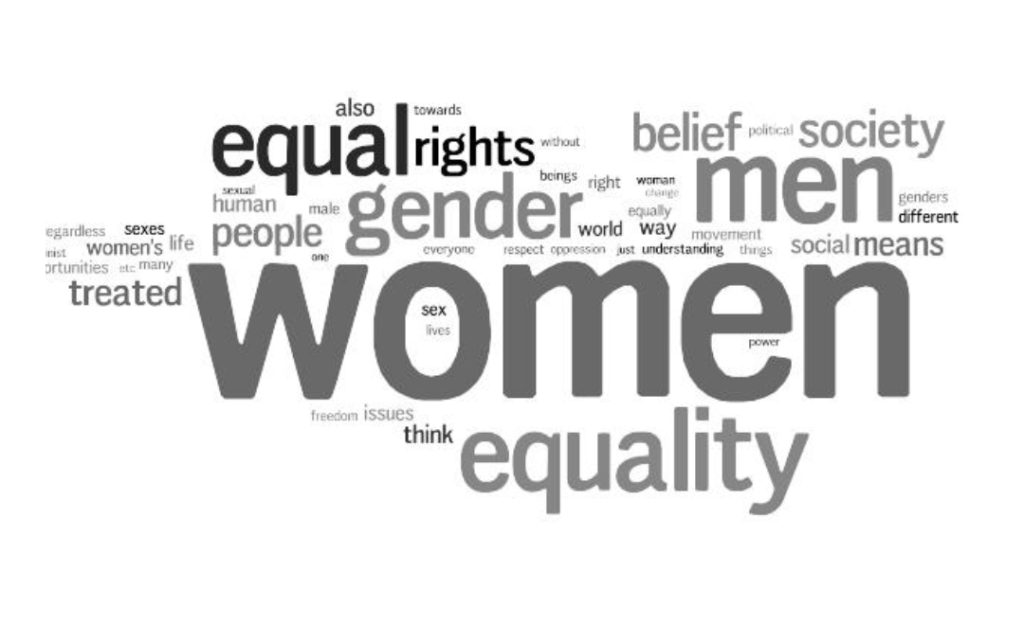
The Issues of right to reproductive wellbeing, explicitly abortion, which is of very Importance in the Indian context. raditionally The society has tried to manage to regulate each part of a women’s lives. Religion, caste and social qualities or culture have assumed significant parts in characterizing and controlling women’s fertility.
In the present scenario where society decides where a women will live, how they will live and who they will marry, whether they will study or what they do and do not. In India, disabled women or women with various disabilities and mental retardness have been reliably denied their privileges. Deficient and poor reproductive healthcare and medical services for women brings about high chances of risky fetus removal(abortion) and death which might have been prevented otherwise. In spite of the fact that India was among the primary nations in the world to create legal and strategic systems ensuring access to early abortion and contraception, women and girls keep on encountering hindrances and problems to full access of their rights, including low quality of healthcare and womens decision making power. Historically, reproductive wellbeing related laws and strategies in India have neglected to adopt a women’s rightsbased strategy, rather they are focusing on segment/demographic targets, for example, population control, while also implicitly or explicitly undermining women’s reproductive autonomy though various discriminatory provisions, for example, permission from the spouce for admittance to reproductive healthcare services. Regardless of a national law punishing marriages of young girls under 18 years old and arrangements and plans ensuring women’s maternal medical care, India keeps on representing the most elevated number of child marriages and 20% of all maternal deaths globally. Although India’s National Population Policy ensures women’s access to contraception methods, The governments keep on presenting plans about advancing female sterilization, risky substandard sterilization procedures, and denial of access to non-permanent methods.
Although abortion is legal on various grounds until a few weeks of gestation Period and also throughout pregnancy where it is necessary to save the life of the pregnant woman under the Medical Termination of Pregnancy Act, more than 50% of the 15.4 million abortions estimated to occur in India annually are risky and result in maternal deaths. U.N. human rights experts have raised concerns to the Indian government regarding human rights violations arising from various reproductive rights issues, including maternal mortality, unsafe abortion and poor quality of after abortion care, lack of access to the wide range of contraceptive methods and reliance on coercion and substandard female sterilization, child marriage, and lack of information and education on reproductive and sexual health. These experts have called for India to address these violations, as well as discrepancy in access to reproductive health care. Indian Courts have main role to play in ensuring women’s reproductive rights are protected as guaranteed by their constitutional and human rights. India has a vibrant women’s movement and NGO’s that are committed to protect the rights and choices of women. Simultaneously a large number of ladies faces social and domestic pressure, factor and limitations that limit their capacity to plan the follow up on reproductive decisions. In India, however regenerative rights are a lot of explicit to the couples, yet it’s anything but an aggregate choice of the family.
The right to make decisons freely about healthcare and medical treatment, including decisions about a person’s own fertility and sexuality, is mentioned in Article 12 and 16 of the Convention of the Elimination of all the Forms of Descrimination Against Women(1978).
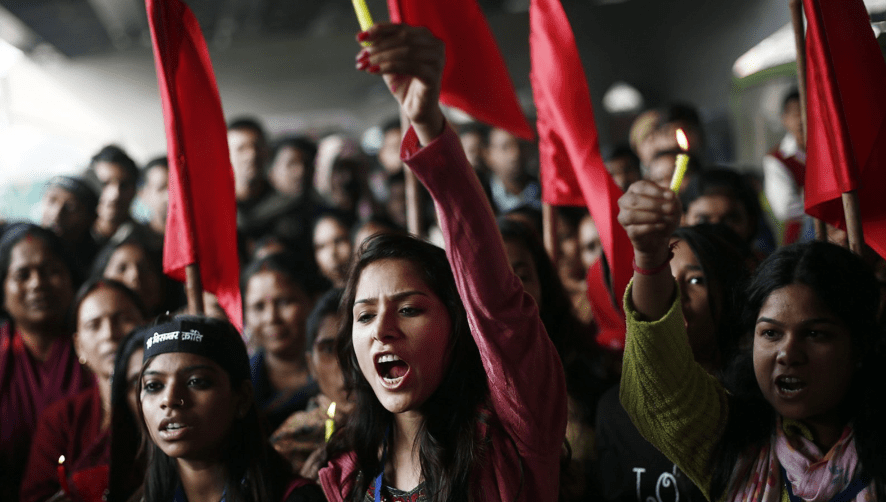
Women with disabilities are denied their rights. For example a mentally challenged 20 year old girl was raped by a worker at an Instituition for destitute women. Some time after it was found that she was pregnant. Later the Doctors which included a psychiatrist concluded that she is capable of bearing the child and raising it but her mental health can be further affected by the stress of bearing and raising her child. Based on this decision the Court ordered termination of Pregnancy(MTP). On the NGO’s appeal against the decision, the Supreme Court gave the landmark decision allowing the girl to carry on with her pregnancy resulting from sexual assault. This case thus raised fundamental isuues relating to consent and to the support required while assessing consent. The case was not about abortion but it was about whether the law of the country recognizes and protects the agency of a women to take decisions of her life and body, especially when the women is a person with mental illness or disability.
Since The Supreme Court has taken the decision and permitted her to proceed with pregnancy however has neglected to address backing up and state’s responsibility for making a dependable supportive system for her as an obligation under Article 12 of the UN Rights of Persons with Disabilities Convention. This case demonstrates expressively that the Indian legal system must make extraordinary arrangements to align it with worldwide enactments. It likewise brings up the issue whether our government authorities are competent enough to protect women and women with disabilities and their reproductive rights.
What needs to be done to empower women’s rights to reproductive health?
Lacking conceptive medical care for women brings about high chances of undesirable pregnancy, dangerous and unsafe fetus removal, and preventable death and injury because of pregnancy and labor. Brutality against females, including harmful traditional practices like female genocide, negatively affects ladies’ wellbeing, prosperity and social interest. Violence in different forms also reinforces inequality and prevents women from realizing their reproductive goals.
Providing good quality reproductive health services helps protect them from health risks. Reproductive health does not affect women alone but also it is a family health and social issue as well as it affects all the family members.
Reproductive health care should include following components;
1) Family planning should be done along with strong government support, caretakers who are well trained, sensitive to local and cultural conditions, can communicate with client’s/patients needs, and are friendly and sympathetic towards them. The services provided should be affordable and a choice of different contraceptive methods should be available, Counseling ensuring consent from the concerned person in contraceptive choice, ensuring confidentiality of any kind of information, comfortable and clean facilities and speedy service.
2)Safe motherhood programmes should provide access to emergency obstetric care and wellbeing, including treatment of Infection, hemorrhage, hypertension and obstructed labour. A system for ensuring rapid transport to an equipped medical facility/medical centres for a better treatment.
3)Trained health workers to identify and treat post pregnancy or post abortion problems, as well as to counsel on different important things like infant care, hygiene, immunityof both the child and the mother, On family planning, and about maintaining good health.
4)Early termination and Post-fetus removal Care: Abortion can lead to significant health problem. Family Planning services will guarantee reduction in undesirable pregnancies and forestall early terminations(abortions) which will likewise lessen the death rates which occurs because of unsafe and risky fetus removals. In conditions where fetus removal isn’t illegal good quality wellbeing/health care services should be given to guarantee safe early termination practices and great quality post-early termination care which would fundamentally lessen maternal death rates.

Conclusion
Reproductive health and right to reproductive health is not only an Important issues for the females but it is also a family health and social issue. The ultimate aim and objective of the right to reproduction is well being of the family and individuals. At the same time it becomes the responsibility of the governing authority to give good quality reproductive health care services and protect the individuals reproductive rights while being sensitive to the their cultural issues. There is increased need for sypathy of the judicial and government while protecting the reproductive rights of people with disability especially mental retardation and mental illness.
Download Your E-Article/E-Paper here!!
The Audiobook is only available for a week. Make sure you download it from the online link. (If you forget to download Your Audiobook don’t worry just reach out to us via [whatsapp] we will help you with the same.)


 The Independent Pioneer