

BY- APARAJITA R.JHA

The Covid-19 pandemic has taken the world by storm and has been a major influence in the daily lives of almost every individual on the planet be it directly or indirectly. We shall be primarily focusing on the psychosocial impacts of the virus in India. For simplicity’s sake an understanding of meaning of psychosocial impact needs to be discussed briefly. The word can be simply broken down into its two constituents, psychology and sociology. Psychological Impacts are the effects caused by the environmental and biological factors on the social and psychological aspects of one’s life. COVID 19 had impacted the lives of the people both positively and negatively , as some used the quarantine to work from home which has allowed them to be close to the family however majorly it had negative impact on people.
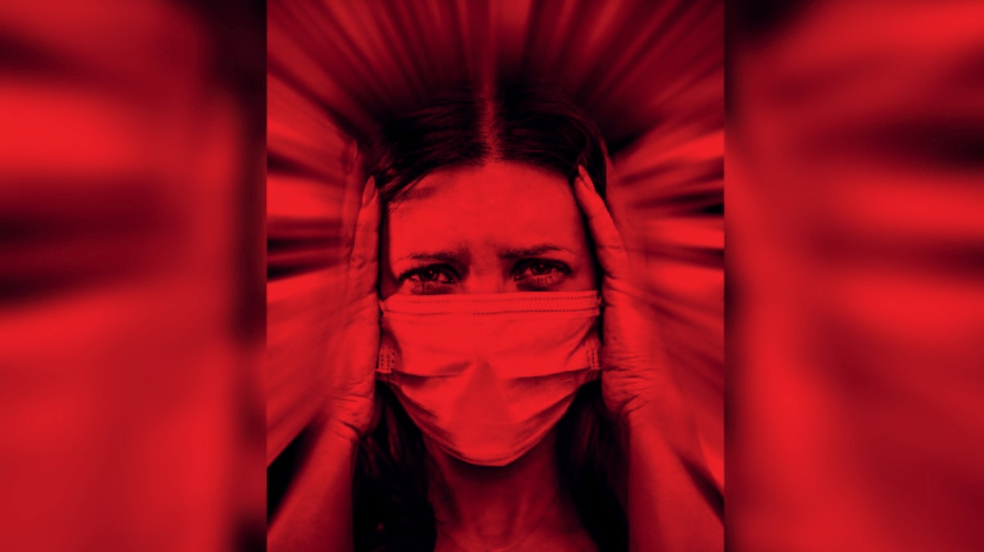
EFFECTS OF QUARANTINE, LOCKDOWNS AND ISOLATION ON MENTAL HEALTH
The situation is worsened with the imposition of quarantine measures and lockdown. The psychological effects of loss of control, excess information and physical distance would lead to anxiety, distress and depression, but when coupled with financial instability, lack of access to basic needs and uncontrollable nature of the disease would lead to condition of mental torment and agony. Moreover, due to the increased anxiety in the masses, an urge to know their health conditions would only lead to the situation to worsen.
The fear in a pandemic is not only restricted to the fear of contracting the disease but also includes elements of separation, loss of freedom, uncertainty and helplessness. These aspects may lead to drastic effects like such which includes the heightened risks of suicide. It shall also be taken into consideration that the current society is one that possess speed, in both travel and communication, the sudden stoppage of which would affect individuals emotionally.
EFFECTS OF SOCIAL MEDIA ON MENTAL HEALTH
Being in the 21st century, information is on the tip of our fingers and although beneficial in most scenarios , during the pandemic , it takes a negative form. Due to the abundance of cheap internet facilities and increase in the use of social media and other sophisticated and accessible forms of communication, there is an increase in the anxiety and distress in the masses. This is not only having an immediate negative effect on the mental health of individuals; it may also carry forward in the future as well.
India have imposed restriction on the movement of the citizens, have done it to contain the transmission of the virus, but this does not rule out the interaction over the internet. Any news circulated in the social media can be either the legitimate information or one that is spreading misinformation. However, there is not any mechanism which the layman can use to detect the same other than only trusting particular source which again is not an ideal method as there is no strait jacket formula to understand what is legitimate and what is not.
In a time of crisis, any form of misinformation spreading through websites could prove to be detrimental. Information spreading through unverified and unreliable sources could at these times be considered as facts as some of these news may give hope to the masses. For instance the cure suggested by Ram Dev Baba, had no medical backing , however, people believed as there it is cloaked by the hope that the masses sees in the product even though the product was merely an immunity booster. Many would use this as marketing strategies against the gullible and scared individuals. The most affected one would be the under-developed and developing countries as they would not be well aware or informed about the same, and owing to the financial crisis , they would look for a cure that would let them restart their day to day work which acts as their source of income.
EFFECT OF STIGMATIZATION ON MENTAL HEALTH
Taking the example of the SARS outbreak in the year 2003, the stigma was such that it carried on even after years of getting affected by the disease, which incapacitated many from returning back to their normal lives. The Corona Virus outbreak has just taken the same to a notch above, since the numbers are unimaginable and stigmas of fear, racism, discrimination and marginalization would just act as a catalyst to the already prevalent socio-economic impacts of the virus. The situation is such that this would give rise to a snowball effect ,where the fear would lead the individuals to seek medical and professional attention which would give result in the rise in the transmission of the disease. Again, as seen in the SARS and H5NI outbreak it was seen that the psychology played a huge role in the willingness of individuals to seek medical help or even disclose the fact that they might to suffering from the disease due to fear of isolation and discrimination. This is not only detrimental to the individuals suffering from the disease but also hampers the overall management and control of the disease due to cases not being brought to the forefront.
Stigmatization can also bring about certain social evils like discrimination and racism. The case of Indian from the North Eastern regions is a great example of the same. The NE residents of India typically have mongoloid feature that resembles that resembles features of the Chinese nationals. They have been subjected to discrimination in the past, the same was increased due to the fact that it was believed that the virus originated from China.
The stigma towards certain profession has also been observed where the forefront workers also called the Coronavirus Warriors are being illtreated due to the fear of contracting the disease with contact with these men. In a country like India, a large chunk of the population are migrant workers. With the sudden lockdowns they were the ones who are affected the most while the ones residing in the urban areas of the country particularly the rich faced lesser economic backlash. They migrant workers along with the daily wage earners, house helps, labourers and many more, who were already in a unstable financial condition were now pushed towards unimaginable hardships.
PSYCHOSOCIAL IMPACTS COUPLED WITH THE ECONOMIC COLLAPSE
The economic implications of the pandemic also play a huge role in the mental health of an individual. When contemplating about the post-pandemic scenario , everyone would be thinking of the time required to get back to normalcy, however, with the economic set-backs faced in the pandemic, this process could be perceived to be a tedious one.
The pandemic had adversely affected Indian economy. The Indian tourism which accounts for 9.2% of the GDP has suffered a major blow because of the travel restrictions, the aviation sector and many more industries have also suffered for the same reasons. India even though was hit hard by the second wave and most of the States went for lockdown the industries were allowed to operate after complying with the COVID protocol as the country could not face any more economic loss. The country’s economy has resulted in the suffering of many individuals as they lost their jobs during the pandemic and they had no resort to find for an alternative as everything was shut due to the pandemic. The economic recession resulted into the loss of as many as 41 lakh jobs.
The unemployment and poverty during COVID had taken a toll on the mental health of the people. The fear of losing job and the increase in competition has increased anxiety and stress among the people. There are reports which have shown that the employees are expected to work even when their family members are sick with the COVID-19 virus, and the employees do perform such task because of presence of “hustling” culture. The capitalistic firms turned towards virtual unpaid internships , without even considering the extreme financial need of the people during such difficult times. The immense work pressure with health crisis has resulted into exhaustion and worsening the mental health situation. The employees of the country are being driven towards mass burnout.
During pandemic more than half of all women had suffered income loss when compared to a third of men . When compared with the burnout rates of women, there has been a spike increase from 34% in 2019 to 75% in 2020. Studies showed that the burn out of women were more than men in the pandemic. The increase in depression and anxiety because of the pandemic has affected the male and female differently, it was seen that globally there was an increase of intimate partner violence in dyadic relationships.
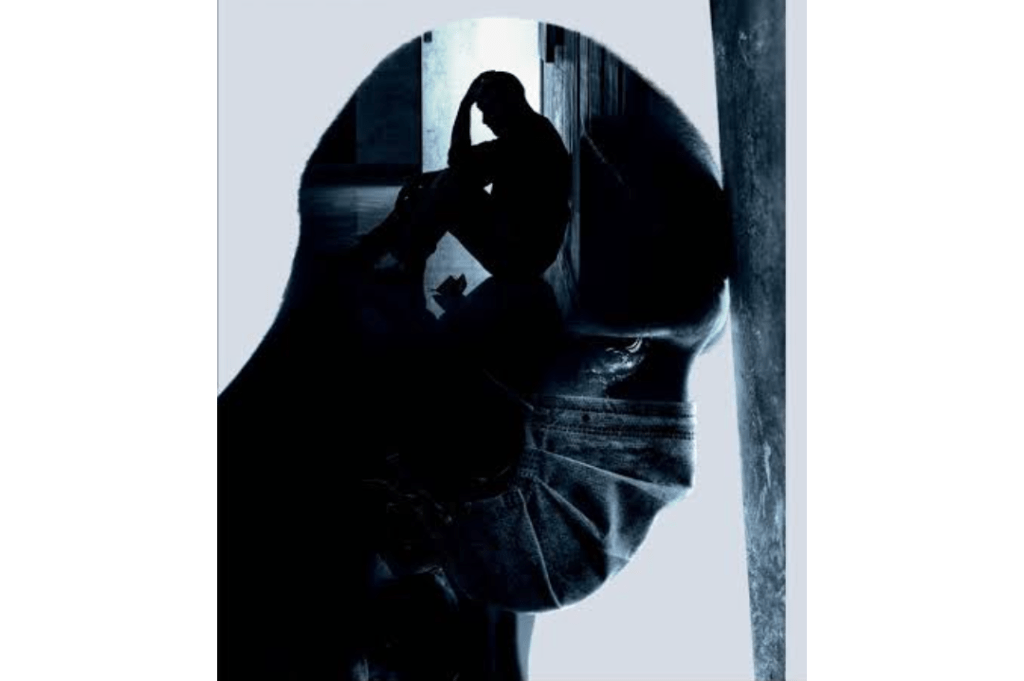
WHY ARE MENTAL HEALTH ISSUE GOING UNADDRESSED?
Even though various programs were adopted by the government to increase mental health awareness like National Mental Health Program and District Mental Health Program but it is still not accessible to a major part of the population . Studies have shown people do not visit a mental health facility because of the stigma attached to it . The awareness via social media and news is not of major help as most of the Indians lack the education to understand the same. Economic inequality and uneven distribution of mental facilities also acts as a barrier. It is indeed true that there is an eventual growth of conversations around mental health but however it is centered around those who already have an access to it . With less to no information of mental health problems among majority of the population it becomes very difficult for them to recognize the symptom. Generally people are unable to express their emotional stress which leads to them suffering but in silence. Studies have shown that the existing norms and social beliefs makes it more difficult for men to seek for help .
CONCLUSION
A greater investment and saving capacity of the country will only come with an economy which is physically and mentally healthy. A strong resilience against the pandemic can only be built with strong mental health specially among the young adults. However, ignoring the same will only push us closer to severe losses. Government needs to play a strong role in helping us come out of such a sever condition by investing more in mental health programs and increasing job security of the people. The victims suffering from insecurities can only overcome from the same when financial provisions will be coupled with mental awareness. Workforce absenteeism due to depression or other mental health causes can be reduced by strengthening the community and providing specialist mental heal services. It is the state of mind that guides the path for a better physical wellbeing and unless the individuals in the country are at the peak of their health the country will not be able to break out of the chains of such a crisis.
Download Your E-Article/E-Paper here!!


 The Independent Pioneer